Lebanese Pantry Essentials: 10 Ingredients That Will Transform Your Everyday Cooking
Download a PDF of the this Lebanese Pantry Essentials Guide here
If you’ve ever tasted Lebanese food and wondered how something so simple can taste so deeply layered and satisfying, the answer is almost always in the pantry.
Lebanese cuisine is built around a small but mighty collection of pantry staples. These aren’t exotic ingredients you’ll use once and forget, they’re the kind of building blocks you’ll reach for again and again across salads, dips, soups, grilled meats, and even desserts.
I grew up in a Lebanese-American household where za’atar lived on the breakfast table, tahini was always in the fridge, and dried mint found its way into almost everything. These 10 Lebanese pantry essentials are the ones I truly can’t cook without, and once you have them on hand, I think you’ll feel the same way.
In this guide you’ll find:
- What each ingredient is and why it matters
- How to store it for maximum freshness
- Real A Cedar Spoon recipes to put each one to use right away
3 Tips Before You Start Shopping
Before we dive into the ingredients, a few things that will save you time and money:
- Shop at a Middle Eastern grocery store. You’ll find better quality and far better prices on tahini, za’atar, and pomegranate molasses than at a standard supermarket.
- Buy small quantities and replace often. Spices like sumac and dried mint lose their potency quickly. Fresher is always better.
- Taste as you go. Lebanese cooking is intuitive. Use these recipes as a starting point, then trust your palate.
1. Za’atar — Lebanon’s Most Beloved Spice Blend
Za’atar (pronounced ZAH-tar) is a spice blend made from dried thyme, sesame seeds, sumac, and salt. It’s earthy, nutty, tangy, and herbal all at once — and it’s probably the most quintessentially Lebanese ingredient on this list.
You’ll find za’atar sprinkled over eggs at breakfast, swirled into olive oil for bread dipping, rubbed onto flatbreads, and mixed into dressings. No Lebanese pantry is complete without it.
Storage tip: Buy from a Middle Eastern grocery, quality varies widely. Look for a blend that still smells fresh and herby when you open the bag.
Recipes to try: Mediterranean Hummus Toast (10 min) | Za’atar Roasted Cauliflower with Tahini Yogurt Sauce (35 min)
2. Tahini — The Backbone of Lebanese Cooking
Tahini is ground sesame paste, and if you’ve ever made hummus from scratch, you already know how transformative it is. A good tahini is silky, slightly bitter, and deeply nutty. Thin it with lemon juice and a little water and it becomes a sauce that goes with just about everything.
Tahini shows up in hummus, salad dressings, tahini dipping sauces, marinades, and even Lebanese desserts. It’s one of those pantry ingredients that earns its place in your fridge permanently.
Storage tip: Oil separates naturally, stir from the bottom before using. Store in the fridge after opening.
Recipes to try: Lebanese Hummus (10 min) | Tahini Yogurt Dressing (5 min)
3. Sumac — The Lebanese Alternative to Lemon
Sumac is a deep burgundy spice ground from dried sumac berries. It’s tangy, slightly fruity, and brilliantly versatile. Where Western cooking reaches for lemon, Lebanese cooking often reaches for sumac, it adds brightness and a pop of color to almost any dish.
You’ll find sumac in fattoush salad, sprinkled over meats like these Sumac Chicken Wings, stirred into dressings, and used as a finishing spice the way you might use flaky salt.
Storage tip: Sumac loses its punch quickly. Buy in small quantities and store away from light and heat.
Recipes to try: Sumac Lemon Baked Chicken Wings (45 min) | Fattoush Salad (15 min)
4. Pomegranate Molasses — A Little Goes a Very Long Way
Pomegranate molasses is made by reducing pomegranate juice down to a thick, dark syrup. The result is intensely tart, slightly sweet, and deeply complex, and just one tablespoon can completely transform a dish.
It’s one of those ingredients that sounds exotic but becomes indispensable once you taste it in a salad dressing or drizzled over roasted eggplant. Find it at Middle Eastern grocery stores or specialty food shops.
Storage tip: Use sparingly as it’s powerful. One tablespoon transforms a dish. Keeps well in a cool, dark pantry.
Recipes to try: Easy Arabic Salad (10 min) | Drizzle over this Mediterranean Eggplant Salad (25 min)
5. Rose Water — The Secret Behind Lebanese Desserts
Rose water is distilled from rose petals and carries a delicate floral scent that is distinctly Lebanese. A few drops are all you need to transport a dessert somewhere entirely its own.
It’s most famous in baklava, the rose water syrup soaked into crispy phyllo layers is what makes Lebanese baklava unmistakably Lebanese. It’s also used in simple syrups, lemonade, and rice pudding.
Storage tip: Use sparingly, it’s potent. Start with half the amount a recipe calls for and taste as you go.
Recipes to try: Lebanese Baklava (90 min)
6. Dried Mint — More Savory Than You’d Expect
Fresh mint is lovely, but dried mint is a completely different ingredient. It’s more concentrated, more savory, and deeply embedded in Lebanese cooking in ways that fresh mint simply can’t replicate.
Dried mint goes into salad dressings, soups, yogurt sauces, and dips. The classic lemony-mint dressing in Lebanese Salata is the perfect example of dried mint doing something fresh mint can’t quite pull off.
Storage tip: Replace dried mint often — if it doesn’t smell strongly minty when you rub it between your fingers, it’s time for a fresh bag.
Recipes to try: Easy Lebanese Salad / Salata (10 min) | Turkish Lentil Soup (40 min)
7. Allspice — The Warm Backbone of Lebanese Spice Blends
Allspice smells like a combination of cinnamon, nutmeg, and clove — because it truly contains the flavor notes of all three. It’s the warm, aromatic backbone of Lebanese spice blends like shawarma seasoning and baharat.
You’ll find allspice in meatballs, slow-cooked meats, rice dishes, and stuffed vegetables. Lebanese cooking without allspice would taste flat and incomplete.
Storage tip: Whole allspice berries freshly ground are noticeably more fragrant and complex than pre-ground. Worth the extra step.
Recipes to try: Homemade Shawarma Spice Blend (5 min) | Mediterranean Turkey Meatballs (30 min)
8. Bulgur Wheat — The Grain Behind Lebanese Tabbouleh
Bulgur is a quick-cooking cracked wheat that’s been parboiled, so it just needs a brief soak or simmer to be ready. It’s high in fiber, has a satisfying nutty chew, and absorbs flavors beautifully.
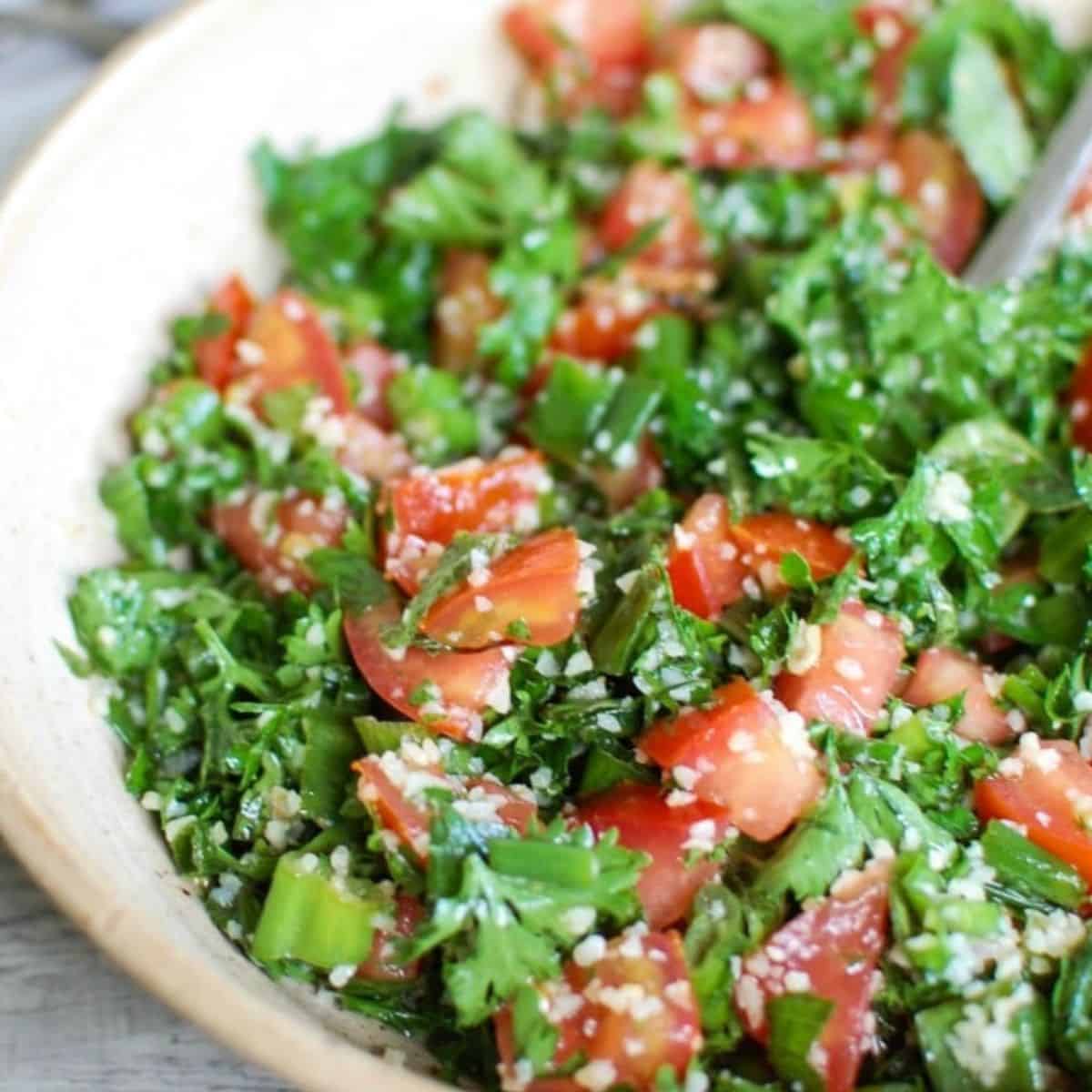
It’s most famous as the grain in tabbouleh, though authentic Lebanese tabbouleh is very parsley-forward and uses only a small amount of fine bulgur. Coarse bulgur works beautifully in heartier soups and pilafs.
Storage tip: Fine bulgur for tabbouleh, coarse bulgur for soups and pilafs. They are not interchangeable.
Recipes to try: Lebanese Tabbouleh (20 min) | Tomato Red Pepper Bulgur Soup (35 min)
9. Cinnamon — Used in Savory Dishes as Much as Sweet
Cinnamon in Lebanese cooking is used differently than you might expect, it’s as common in savory dishes as in desserts. That balance is part of what makes Lebanese cuisine so distinctive and layered.
You’ll find cinnamon in spiced ground meat, Lebanese green beans (lubee), rice dishes, and slow-cooked stews. It’s never overpowering; it’s the background warmth that makes everything taste more complete.
Storage tip: Lebanese recipes often use Ceylon cinnamon, which is softer and sweeter than standard cassia cinnamon. Either works, but adjust the amount to taste.
Recipes to try: Spiced Beef Hummus Pita Pizza (25 min) | Lebanese Green Beans / Lubee (40 min)
10. Olive Oil — The Foundation of It All
Olive oil isn’t a supporting player in Lebanese cooking, it’s the foundation. It’s used generously for cooking, drizzling, finishing, and marinating. Quality matters enormously here.
A good extra-virgin olive oil will be bright, grassy, and slightly peppery, and it will elevate every single dish it touches. Use a high-quality EVOO for finishing and a lighter olive oil for high-heat cooking.
Storage tip: Keep away from heat and light. Buy in a size you’ll use within a few months for best flavor.
Recipes to try: Lemon Marinated Olives (10 min + chill) | Easy Marinated Tomatoes (10 min + chill)
Your Lebanese Pantry Starter List
Ready to stock your kitchen? Here’s a quick checklist to take with you:
- Za’atar
- Tahini
- Sumac
- Pomegranate Molasses
- Rose Water
- Dried Mint
- Allspice
- Bulgur Wheat (fine and coarse)
- Cinnamon
- Good Extra-Virgin Olive Oil
Head to your nearest Middle Eastern grocery store first, you’ll find most of these at a fraction of the price (and often much better quality) compared to a regular supermarket.
Start Cooking Tonight
Once these 10 Lebanese pantry essentials are in your kitchen, weeknight dinners get a whole lot more interesting. A handful of za’atar and olive oil turns simple roasted vegetables into something special. A spoonful of tahini transforms a grain bowl. A pinch of allspice and cinnamon makes ground meat taste like it slow-cooked all day. These are the flavors I grew up with, and I hope they find a permanent home in your kitchen too.
Happy cooking! 🌿
-Julia