
This post may contain affiliate links.
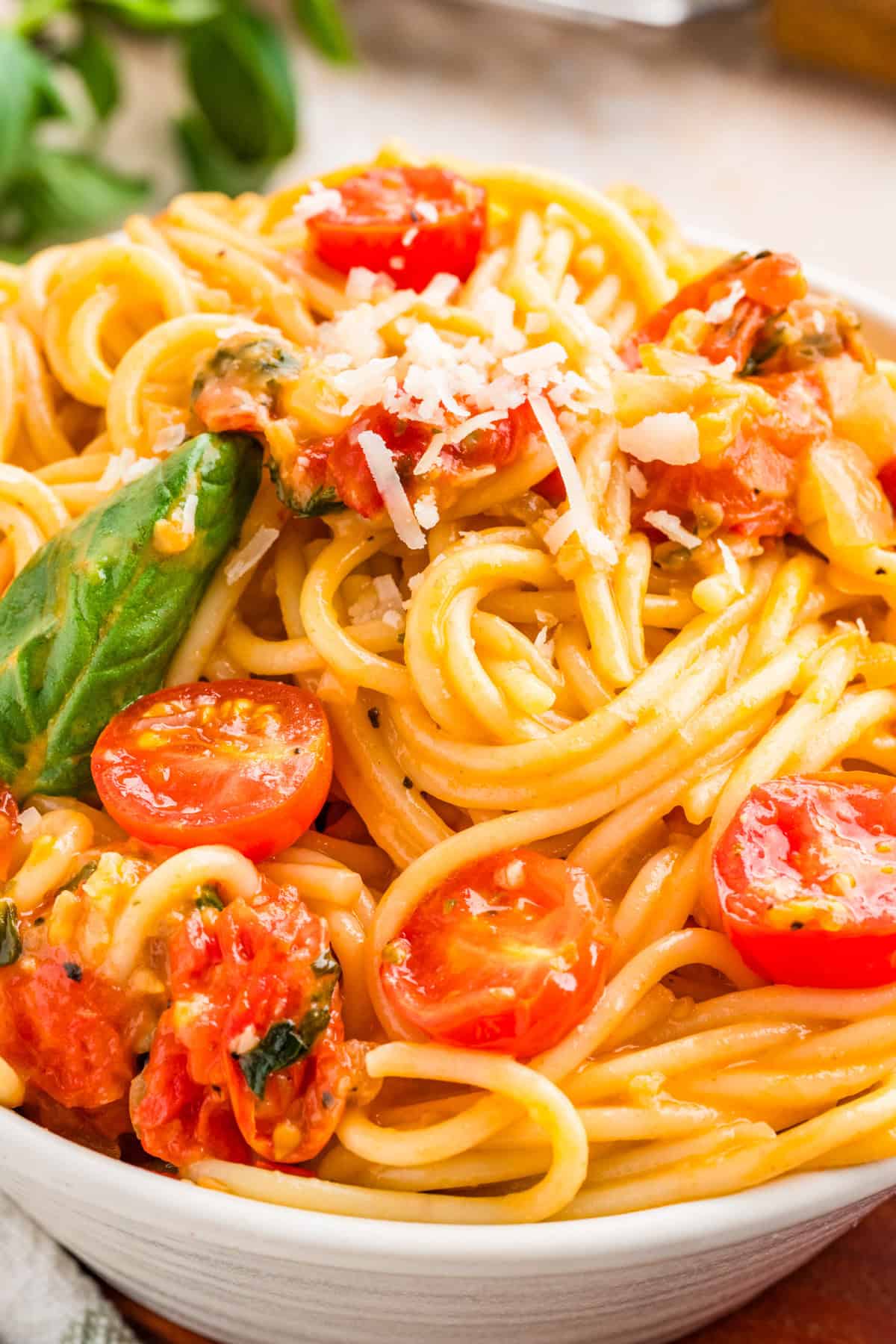
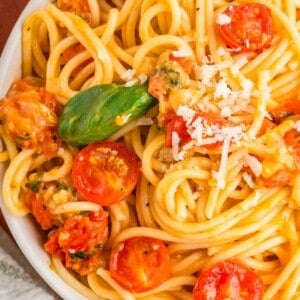
This Cherry Tomato Basil Pasta is a 30-minute weeknight dinner that lets sweet, peak-season cherry tomatoes do all the work. Fresh basil, parsley, garlic, and parmesan come together in a silky sauce built right in the pan with no canned tomatoes and no heavy cream, just simple ingredients at their best. It is the kind of summer pasta you will want to make on repeat all season long.
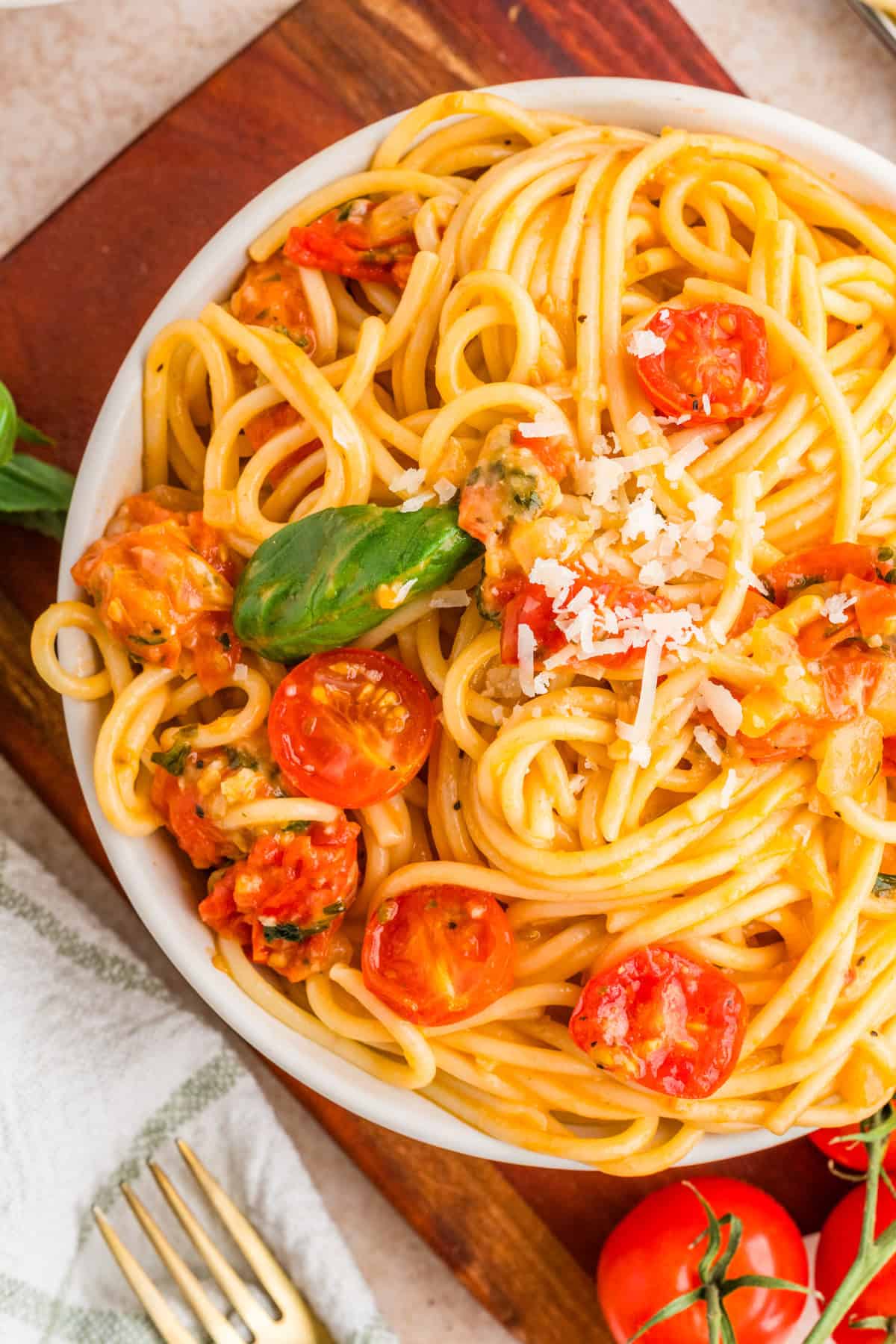
There is something about a bowl of ripe cherry tomatoes sitting on your counter in the middle of summer that just makes you want to cook. Not a complicated dinner with a long ingredients list. Just something simple that lets those tomatoes be exactly what they are, sweet, juicy, and bursting with flavor. This Cherry Tomato Basil Pasta is that recipe. It comes together in 30 minutes with a handful of pantry staples, and the tomatoes do almost all the heavy lifting.
What makes this pasta stand out is the sauce. You are not opening a can or adding cream. You are cooking down fresh cherry tomatoes with olive oil, onion, garlic, and herbs until they collapse into something glossy and rich. A splash of starchy pasta water and a generous amount of freshly grated parmesan pull it all together into a silky sauce that coats every single strand. It tastes like the kind of thing you would order at a little restaurant with outdoor seating and a wine list, and it took you 30 minutes on a Tuesday night. If you like tomato recipes try my Tomato Toast with Whipped Feta, Easy Marinated Tomatoes or these Oven Roasted Tomatoes.
Why This Cherry Tomato Basil Pasta Is Worth Making

If your counter has a pint (or two) of cherry tomatoes sitting on it right now, this is where they want to end up.
Cherry tomato season is short and sweet, and this pasta is genuinely one of the best ways to use those tomatoes at their peak. When they’re ripe and full of juice, you don’t need much else. A little olive oil, some garlic, an onion, a handful of fresh herbs, and good parmesan. That’s it.
This is the kind of recipe I come back to every summer because it works every time. The tomatoes soften and burst and release all of that sweet, slightly acidic juice right into the pan. You stir in the herbs, toss with pasta and a splash of starchy pasta water, add parmesan, and what you end up with is this glossy, clingy, restaurant-worthy sauce that took you about 20 minutes to make. It’s a Mediterranean pasta dish kind of dinner, simple ingredients, maximum flavor, nothing fussy.

Table of Contents
- Recipe Ingredients
- Ways to Modify this Cherry Tomato Pasta
- How to Make Cherry Tomato Basil Pasta
- The Trick to a Silky Sauce (It’s All About the Pasta Water)
- The Sputtering Tomato Problem (and How to Avoid It)
- How to Make It a Meal
- Storage, Reheating, and Next-Day Tips
- Recipe FAQ
- More Tomato Recipes
- Cherry Tomato Basil Pasta Recipe
Recipe Ingredients
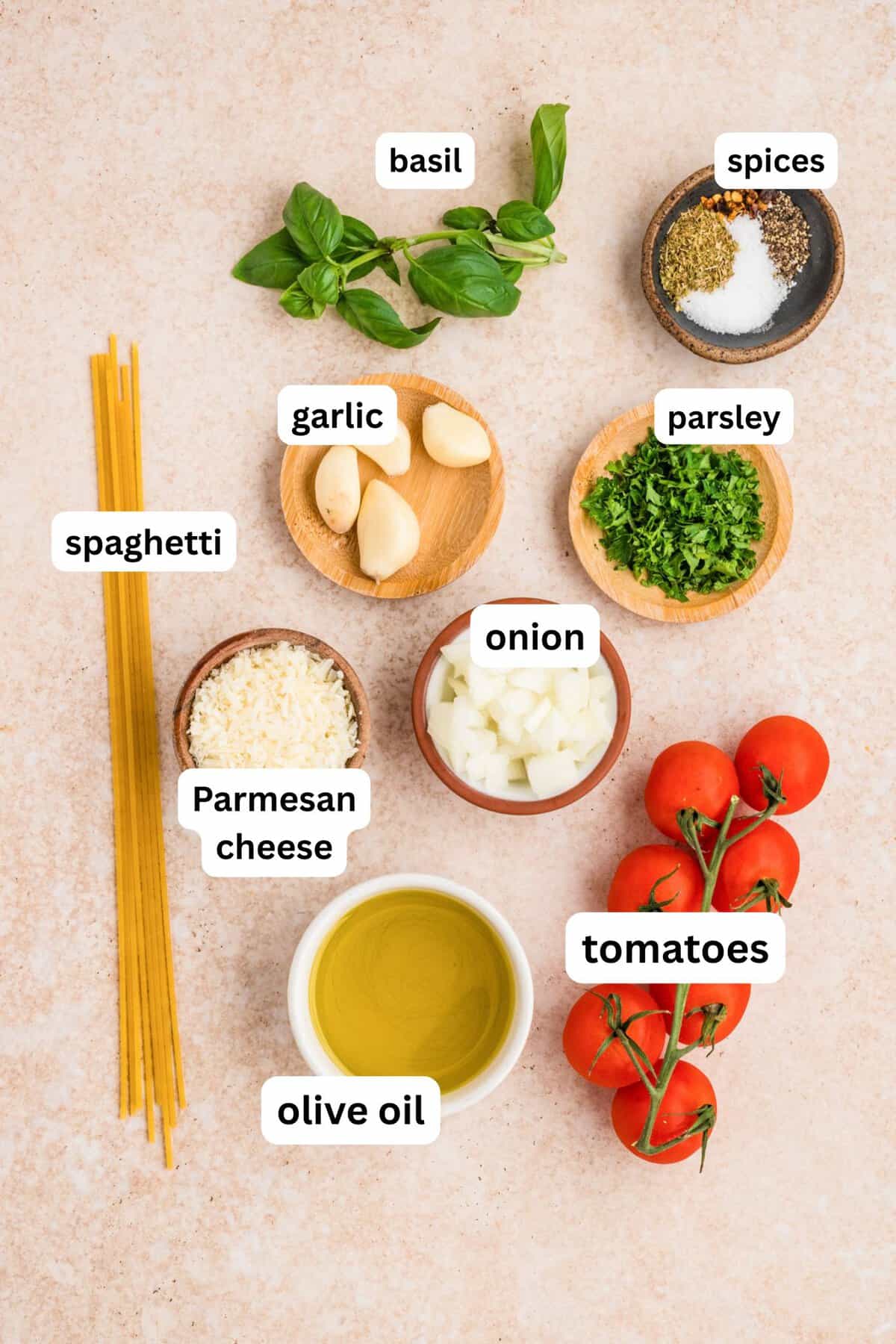
- Cherry tomatoes: Two pints, halved. You want them halved so they release their juice into the pan faster and more evenly. Any color works beautifully here, a mix of red, orange, and yellow tomatoes makes the sauce a little more complex in sweetness. Grape tomatoes work too.
- Olive oil: Extra virgin olive oi is the base of the sauce. Use good olive oil because you’ll taste it.
- Yellow onion: This is the move most cherry tomato pasta recipes skip, and it makes a real difference. The onion softens into almost nothing as it cooks, adding a subtle sweetness and body to the sauce that you won’t get from garlic alone.
- Garlic: Four cloves, minced. Add it after the onion is already soft so it doesn’t burn.
- Fresh basil and fresh parsley: The basil brings that sweet, aromatic lift. The parsley adds a brightness and a little grassy sharpness that rounds everything out. This combination is very much a Mediterranean instinct, and it works incredibly well here. If you only have one or the other, you’ll be fine, but together they make the sauce taste more layered.
- Parmesan: Freshly grated, not the stuff in the green can. One full cup, finely shredded. This is what helps build the silky sauce.
- Pasta: 12 oz, cooked al dente in well-salted water. Spaghetti is classic for this. Linguine, bucatini, or even a short pasta like rigatoni all work.
- Spices: dried oregano, black pepper, red pepper flakes. These are the background notes. Don’t skip the oregano, it adds an earthy depth that keeps the dish from tasting one-dimensional.
Ways to Modify this Cherry Tomato Pasta
- Tomatoes: Any color cherry or grape tomatoes work. A mix of red, orange, and yellow adds visual interest and a little more flavor complexity. Not cherry tomato season? Use a pound of diced Roma tomatoes or vine-ripe tomatoes instead. The sauce will be slightly chunkier but just as good.
- Pasta: Spaghetti is classic here, but linguine, bucatini, rigatoni, penne, or fusilli all work. Short shapes like rigatoni catch the sauce in their ridges.
- Use gluten-free pasta if needed. Just make sure to still reserve pasta water before draining.
- Cheese: Pecorino Romano is a great parmesan swap. It’s saltier and sharper but melts the same way.
- Want a Mediterranean twist? A few crumbles of feta stirred in at the end adds a tangy, creamy finish.
- To make it dairy-free, skip the cheese and add an extra drizzle of good olive oil and a pinch of salt at the finish.
- Heat level: The recipe as written has a mild background heat from the red pepper flakes. For a spicier pasta, increase to up to 1/2 teaspoon. Leave the flakes out entirely for a kid-friendly version.
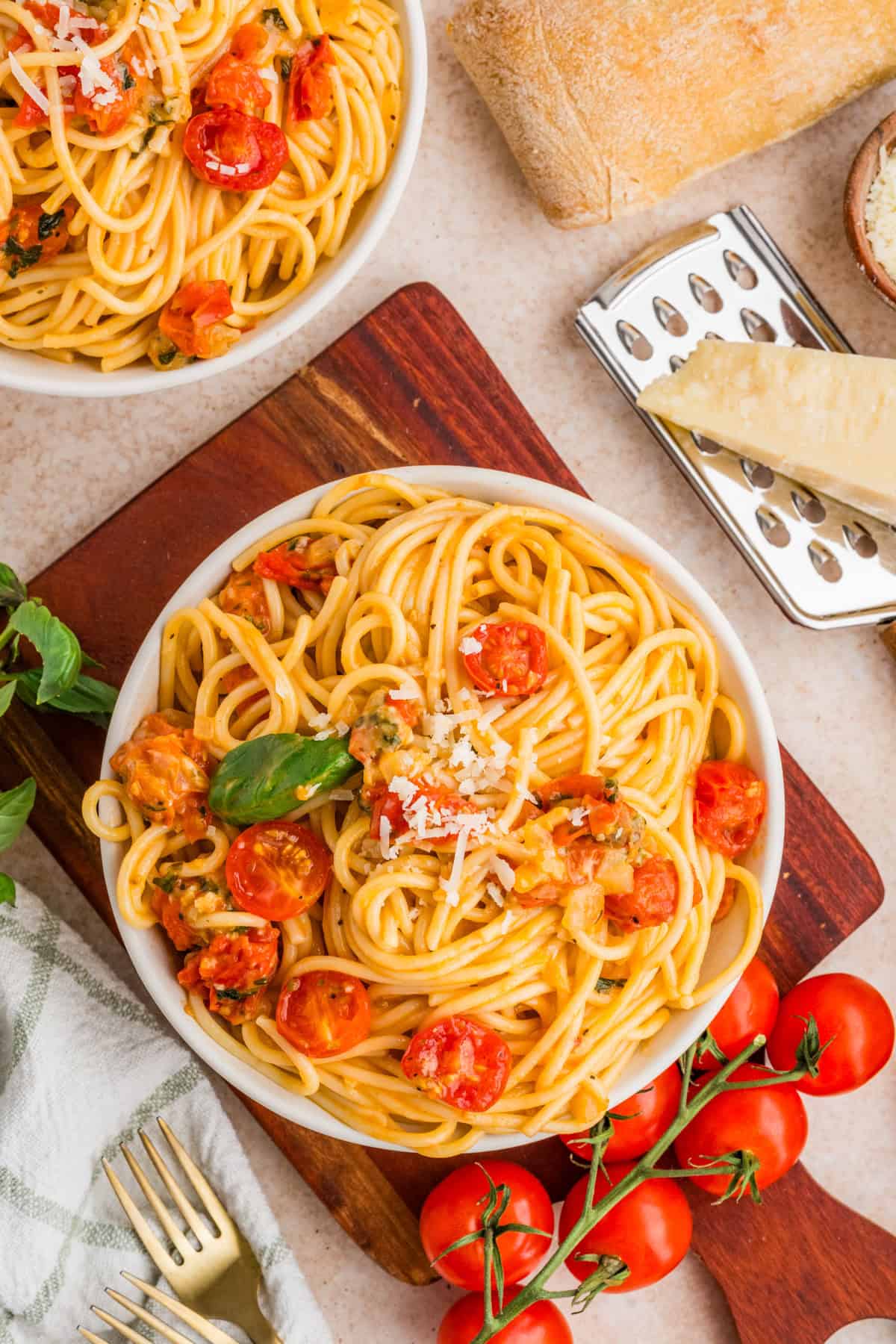
How to Make Cherry Tomato Basil Pasta
Step 1: Cook the pasta. Bring a large pot of heavily salted water to a boil. Cook pasta to al dente according to package directions. Before you drain it, scoop out at least 2 cups of pasta water and set it aside. This is important, don’t forget this step.
Step 2: Sauté the onion. While the pasta cooks, heat olive oil in a large pot or deep skillet over medium heat. Add the diced onion and cook for about 5 minutes, stirring occasionally, until it’s softened and translucent.
Step 3: Add garlic. Add the minced garlic and cook for 1 to 2 minutes more until fragrant. You want it golden and soft, not brown.
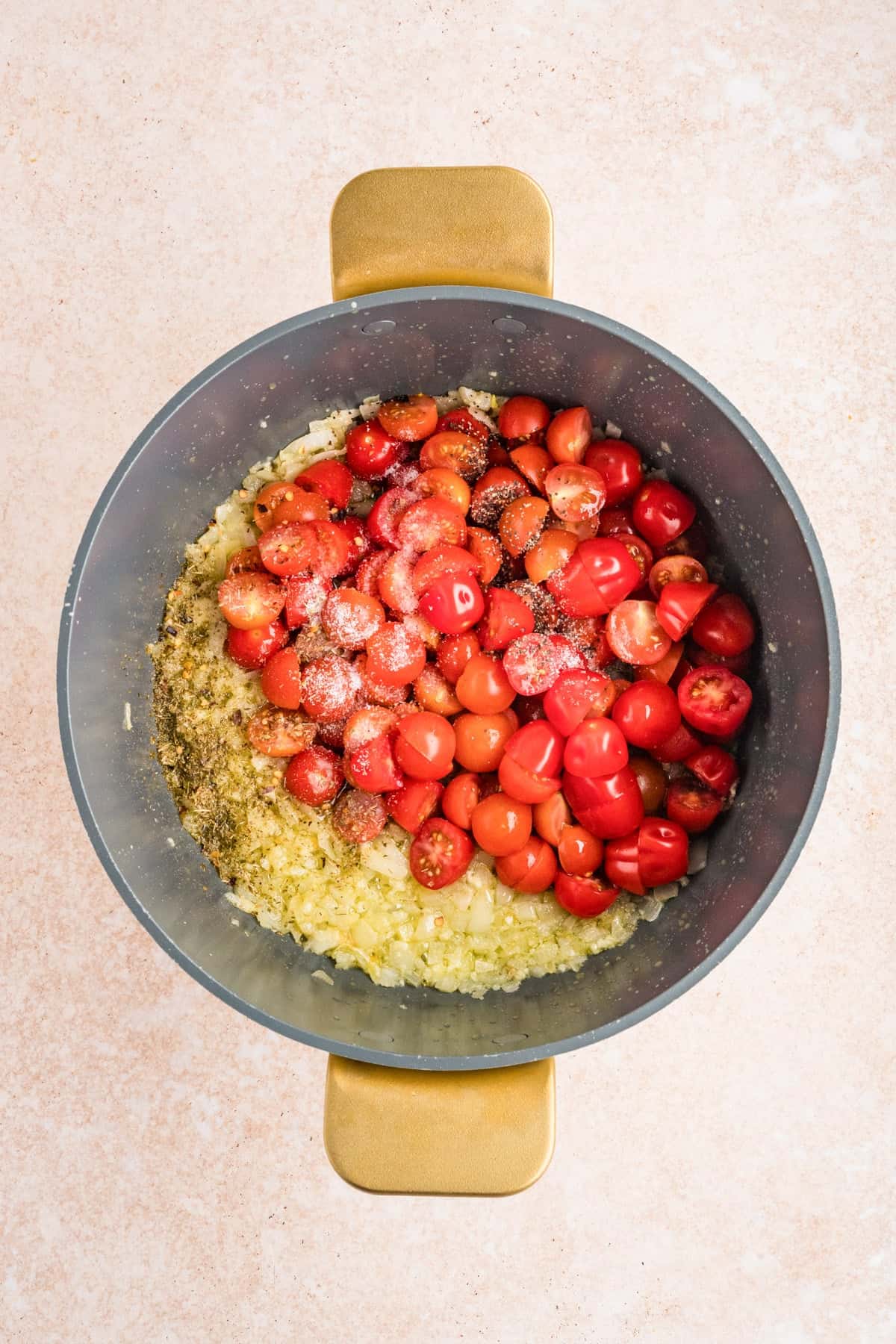
Step 4: Add tomatoes and seasoning. Add the halved cherry tomatoes, salt, oregano, black pepper, and red pepper flakes. Stir to combine. Cook for about 5 minutes over medium heat. See the note below about sputtering.
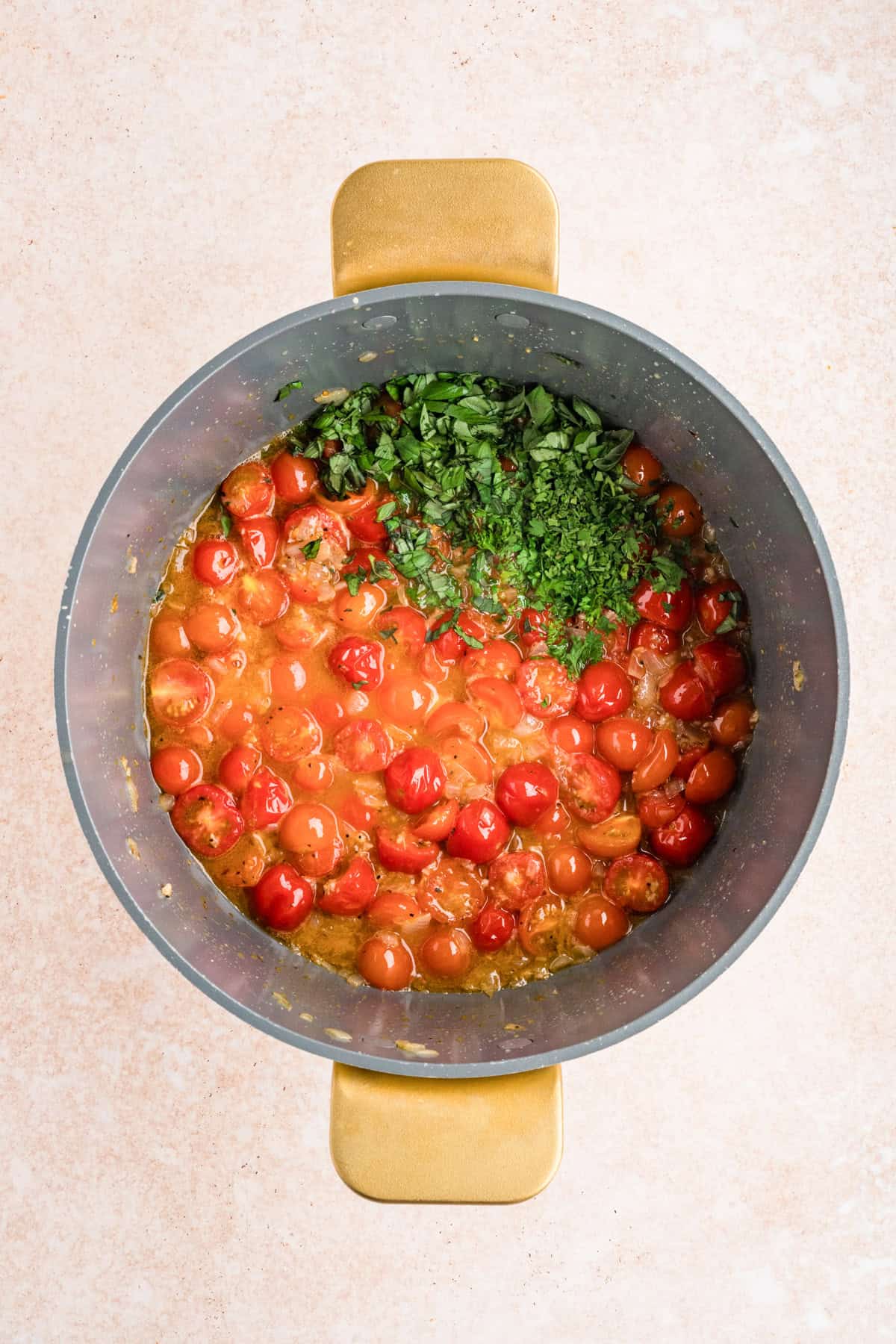
Step 5: Add the herbs. Stir in the basil and parsley and cook for another 5 minutes. The tomatoes should be fully broken down and jammy, with some texture remaining.
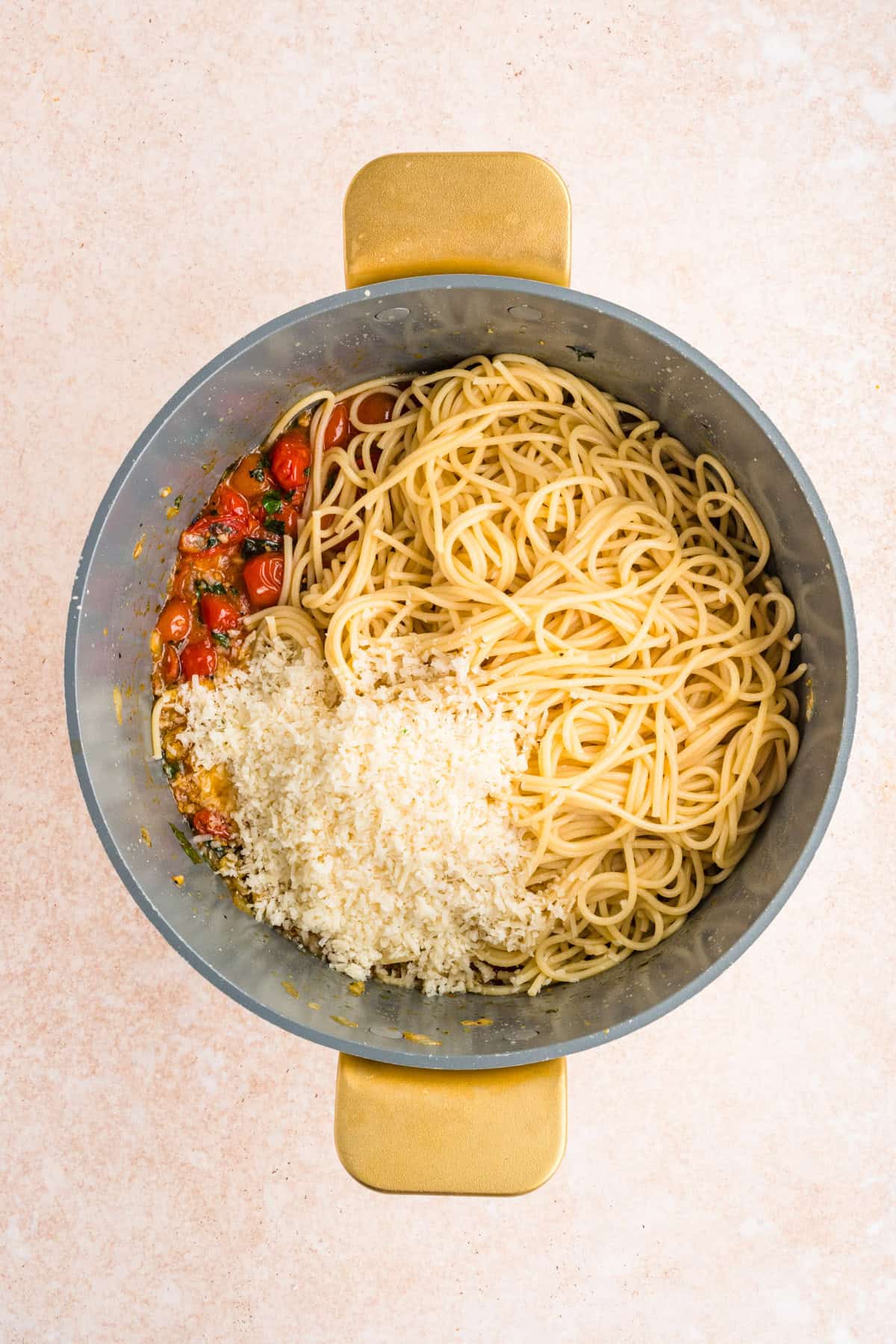
Step 6: Toss with pasta and parmesan. Add the drained pasta directly to the pot with the tomatoes. Add the parmesan and toss to coat. Slowly pour in about 2/3 cup of the reserved pasta water, using tongs to work it through the pasta. Keep tossing until you see a silky, glossy sauce forming around the noodles. Add more pasta water a splash at a time if the sauce looks too thick or the pasta starts sticking.
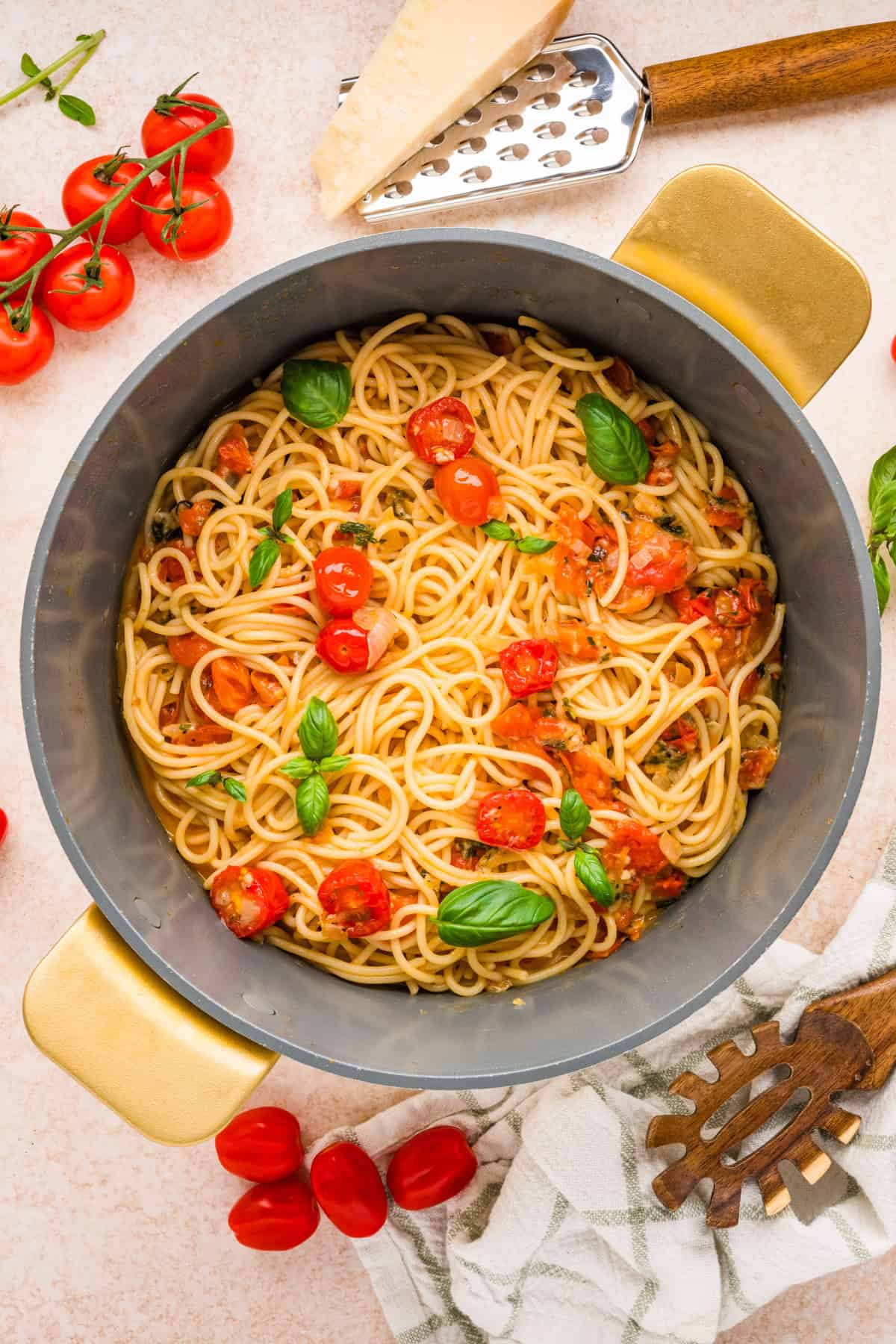
Step 7: Serve. Top with a little more parmesan and fresh basil leaves. Serve immediately.
The Trick to a Silky Sauce (It’s All About the Pasta Water)
This is the part that makes home cooks feel like they figured something out, because it really does feel like a trick the first time it works. When you cook pasta, the water fills up with starch. That starchy water, when you add it to the pan with your tomatoes and parmesan, acts as an emulsifier. It helps the olive oil, the tomato juices, and the cheese come together into a sauce that coats the pasta instead of just pooling at the bottom of the bowl.
The key is to add the pasta water gradually, tossing as you go. You’re looking for the moment when the sauce shifts from looking like it’s just coating the noodles loosely to looking like it’s hugging them. That’s when you know you’ve hit it. Reserve more water than you think you’ll need. A cup is the floor; two cups is better. You can always add more, but you can’t take it back.
The Sputtering Tomato Problem (and How to Avoid It)
Here’s the thing nobody tells you: hot cherry tomatoes in a pan will sputter. As they heat up and release their juice, you’ll get little pops and spatters of hot liquid. This is normal, but it also means a few things practically.
Lower the heat to medium-low as soon as the tomatoes start to bubble. You don’t need a screaming-hot pan for this step. Low and slow is actually better because it gives the tomatoes time to fully collapse and release all their sweetness.
Use a large, deep pan with high sides. A wide skillet works, but a deep sauté pan or a Dutch oven is even better because the sides protect you from the splatter. You can also partly cover the pan with a lid that’s slightly ajar for the first few minutes. This contains the mess while still letting steam escape so the sauce doesn’t get watery.
How to Make It a Meal
This pasta is fully satisfying on its own, but it’s also a great base if you want to add protein.
- Grilled chicken sliced over the top is the easiest move. A grilled Mediterranean chicken recipe works perfectly here.
- Shrimp is another great option. I like this Greek Shrimp Marinade. Cook them in the same pan before you start the sauce, set them aside, then add them back when you toss the pasta.
- For a vegetarian boost, white beans stirred in with the tomatoes add protein and a creamy texture that works really well with this sauce.
- On the side, a simple Lemon Arugula Salad Recipe with Parmesan Cheese or a Massaged Kale Salad with Lemon Dressing and some crusty bread for sauce-soaking rounds the meal out perfectly.
Storage, Reheating, and Next-Day Tips
- Store leftovers in an airtight container in the fridge for up to 4 days. The sauce will thicken overnight as the pasta absorbs it, which is honestly kind of great, the next-day pasta has more depth.
- To reheat, add a splash of water or olive oil to the pan and warm it over medium-low heat. Stir gently as it heats. The microwave works too, just cover it and add a small splash of water before heating.
- One note on make-ahead: if you know you’re going to have leftovers, you can also set aside a portion of the sauce before tossing it with pasta, then store them separately. The sauce freezes well for up to 3 months.
Recipe FAQ
Yes. Grape tomatoes are a little firmer and slightly less sweet, but they work well here. Just halve them the same way and follow the same cook time.
No, but it makes a noticeable difference. If you only have basil, use it. If you only have parsley, the sauce will taste a little more savory and less sweet. Either works.
You can skip the parmesan or use a dairy-free parmesan alternative. The sauce will be a little thinner and more brothy without it, but still very good. Add a little extra pasta water to help it come together.
Fresh really is much better here, but if you only have dried, use about 1 teaspoon and add it with the other spices rather than at the herb step.
Spaghetti is the classic choice here and it works really well because the thin, long noodles pick up the sauce in every strand. Linguine and bucatini are great options too. If you prefer a short pasta, rigatoni, penne, or fusilli all catch the sauce in their ridges and tubes. The texture is different, a little chunkier, but equally good. The one thing to keep consistent no matter what shape you use: cook it al dente. The pasta continues to absorb the sauce as it sits, so pulling it just before it’s fully soft gives you the best texture by the time it hits the table.
More Tomato Recipes
Tried this recipe? Leave a star rating and comment below! Subscribe to my newsletter or follow me on Facebook, Instagram, or Pinterest for the latest.
Cherry Tomato Basil Pasta
Ingredients
- 12 ounces pasta, cooked to al dente
- 4 tablespoons olive oil
- 1 small yellow onion, diced
- 4 cloves garlic, minced
- 2 pints cherry tomatoes, halved
- 1 teaspoon kosher salt, plus more to taste
- 1 teaspoon dried oregano
- 1/4 teaspoon coarse ground pepper
- 1/8 teaspoon crushed red pepper flakes
- 1/4 cup fresh basil, chopped, plus more for garnish
- 1 tablespoon fresh parsley, chopped
- 1 cup parmesan cheese, freshly finely shredded, plus more for garnish
Instructions
- Cook the pasta to al dente in a salted pot of water. Before straining, reserve 2 cups of pasta water.
- In a large pot, heat the olive oil over medium heat. Sauté the onion until softened, about 5 minutes. Add the garlic and sauté for an additional minute.
- Add the tomatoes, salt, oregano, pepper, and red pepper flakes. Cook for about 5 minutes until the tomatoes are softened. Turn the heat down as needed when the tomatoes start to sputter. Use a stirring spoon to crush some of the tomatoes as it cooks.
- Add the basil and parsley and cook for an additional 5 minutes. Add the cooked pasta and parmesan cheese and toss to combine. Slowly pour in 2/3 cup of the pasta water and use tongs to help mix the pasta together until a silky sauce comes together around the pasta. Add more water as needed. The longer it sits the thicker the sauce will get.
- Garnish with a sprinkle of basil and more parmesan, if desired.
Notes
- Use freshly grated parmesan, not pre-shredded. It melts into the sauce much more smoothly.
- Measure the basil as whole leaves before chopping. A quarter cup of already-chopped basil is way too much.
- Reserve more pasta water than you think you need. Two cups is the minimum. You can always add more but you cannot add it back once it is gone.
- Lower the heat to medium-low as soon as the tomatoes start to sputter and pop. High heat makes a mess and dries out the sauce.
- For a spicier pasta, increase the red pepper flakes to up to half a teaspoon.
- If you use regular table salt or sea salt instead of kosher salt, cut the amount in half.
- A mix of red, orange, and yellow cherry tomatoes adds extra flavor complexity and makes the dish look beautiful.
- If you want some whole tomato halves for garnish, pull a few out of the pan before you add the herbs and set them aside until serving.
- Pecorino Romano works as a parmesan swap. It is sharper and saltier but melts the same way.
- Store leftovers in an airtight container in the fridge for up to 4 days. The sauce thickens overnight as the pasta absorbs it, so add a small splash of water when reheating.
Nutrition
Nutrition information is automatically calculated, so should only be used as an approximation.









Cherry tomatoes are in abundance this time of year. This recipe was FAST (which is important with four teens in five sports), light, and DELICIOUS! This will become part of our weeknight rotation and was a hit with the fam.
I am so glad to hear that! And yes- fast is good! I have 3 boys in sports so I know what you are talking about! 🙂
Easy Summer Basil Tomato pasta dish the whole family will love!