
This post may contain affiliate links.
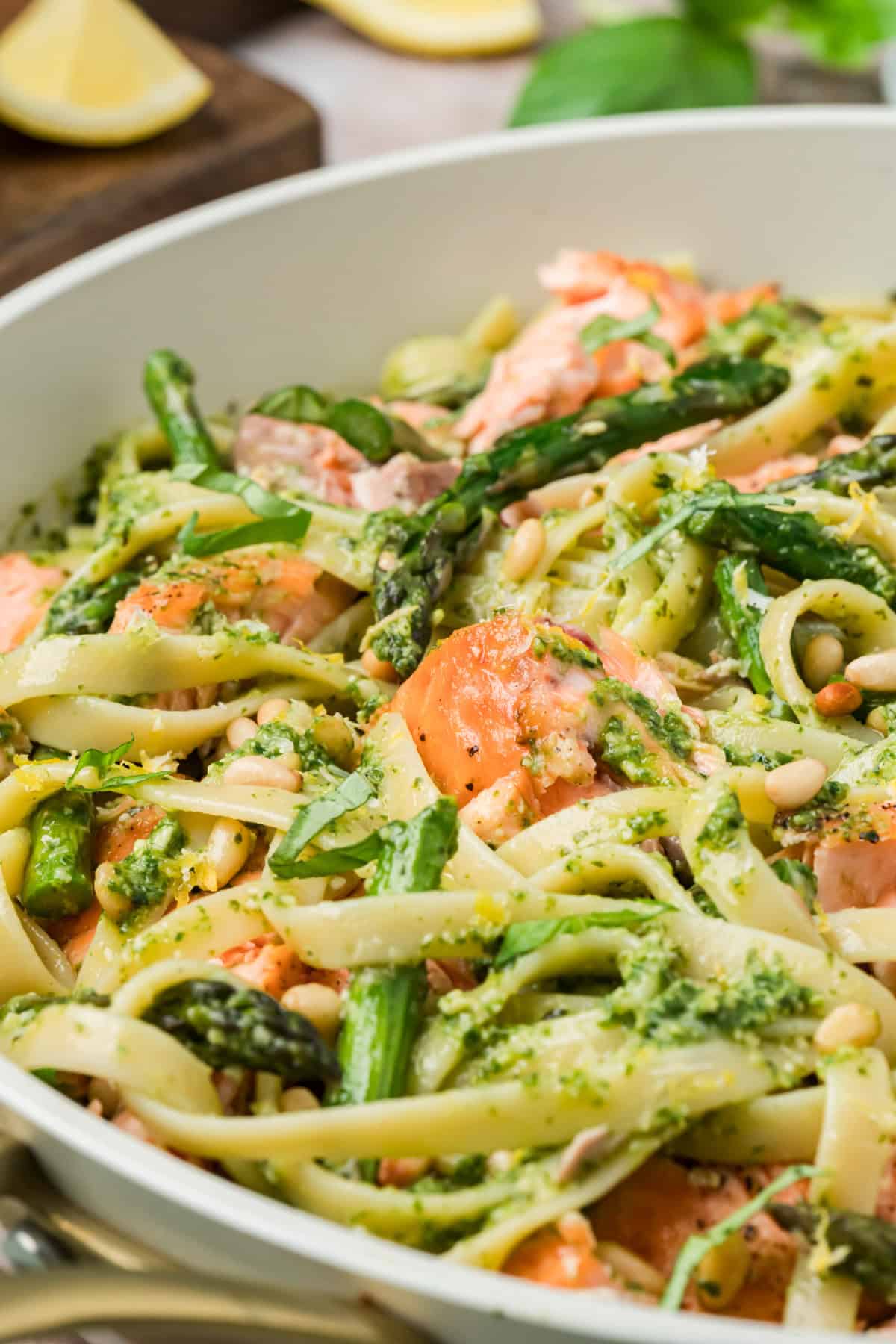
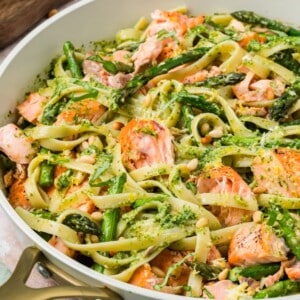
This pesto pasta with salmon is a quick weeknight meal. Pan-seared salmon with golden, crispy edges, fresh asparagus, and a silky basil pesto sauce with lemon, ready in 25 minutes and good enough to put on a restaurant menu.
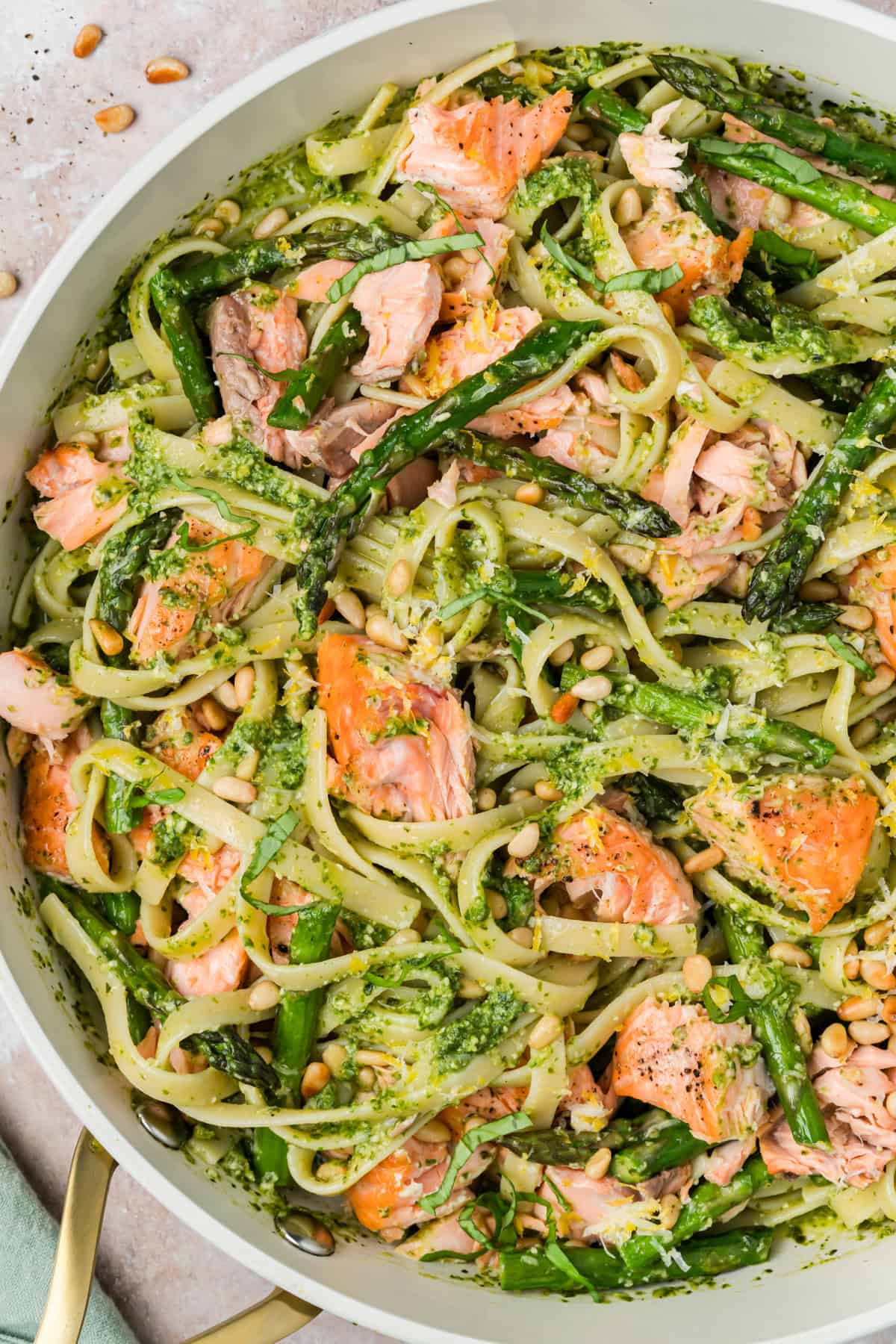
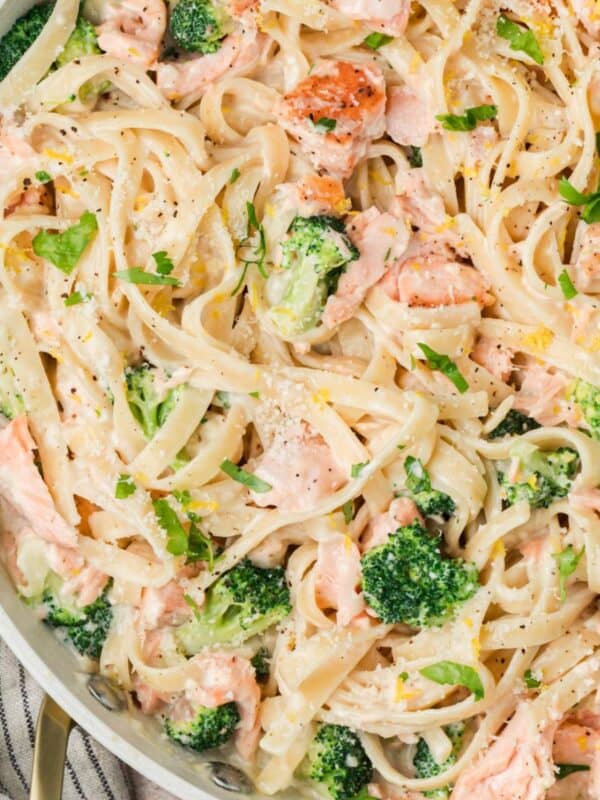
Pesto pasta is one of those dinners that never gets old in my house. But the second you add salmon to it? It turns into something you’d genuinely expect to see on a restaurant menu, and the whole thing comes together in 25 minutes on a Tuesday night. This pesto pasta with salmon hits that exact sweet spot: it feels a little special, it tastes incredible, and it is genuinely easy. No cream sauce, no complicated steps, just good basil pesto, perfectly seared salmon, bright lemon, and silky pasta that comes together in the time it takes to boil a pot of water. You might remember my Salmon Alfredo Pasta recipe I shared a few weeks ago. This one is similar but uses pesto as the sauce and is perfect for spring!
The asparagus is not filler. It adds color, a little bite, and it soaks up the pesto beautifully. And that reserved pasta water? That is the quiet hero of this whole dish, it is what turns the pesto from a thick spread into a sauce that actually coats every strand of pasta. If you love Mediterranean-inspired dinners that are fast and fresh, this one is going straight into your weeknight rotation.
Why This Pesto Pasta with Salmon Works

Here is what makes this salmon pasta dish stand out:
• The salmon is pan-seared, not baked, golden crispy edges, tender center. Texture matters here.
• The sauce is pesto-based, not cream-based. The basil flavor actually sings, and the lemon zest and juice keep it bright.
• That reserved pasta water is not optional. That one quarter cup of starchy water is what turns the pesto from a thick spread into a sauce that clings to every strand.

Ingredients
Here is what you are working with, and a few notes on each:
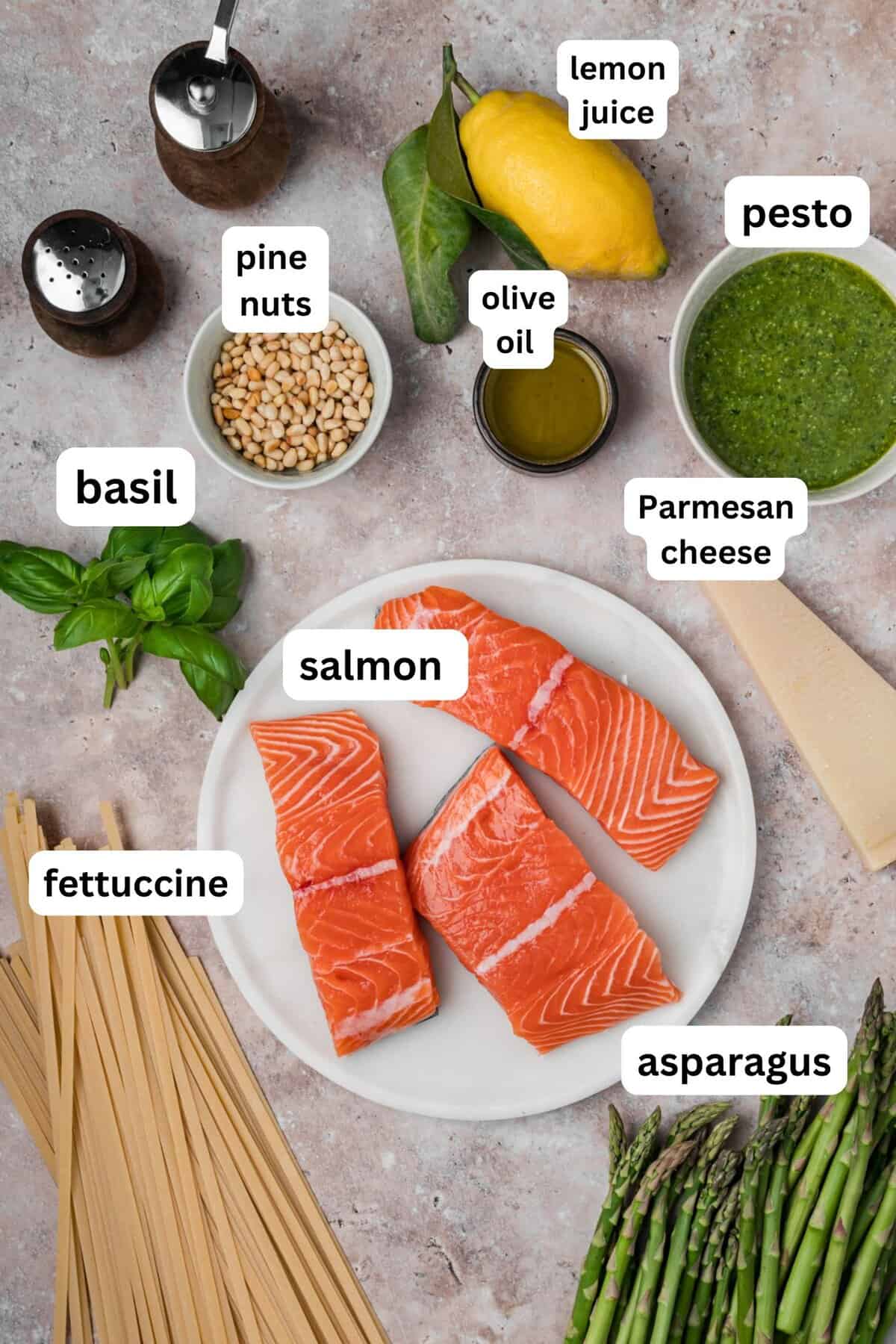
- Salmon: One large fillet or individual fillets both work. Pat it very dry before it hits the pan, that is the key to a golden sear instead of a grey steam. Wild-caught sockeye or Atlantic salmon are both great here.
- Long pasta: Fettuccine or linguine are my top picks for this recipe. The long strands pick up the pesto sauce beautifully and make the whole bowl feel cohesive. Penne or fusilli also work if that is what you have.
- Basil pesto: Use your favorite store-bought brand or make a quick homemade version (recipe in the notes below). A good jarred pesto goes a long way here, just make sure it is one you actually like eating by the spoonful.
- Fresh asparagus: Trim the woody ends and cut into 2-inch pieces. This cooks fast, you want it bright green and just tender, not limp.
- Reserved Pasta Water: ½ cup pasta water, reserved before draining (you will use ¼ cup for the sauce)
- Lemon juice + zest (1 tablespoon juice, 1 teaspoon zest): Do not skip this. The lemon is what lifts the whole dish and keeps it from feeling heavy.
- Parmesan cheese: Freshly grated melts into the sauce. Pre-shredded from a bag tends to clump. Worth the extra 30 seconds.
- Toasted pine nuts (optional, for serving): Just 2 to 3 minutes in a dry pan makes them golden and nutty. A really nice finishing touch.
Substitutions and Variations
- Pasta shape: Fettuccine and linguine are ideal, but penne, fusilli, or rotini all work. Short shapes hold onto the chunky bits of salmon and asparagus nicely.
- Swap the asparagus: Cherry tomatoes, green beans, cauliflower baby spinach (toss it in at the very end), or broccolini all work well here.
- No pine nuts? Skip them or swap in toasted walnuts or sliced almonds. The crunch factor is worth it if you can manage it.
- Make it dairy-free: Use a dairy-free pesto and skip the Parmesan, add a squeeze of extra lemon instead to compensate for brightness.
- Canned salmon: In a pinch, two cans of good-quality wild-caught salmon work. You will skip the searing step, just drain and flake it straight into the pasta.
- Gluten-free: Swap in your favorite gluten-free pasta. Brown rice pasta or chickpea pasta both work well with this sauce.
- Want a creamy sauce instead? Try swapping in my creamy dill sauce for a different flavor profile.”
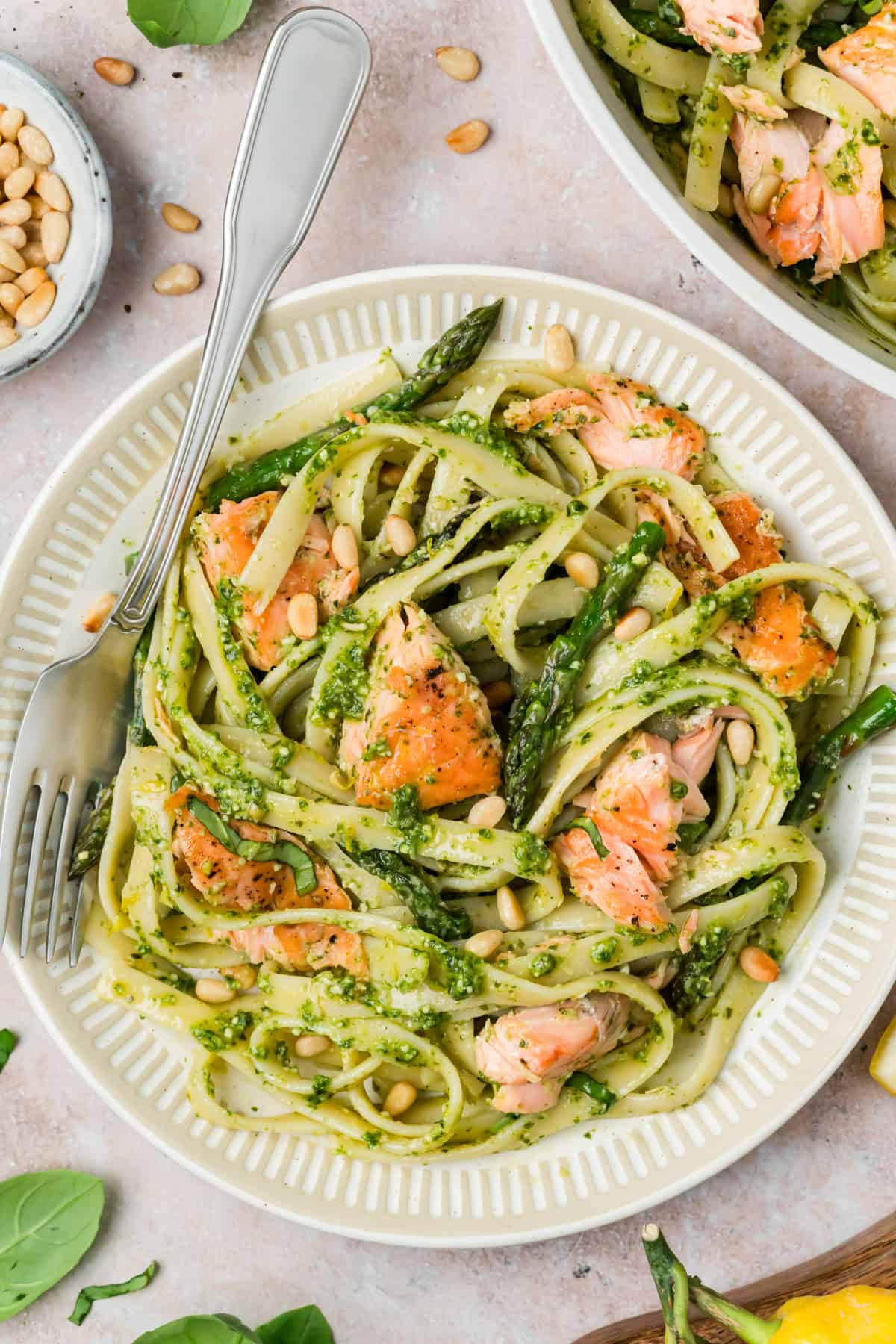
How to Make Salmon Pesto Pasta
Here is the step-by-step: it all comes together in one skillet and one pot at the same time.
Step 1: Cook the pasta. Bring a large pot of well-salted water to a boil. Add pasta and cook until just al dente according to package directions. Before draining, scoop out about ½ cup of pasta water and set it aside, you will use ¼ cup (or more) for the sauce.
Step 2: Cook the asparagus. While the pasta cooks, heat 1 tablespoon of olive oil in a large skillet over medium-high heat. Add the asparagus pieces and season with salt and pepper. Cook for 2 to 3 minutes, stirring once or twice, until bright green and just tender with a little bite. Transfer to a plate.
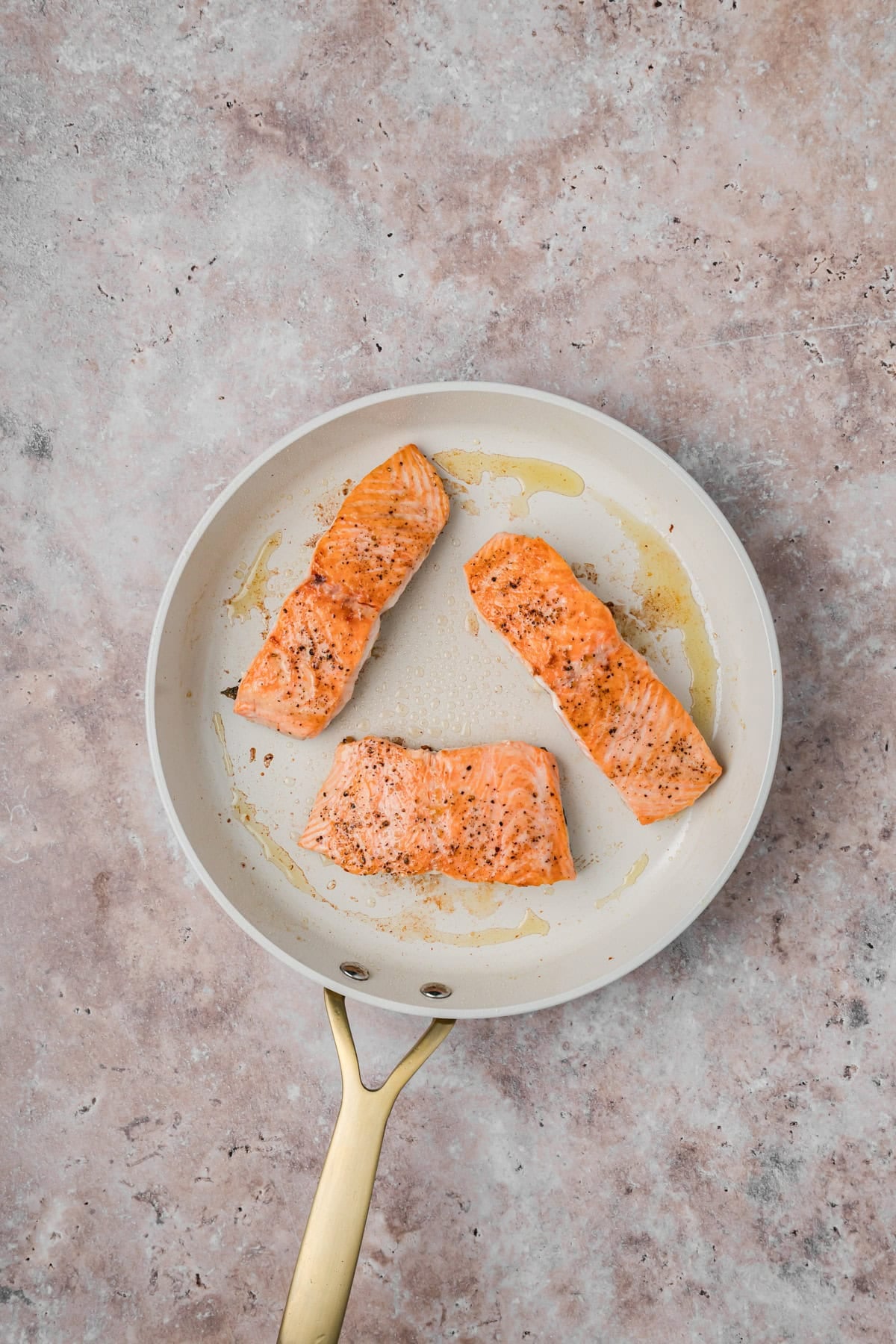
Step 3: Sear the salmon. Pat the salmon very dry with paper towels (this is non-negotiable for a good sear). Season both sides with salt and pepper. Add the remaining tablespoon of olive oil to the same skillet over medium-high heat. Add the salmon and cook for about 5 minutes per side, until the flesh is golden on the outside and just opaque through the center. It should flake easily when pressed gently with a fork. Remove from the pan and let it rest for a few minutes, then break it into large, rustic pieces.
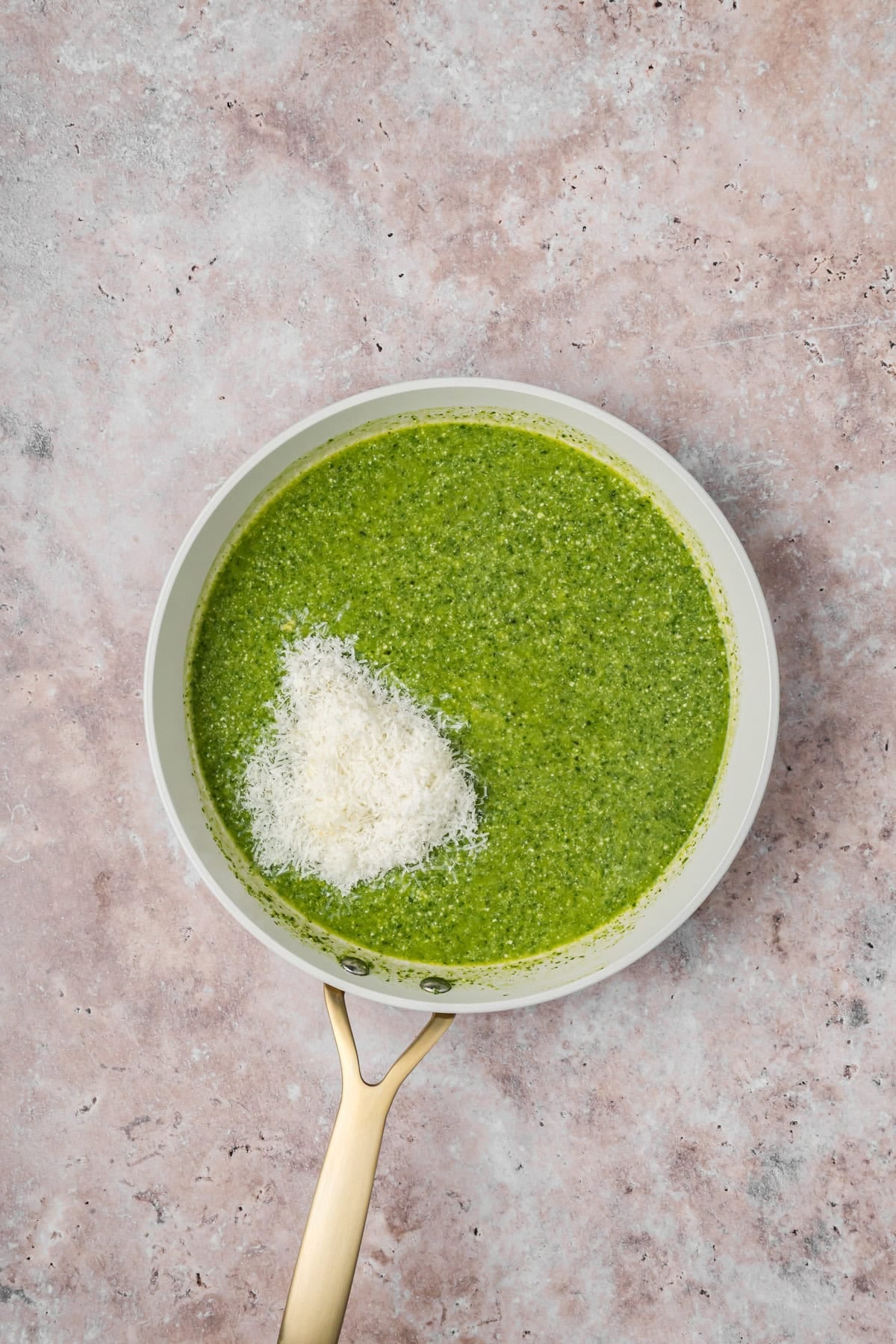
Step 4: Build the sauce. In the same skillet over low heat, combine the pesto, lemon juice, lemon zest, and ¼ cup of the reserved pasta water. Stir until smooth and warmed through, you are just bringing it together, not cooking it.
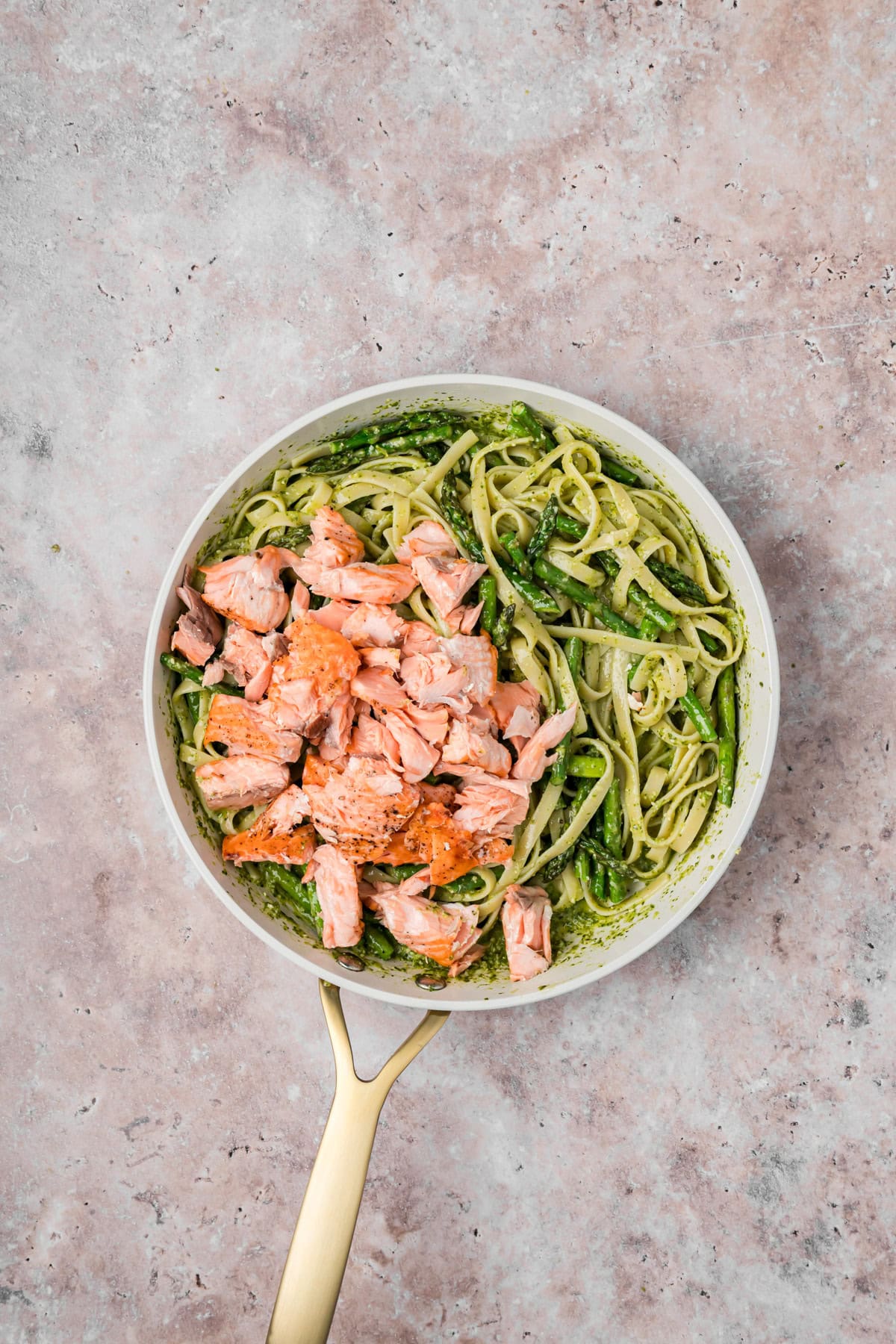
Step 5: Toss everything together. Add the drained pasta to the skillet and toss well to coat every strand. Stir in the Parmesan cheese. The sauce should be smooth and silky, if it looks too thick, add more pasta water a splash at a time until it comes together. Gently fold in the asparagus and salmon pieces.
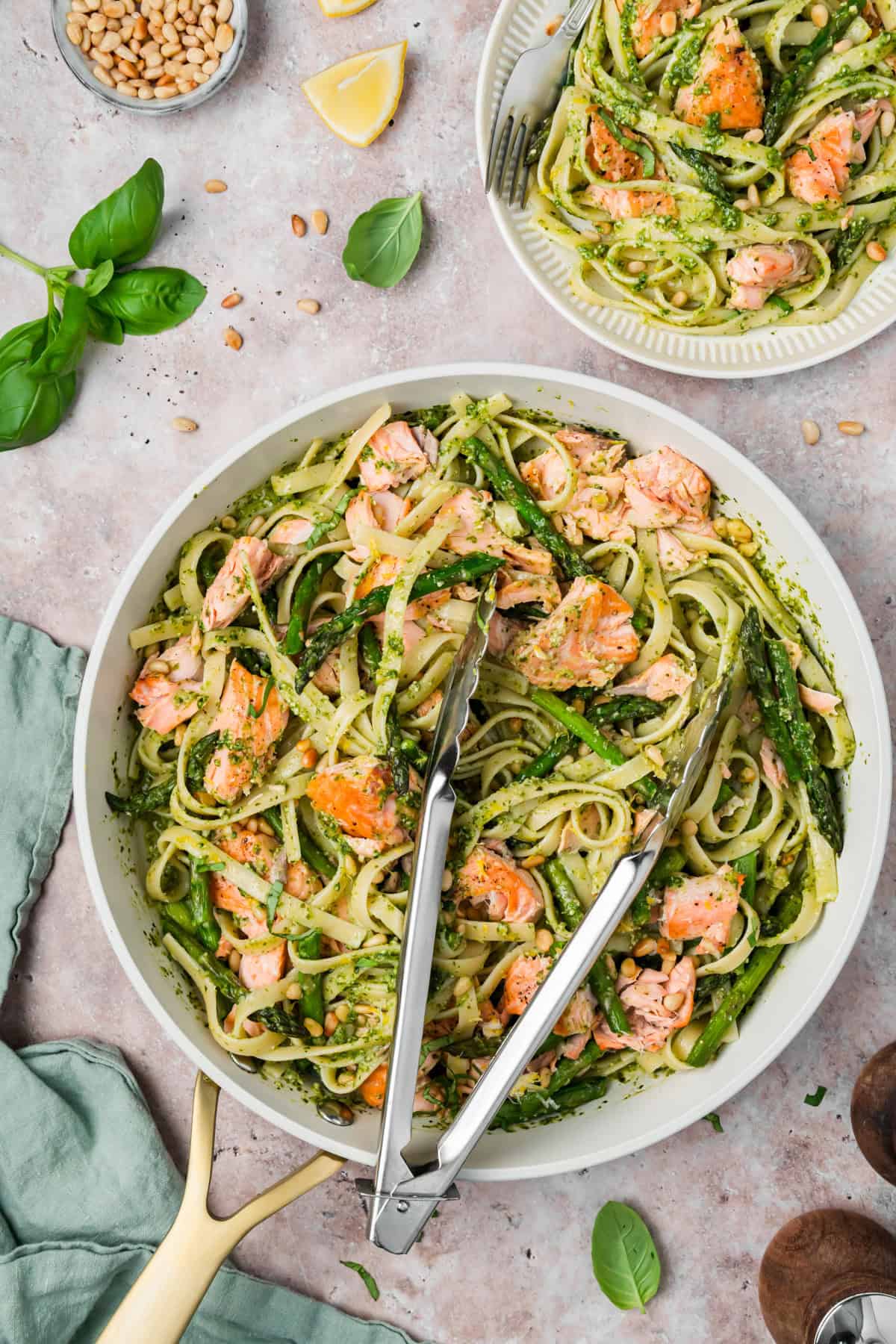
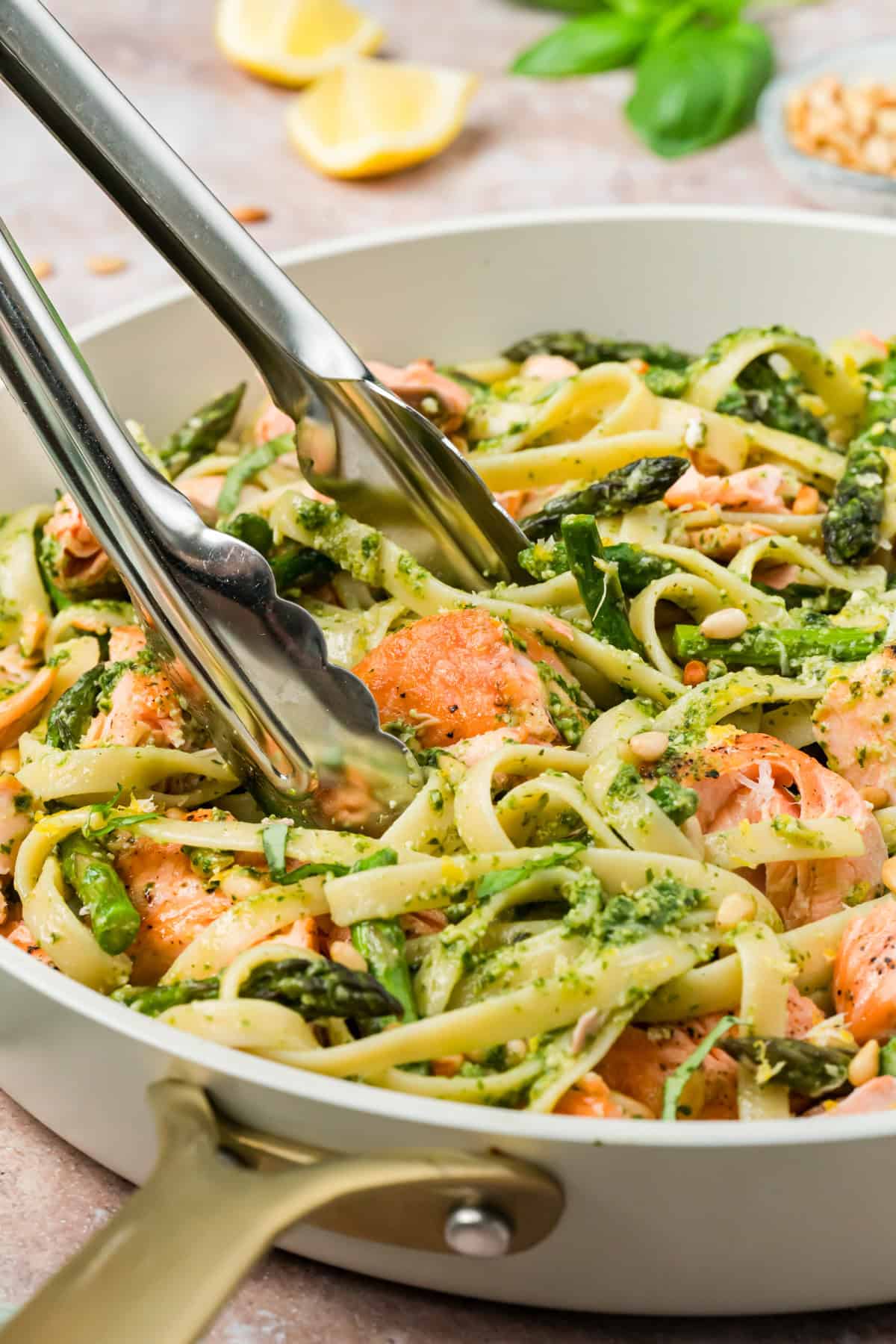
Step 6: Serve immediately. Divide between bowls and top with extra Parmesan, lemon zest, and toasted pine nuts if using. A few fresh basil leaves on top never hurt either.
Recipe Tips
- Dry the salmon before searing. Any moisture on the surface will steam the fish instead of searing it. Paper towels, 30 seconds, makes a real difference.
- Do not move the salmon around in the pan. Let it sit undisturbed until it releases naturally from the pan, about 5 minutes. If it sticks, it is not ready to flip.
- The asparagus should be bright, not grey. Pull it from the pan while it still has some snap. It will soften slightly when you fold it into the warm pasta.
- Save more pasta water than you think you need. You will use ¼ cup minimum, but if your pesto is thick or your pasta absorbs the sauce quickly, you will want more on hand.
- Break the salmon into big pieces, not little flakes. You want chunks of salmon in every bite, not salmon confetti throughout the pasta.
- Taste before serving. Pesto saltiness varies by brand. Taste the sauce before adding extra salt.
Jarred Pesto vs. Homemade: What Works Best Here
Both work great in this recipe. Here is how to think about it:
- Jarred pesto: Totally fine and what I use on most weeknights. Look for one made with olive oil (not canola oil), real Parmesan, and pine nuts. Costco’s Kirkland brand and Rana are both solid. If yours is very lemony, dial back the extra lemon juice in the sauce.
- Homemade pesto: If you have 10 minutes and a food processor, it is worth making. Blend 2 cups fresh basil, 2 tablespoons pine nuts, 1 small garlic clove, ⅓ cup olive oil, ¼ cup grated Parmesan, 1 teaspoon lemon juice, and a pinch of salt until smooth. The flavor is brighter and more vibrant.
What to Serve with Pesto Pasta with Salmon
This is a complete meal on its own, but if you want to round it out:
- A simple arugula salad with lemon vinaigrette, the peppery greens are a perfect contrast to the rich pesto pasta.
- Crusty bread to scoop up any extra sauce left in the bowl.
- A vegetable side like these Simple Garlic Parmesan Green Beans or these Balsamic Mushrooms are a great side.
If you like salmon recipes you also might like this Mediterranean Baked Salmon or these Air Fryer Salmon Bites. If you like pesto recipes try this Shrimp Pesto Pasta.
Storage and Reheating
- Refrigerator: Store leftovers in an airtight container for up to 3 days.
- Reheating: Gently reheat in a skillet over low heat with a splash of water or olive oil to loosen the sauce. The microwave works too, just use 50% power and add a little splash of water to keep it from drying out.
- Freezing: Not recommended. Pesto-based pasta sauces and cooked fish do not hold up well in the freezer.
- Meal prep note: You can cook the pasta and asparagus ahead and store them separately. Sear the salmon fresh for the best texture.
Recipe FAQ
Yes, just make sure it is fully thawed and patted very dry before searing. Frozen salmon that is even slightly damp will steam instead of sear.
Add more pasta water, a splash at a time, over low heat and toss. The starchy water emulsifies with the pesto and olive oil to create a silky sauce. Do not skip saving it.
Absolutely. Two 6-oz cans of wild-caught salmon work great as a pantry swap. Skip the searing step and fold it straight in at the end.
Long pasta like fettuccine or linguine is ideal because it wraps around the sauce and coats beautifully. But honestly, use what you have. Penne and fusilli are both great with this.
More Salmon Recipes
Seafood
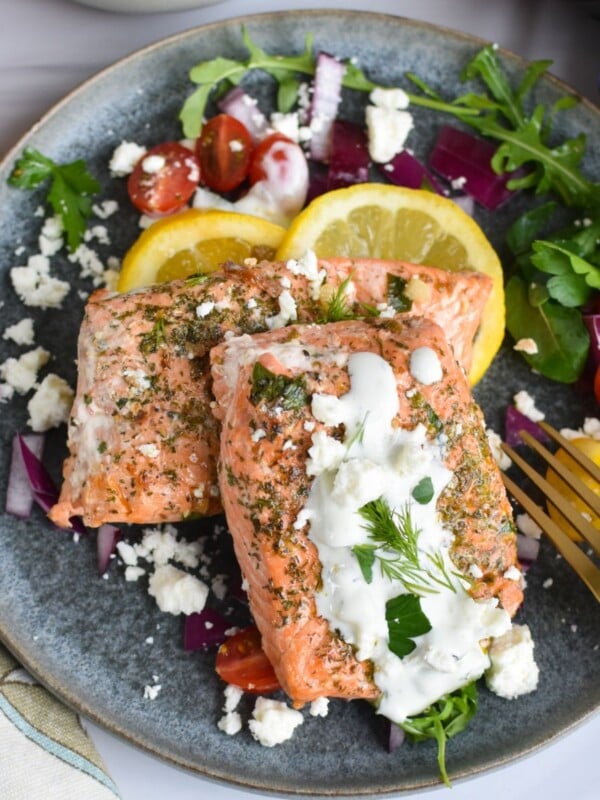
Pan Seared Greek Salmon
Seafood
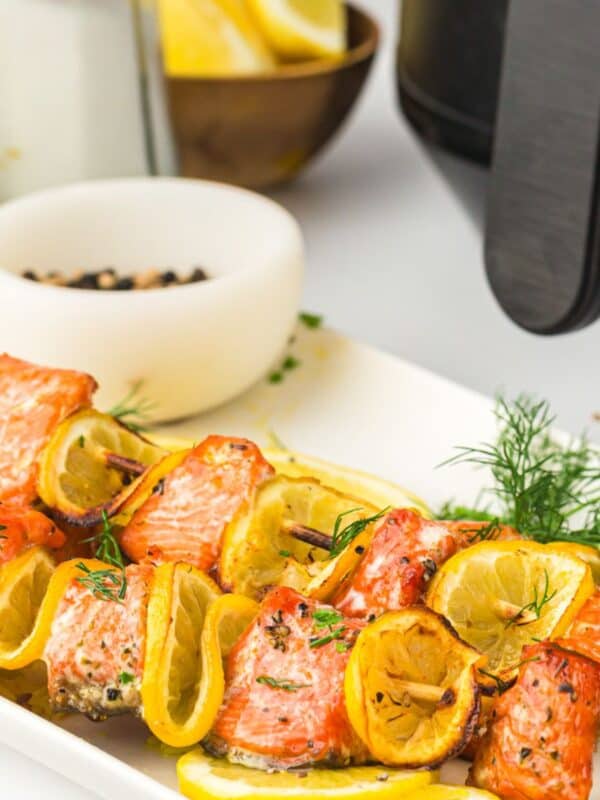
Easy Lemon Salmon Kabobs
Seafood
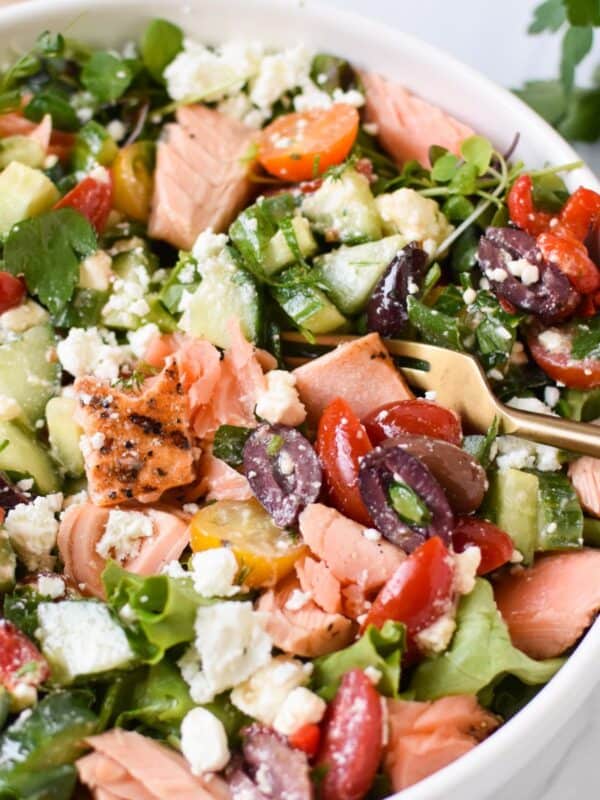
Mediterranean Salmon Bowl
Seafood
Marry Me Salmon
Tried this recipe? Leave a star rating and comment below! Subscribe to my newsletter or follow me on Facebook, Instagram, or Pinterest for the latest.
Pesto Pasta with Salmon (Easy 25-Minute Dinner)
Ingredients
For the pasta:
- 10 ounces long pasta (such as fettuccine or linguine)
- 1/2 pound fresh asparagus, trimmed
- 2 tablespoons olive oil, divided
- 1 pound salmon fillets
- Salt and black pepper, to taste
For the sauce:
- 2/3 cup basil pesto
- 1 tablespoon fresh lemon juice
- 1 teaspoon lemon zest
- 1/4 cup reserved pasta water, plus more if needed
- 1/3 cup freshly grated Parmesan cheese
For serving:
- 2 tablespoons toasted pine nuts, optional
- Fresh basil leaves, optional
- Extra lemon zest and Parmesan cheese
Instructions
- Bring salted water to a boil in a large pot. Add pasta and cook until al dente, according to package instructions. Reserve about ½ cup of the cooking water. Drain the pasta and set aside.
- Cut asparagus into 2-inch pieces.
- Heat 1 tablespoon of olive oil in a large skillet over medium-high heat. Add the asparagus and season lightly with salt and pepper. Cook for 2-3 minutes, until bright green and just tender. Transfer to a plate.
- Pat salmon dry using paper towels and season with salt and pepper. Heat the remaining tablespoon of olive oil in the same skillet. Add the salmon and cook for about 5 minutes per side, until golden and cooked through.
- Remove from the pan and let it rest for a few minutes, then break it into large pieces.
- In the same skillet, combine pesto, lemon juice, lemon zest, and ¼ cup of the reserved pasta water over low heat. Add the cooked pasta and toss to coat well.
- Stir in Parmesan cheese. The sauce should be smooth and coat the pasta well. Add more pasta water, if needed. Gently mix in the asparagus and salmon.
- Divide the pasta between bowls and top with extra lemon zest, Parmesan cheese, and toasted pine nuts (if using).
Notes
- You can use either store-bought or homemade pesto in this recipe. To make a quick homemade version, blend 2 cups fresh basil, 2 tablespoons pine nuts, 1 small garlic clove, ⅓ cup olive oil, ¼ cup grated Parmesan, 1 teaspoon lemon juice, and a pinch of salt until smooth.
- Long pasta works especially well here, as it coats nicely with the sauce. However, short shapes like penne or fusilli can also be used and work just as well.
- If using pine nuts, toast them for a couple of minutes until lightly golden. They taste better this way and become crunchy.
- Keep an eye on the asparagus so it doesn’t overcook. It should stay bright green and slightly firm.
- Leftovers can be stored in an airtight container in the refrigerator for up to 3 days. Reheat in a skillet or in the microwave with a splash of water or olive oil to loosen the sauce.
Nutrition
Nutrition information is automatically calculated, so should only be used as an approximation.









This was delicious. My family loved this! Wonderful flavors.
I am so glad to hear that!
My family loved this!
I am so happy to hear that!
A quick weeknight meal- the pesto is so good in this!