
This post may contain affiliate links.
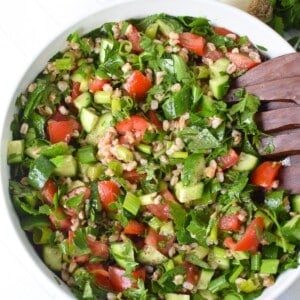
This farro tabbouleh salad takes everything you love about classic Lebanese tabbouleh and makes it heartier with nutty, chewy farro. Fresh parsley, mint, tomato and cucumber come together in a bright lemon garlic vinaigrette that gets better as it sits.
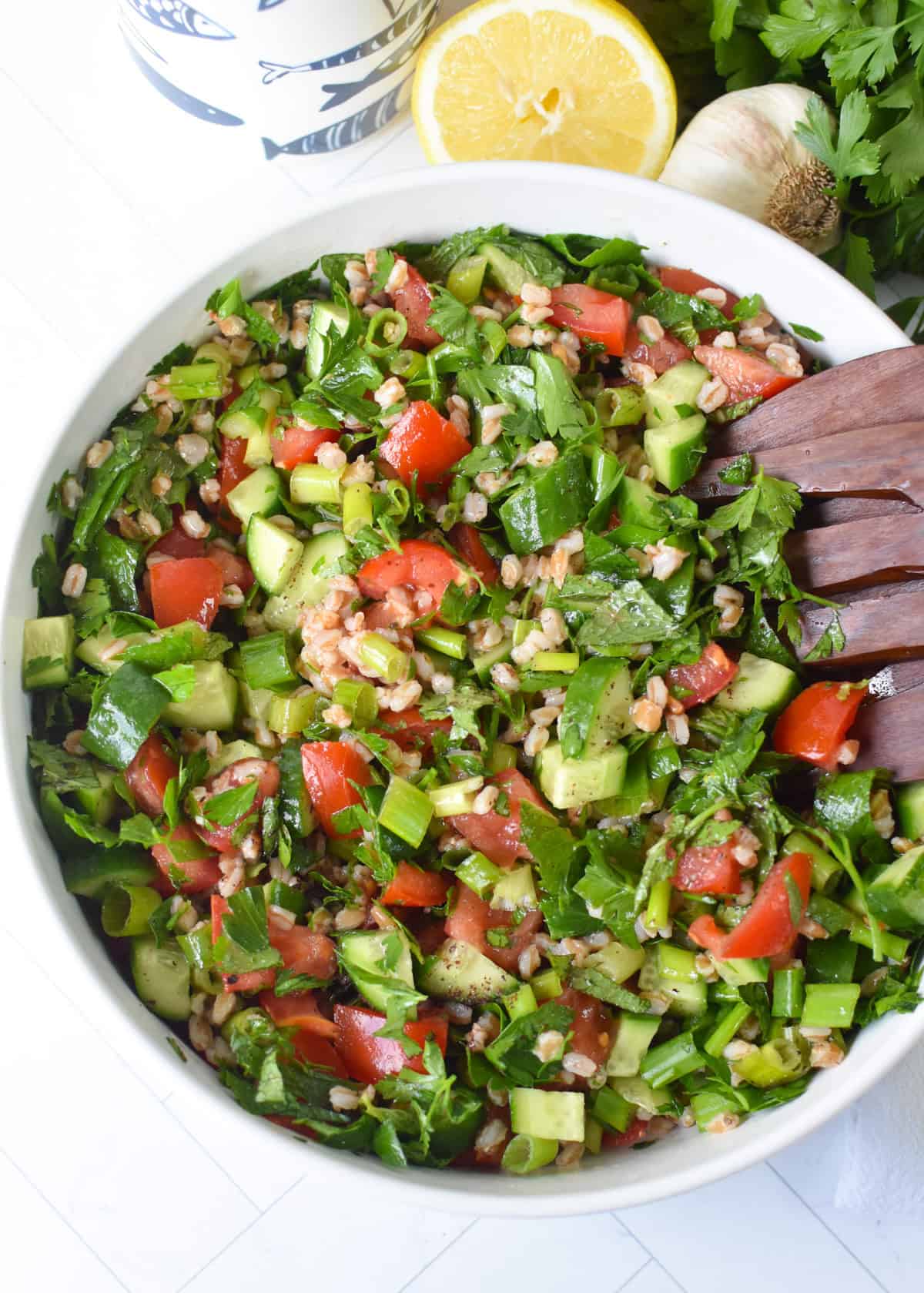
Growing up, tabbouleh was just part of life. My Lebanese great-grandma’s recipe made it over from Lebanon and it never left our family table. We made it in summer. We made it in winter. We made it for holidays and random Tuesday nights when dinner needed a fresh, bright side. So when I started experimenting with farro as the base instead of bulgur wheat, I had one rule: it still has to taste like tabbouleh. Not a grain bowl. Not a Mediterranean salad with tabbouleh vibes. The real thing, just heartier.
This farro tabbouleh salad nails that. The herb ratio is still herb-forward the way it should be, the lemon is bright, and the farro brings this satisfying, chewy bite that makes it feel more like a meal. It is one of those salads that actually gets better as it sits, which means it is basically made for meal prep. If you love Lebanese tabbouleh recipe, this one is a natural next step.
Why Farro Works So Well in Tabbouleh

Most grain swaps in tabbouleh water it down. Quinoa gets mushy. Rice is too soft. Cauliflower is great but not the same vibe. Farro is different.
Semi-pearled farro has a nutty, slightly earthy flavor and a chewy texture that actually stands up to the lemon dressing without going soggy. It soaks in flavor instead of losing structure, which means this salad tastes just as good on day three as it does fresh. Bulgur is wonderful and traditional, but if you want something more substantial, farro is the move.
It also has a naturally wheaty, hearty quality that keeps this salad feeling like a real meal rather than just a side.
One thing to know: farro and bulgur are both wheat-based, so this is not a gluten-free swap. If you need that option, quinoa is your best bet. I actually have a Greek quinoa tabbouleh recipe you can check out.

Ingredients You’ll Need
Here is what goes into this farro tabbouleh salad. Nothing unusual, but quality matters here since the ingredients are simple and front and center.
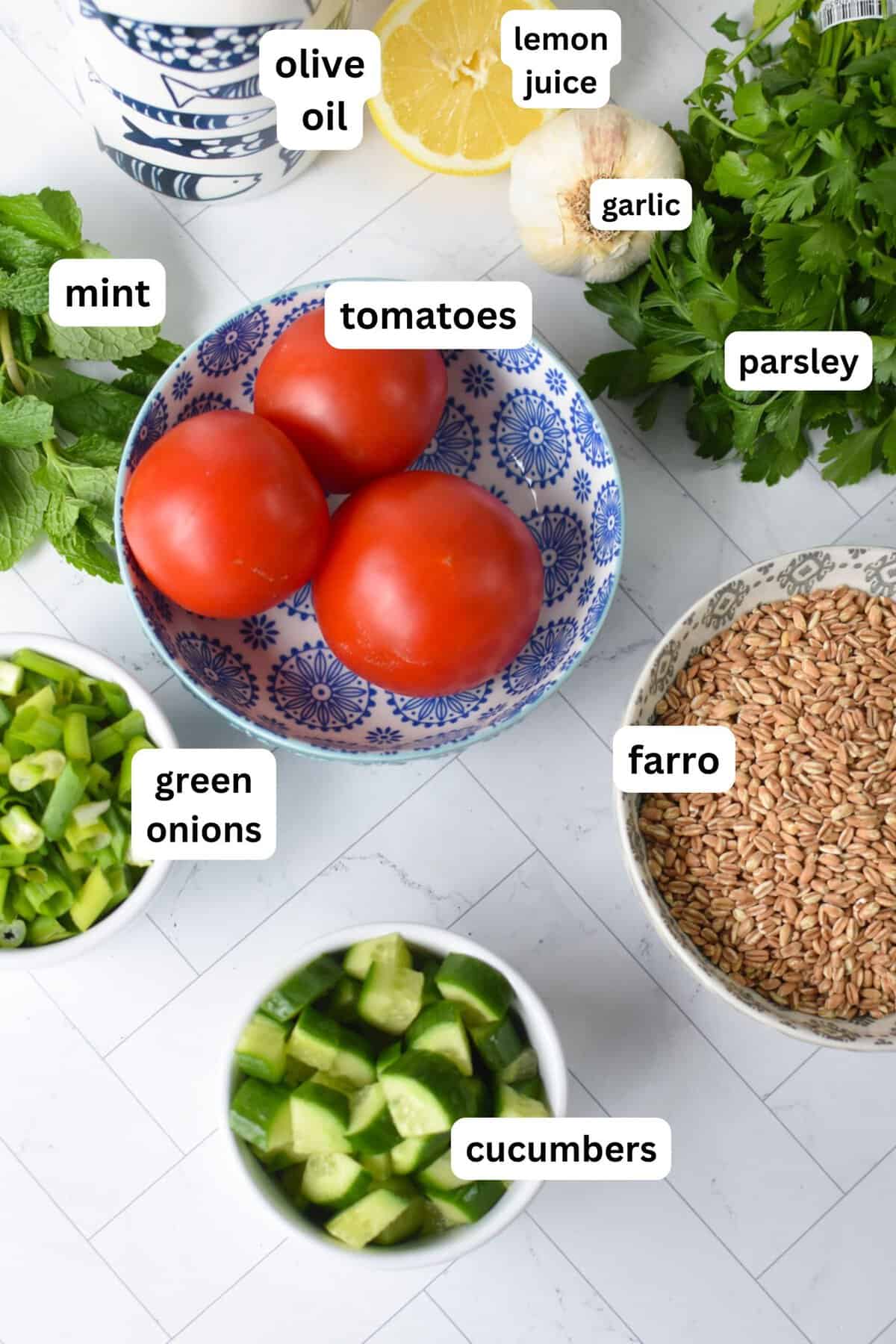
- Farro: Use semi-pearled farro. It cooks faster than whole farro and has the best texture for salads, chewy but not tough. You will find it at most grocery stores near the rice and grains, sometimes in the natural foods section.
- Fresh parsley: You can use either curly or flat-leaf Italian parsley. You need two large bunches. Do not skimp on this. The herbs are what make it taste like tabbouleh.
- Fresh mint leaves: A small amount goes a long way. It adds brightness that plays well with the lemon.
- Green Onions: Chop the green and white parts of the green onions.
- Roma tomatoes: Roma tomatoes give you more control over the dice. Seed them to keep the salad from getting watery.
- English cucumber: Seeded and diced small. English cucumbers have thinner skin so you can skip peeling them.
- The lemon vinaigrette: Fresh lemon juice, good extra virgin olive oil, garlic, salt, pepper, and a small pinch of sumac if you want.
Modifications and Variations
One of the best things about this farro tabbouleh salad is how easy it is to adapt. Here are the most useful swaps depending on what you have on hand or how you are eating.
- Make it gluten-free: Farro is a wheat grain, so swap it out for quinoa to keep all the same flavors without the gluten. Cook the quinoa according to package directions, cool completely, and use a 1:1 ratio.
- Add protein: Toss in a can of rinsed chickpeas for a plant-based protein boost that fits right in. Grilled chicken, shrimp, or salmon also pair really well and turn this into a complete meal.
- Change up the vegetables: The base is flexible. Additions that work well: kalamata olives for a briny punch, sun-dried tomatoes for deeper tomato flavor, roasted red peppers for sweetness, artichoke hearts for a heartier bite, or sliced green onions instead of red onion for a milder flavor.
- Add avocado: Diced avocado folded in right before serving adds a creamy richness that plays nicely against the lemon dressing. Add it last and serve right away since it does not hold overnight.
- Turn it into a bowl: Serve the farro tabbouleh over a Mediterranean Salmon Bowl or a Easy Mediterranean Hummus Bowl.
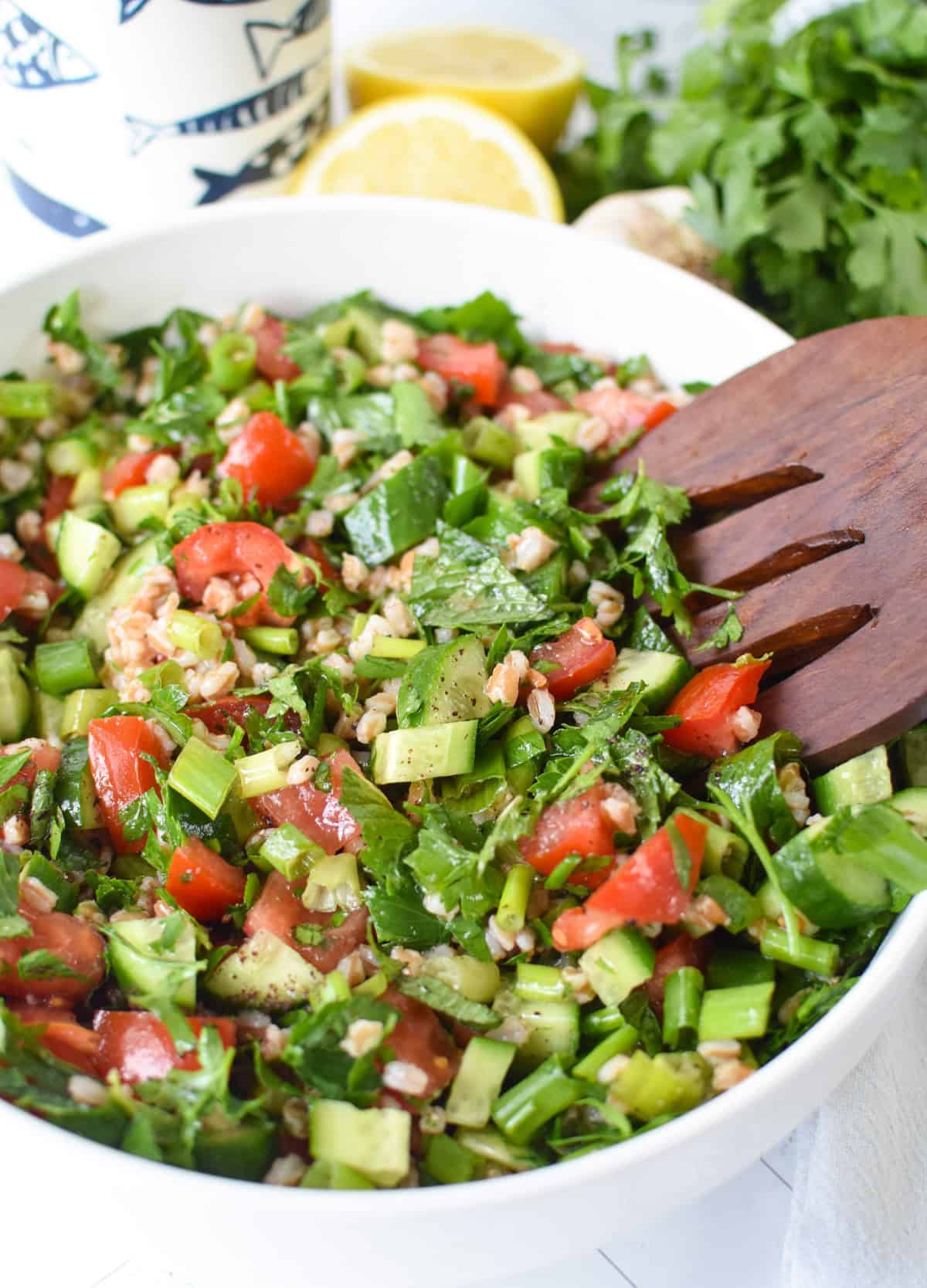
How to Make Farro Tabbouleh
Step 1: Cook the farro. Add farro to a pot with salted water or low-sodium broth. Bring to a boil, reduce to a simmer, and cook until al dente, about 25-30 minutes. You want it chewy, not mushy. Drain well and spread it out on a sheet pan to cool completely. Warm farro will wilt the herbs and make the salad soggy.
Step 2: Salt the tomatoes and cucumber. While the farro cools, dice your tomatoes and cucumber, add a pinch of salt, and let them sit in a colander for about 10 minutes. This draws out excess liquid so your salad stays fresh instead of watery. Pat them dry before adding.
Step 3: Chop the herbs. This step matters more than most people think. The parsley and mint should be chopped finely enough that every single bite has herb in it. Run your knife through both until they are almost fluffy. This is the difference between a grain salad with some herbs thrown on top and a real tabbouleh.
Step 4: Make the dressing. Whisk together lemon juice, olive oil, garlic, salt, pepper, and sumac in a small bowl or shake it up in a jar. Taste it on a piece of cucumber. It should be bright and lemony with a nice richness from the olive oil.
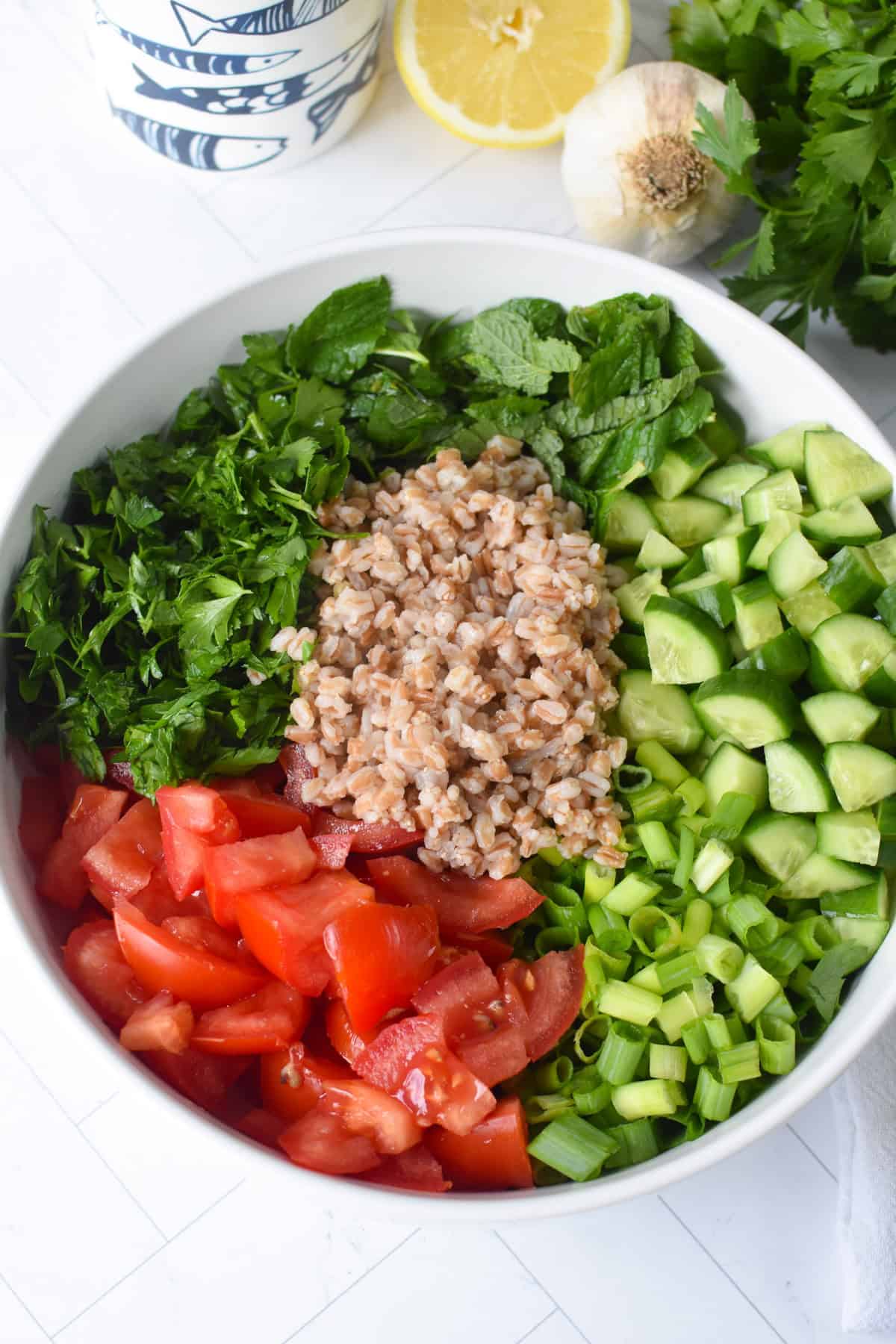
Step 5: Toss everything together. Add the cooled farro to a large bowl. Add the parsley, mint, green onions, tomatoes and diced cucumber. Pour the dressing over and toss well. Stir, taste and adjust salt and lemon juice and lemon zest as needed.
Step 6: Let it rest. Optional: give the salad at least 20-30 minutes to sit before serving. The farro soaks up the dressing, the flavors meld, and it goes from good to really good.
Tips for the Best Farro Tabbouleh
- Cool the farro completely before mixing. Hot farro will steam the herbs and wilt everything. Spread it on a sheet pan and give it 15-20 minutes. Do not rush this step or the whole salad suffers.
- Salt and drain your tomatoes and cucumber. Dice them, add a pinch of salt, and let them sit in a colander for 10 minutes before adding to the bowl. Pat them dry. This one step prevents a watery salad that gets worse as it sits.
- Taste and adjust after resting. After the salad sits, the salt absorbs into the grain and vegetables. You will almost always need a little more lemon or salt at the end. Give it a final taste right before serving and adjust accordingly.
- Use fresh lemon juice, not bottled. The brightness of this salad lives in the dressing. Bottled lemon juice falls flat and you will notice the difference.
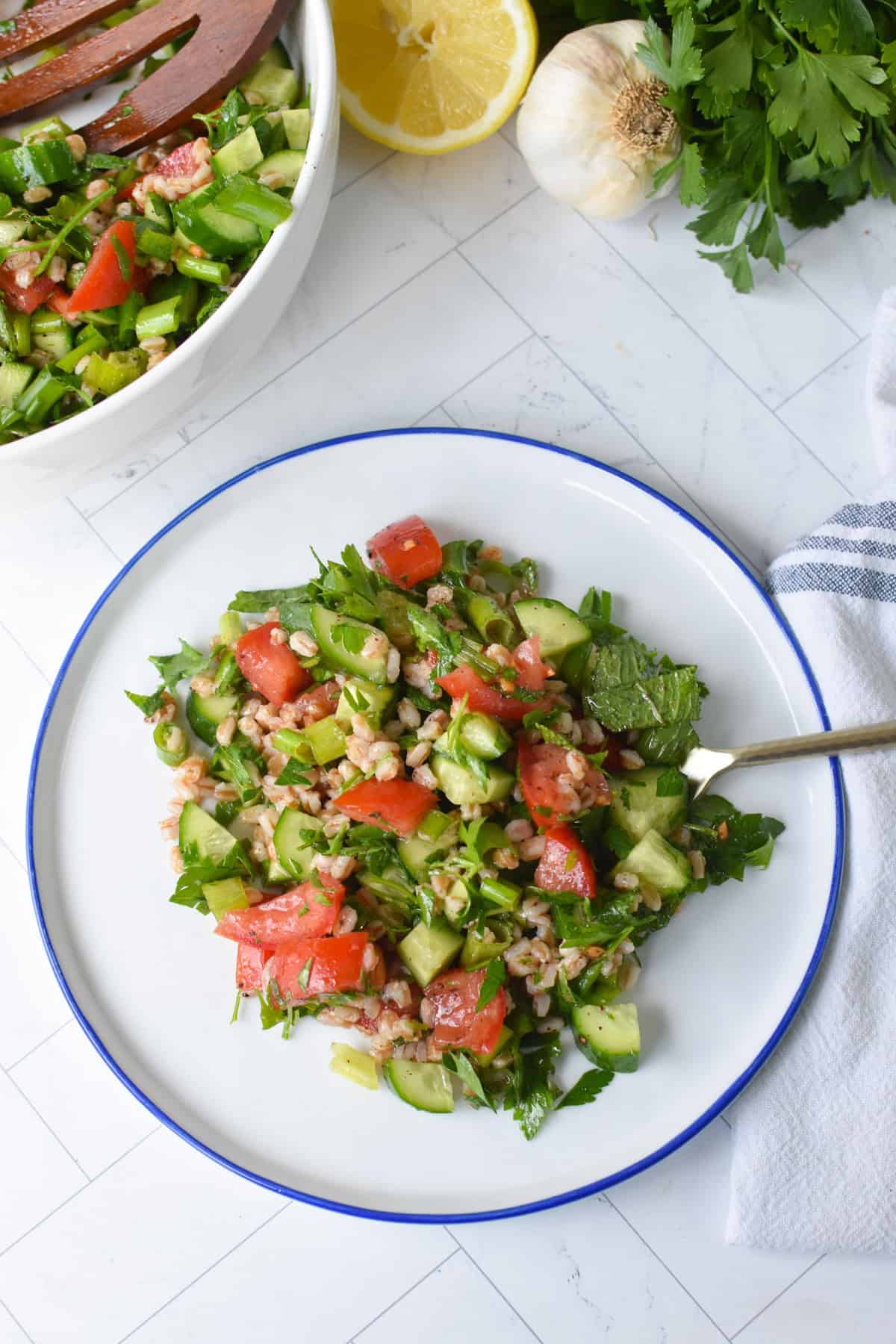
How to Serve Tabbouleh
This farro tabbouleh is flexible. It works as a side or as a main.
- As a side, it pairs well with Lebanese Chicken Kebabs, Greek Chicken Thighs, or a simple piece of Mediterranean salmon. It also fits naturally into a mezze spread next to Lebanese hummus recipe, warm pita, and Lebanese lentil soup recipe.
- As a main, add a can of rinsed chickpeas to bulk it up with more protein, or serve it over a bed of arugula for extra greens.
- It travels well, holds up at room temperature for a couple hours, and is one of the best dishes to bring to a potluck or cookout.
How to Store and Make Ahead
- Storage: Store in an airtight container in the refrigerator for up to 4 days. The farro holds its texture well, which is one of the reasons it is great for meal prep.
- Make ahead: You can fully assemble this salad a day ahead. The flavor actually improves overnight. If making more than a day ahead, keep the feta and herbs separate and mix them in before serving to keep everything fresh-looking.
- Dressing on the side: If you are bringing this to a gathering, pack the dressing separately and toss right before serving.
Recipe FAQ
Yes. Quinoa is the most common swap and works well. Pearl couscous also works. You could even use bulgur wheat, which is the traditional tabbouleh grain.
No. Farro is a wheat grain, so it contains gluten. For a gluten-free version, use quinoa.
Salt your tomatoes and cucumber before adding them to the salad and let them drain in a colander. Pat dry before mixing in. This is the single most effective thing you can do.
More Lebanese Salad Recipes
Mediterranean
Easy Lebanese Salad
Vegetarian
Fattoush Salad
Mediterranean
Easy Arabic Salad
Mediterranean
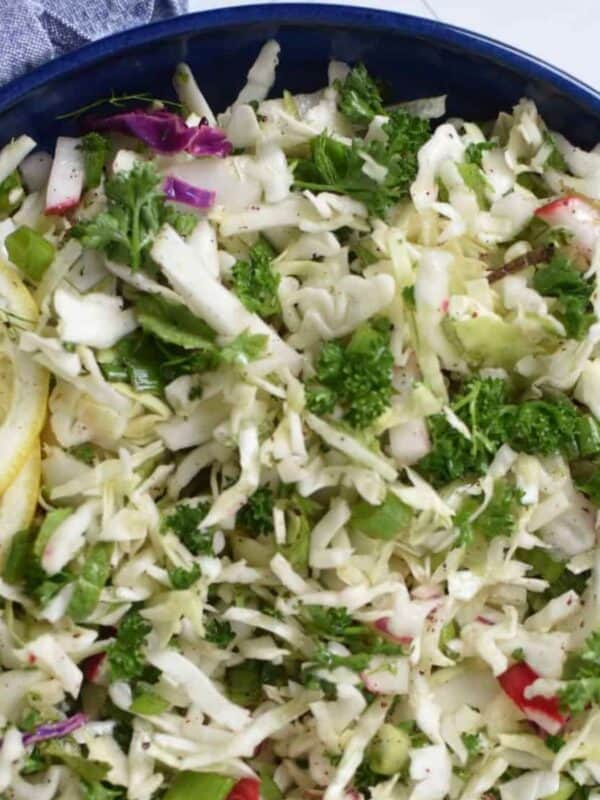
Malfouf Salad (Lebanese Cabbage Salad)
Tried this recipe? Leave a star rating and comment below! Subscribe to my newsletter or follow me on Facebook, Instagram, or Pinterest for the latest.
Farro Tabbouleh Salad
Ingredients
For the salad:
- 2 bunches of Italian parsley, leaves finely chopped
- 1/2 english cucumber, diced
- 1 cup diced tomato, about 3 large roma tomatoes
- 6 green onions, white and green parts finely chopped
- 1/4 cup fresh mint, finely chopped
- 1/2 cup semi-pearled farro, cooked according to the package
For the dressing:
- 1 lemon, juiced
- 1/4 cup extra virgin olive oil
- 2 garlic cloves, minced
- 1/2 teaspoon salt
- 1/8 teaspoon black pepper
- 1 teaspoon sumac, optional
Instructions
- Cook the farro in salted water or broth according to package directions until al dente, about 25-30 minutes. Drain, spread onto a sheet pan to cool completely.
- While farro cools, salt the diced tomatoes and cucumber lightly and let sit in a colander for 10 minutes. Pat dry.
- Finely chop parsley and mint. This step matters, the herbs should be chopped fine enough that every bite has herb in it.
- Whisk together olive oil, garlic, lemon juice, salt, pepper, and sumac (if using).
- Add cooled farro to a large bowl. Add parsley, cucumber,tomatoes, green onions and mint. Toss to combine.
- Pour dressing over and toss well. Taste and adjust salt and lemon.
- Optional: Let rest 20-30 minutes before serving for best flavor.
Notes
- Resting Time: Do not skip the 20-30 minute rest before serving. The farro absorbs the dressing, the flavors meld, and the salad goes from good to really good. If you have time, an hour is even better.
- Farro: Use semi-pearled farro for the best texture in this salad. It cooks faster than whole farro and stays chewy without getting tough. Spread it on a sheet pan to cool completely before mixing or it will wilt the herbs.
- Storage: Store in an airtight container in the refrigerator for up to 4 days. The farro holds its texture well, which is one of the reasons it is great for meal prep.
- Dressing on the side: If you are bringing this to a gathering, pack the dressing separately and toss right before serving.
- Make ahead: You can fully assemble this salad a day ahead. The flavor actually improves overnight. If making more than a day ahead, keep the feta and herbs separate and mix them in before serving to keep everything fresh-looking.
- Sumac: The sumac in the dressing is optional but worth trying. It adds a subtle citrusy tang that layers well with the lemon and is a classic Lebanese pantry spice.
Nutrition
Nutrition information is automatically calculated, so should only be used as an approximation.









Thank you for sharing this recipe
Of course!
A simple easy salad using farro.