
This post may contain affiliate links.
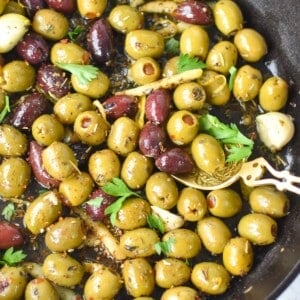
These Warm Olives with Lemon and Mediterranean Herbs are a 10-minute stovetop appetizer that tastes like something you ordered at a Mediterranean restaurant. Kalamata and green olives are tossed in garlic, lemon, and Mediterranean herbs, then warmed in olive oil until glossy and fragrant. Serve them straight from the pan with pita or crusty bread and watch them disappear.
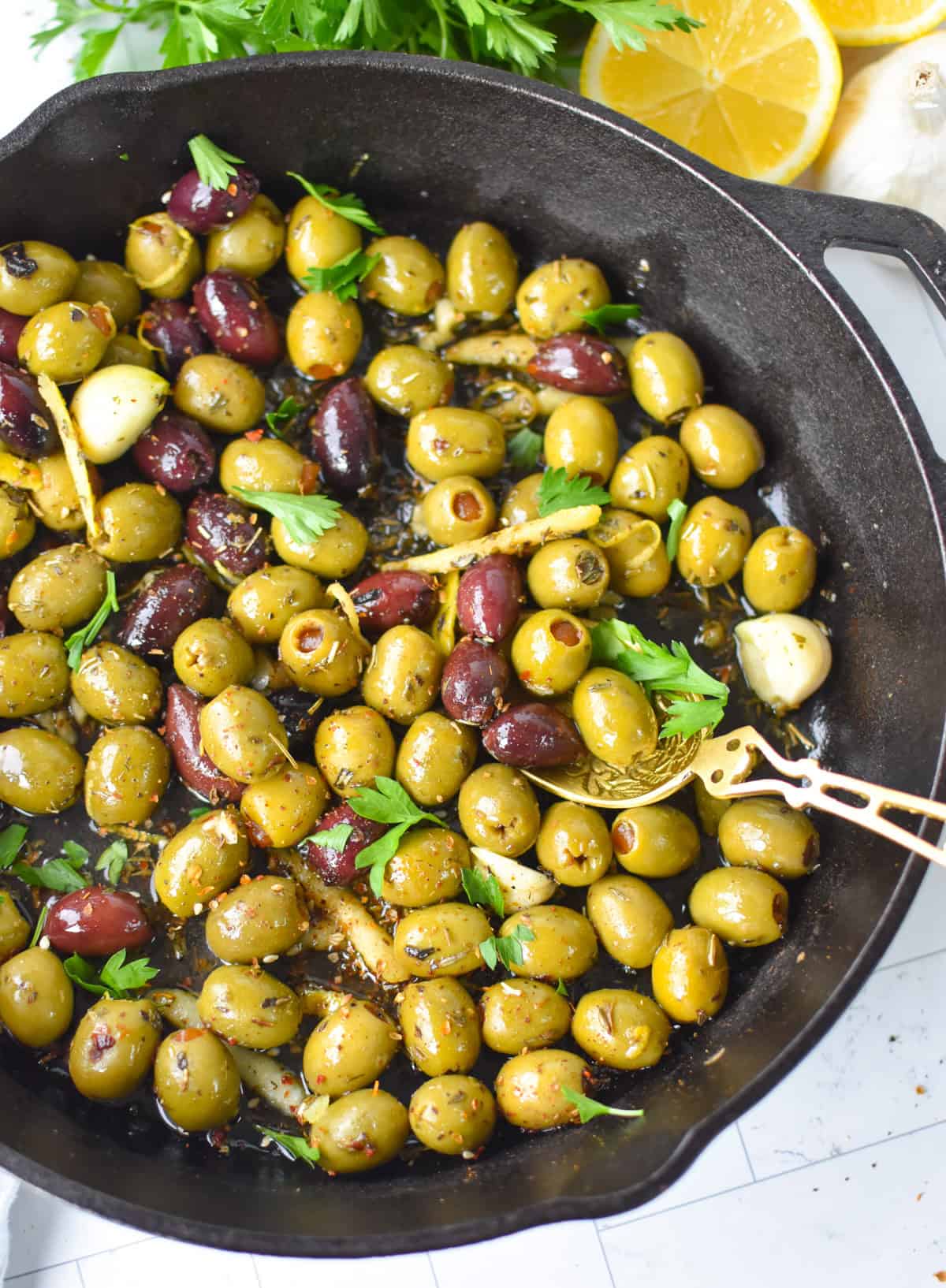
Growing up in a Lebanese household, olives were always on the table. Cold from the jar like these Lemon Marinated Olives, tossed into this Greek Cabbage Salad, or added to a Mediterranean Flabread. But it wasn’t until Mike and I traveled through Greece that I tasted warm olives for the first time. We were sitting at a small restaurant overlooking the sea. A bowl of warm olives came out before anything else. I ate almost all of them before Mike could get to them and spent the rest of the trip trying to figure out what was in that oil.
That memory is what this recipe comes back to every time I make it. If you have never had warm olives before, I want you to know they are a completely different experience from cold ones. The heat softens the flesh just slightly, the oil blooms with garlic and herbs, and every bite is juicy and bright and a little spicy. This is the appetizer I pull out when I need something that looks like I tried without actually trying.
Why Warm Olives Are Better Than Cold Olives

Cold olives taste like olives. Warm olives taste like olives that sat in garlic, lemon, and herbs all day, even when they’ve only been on the stove for five minutes.
When you heat olives in olive oil, the oil becomes the sauce. The garlic mellows into something almost sweet. The lemon zest softens and releases its oils into the fat. The dried oregano and thyme bloom instead of just sitting there. You end up with a dish that tastes layered and intentional from a handful of pantry ingredients and one small skillet. This recipe takes 10 minutes start to finish. You can serve it right from the pan.

Recipe Ingredients
Here is what goes into these warm olives and why each ingredient earns its spot.
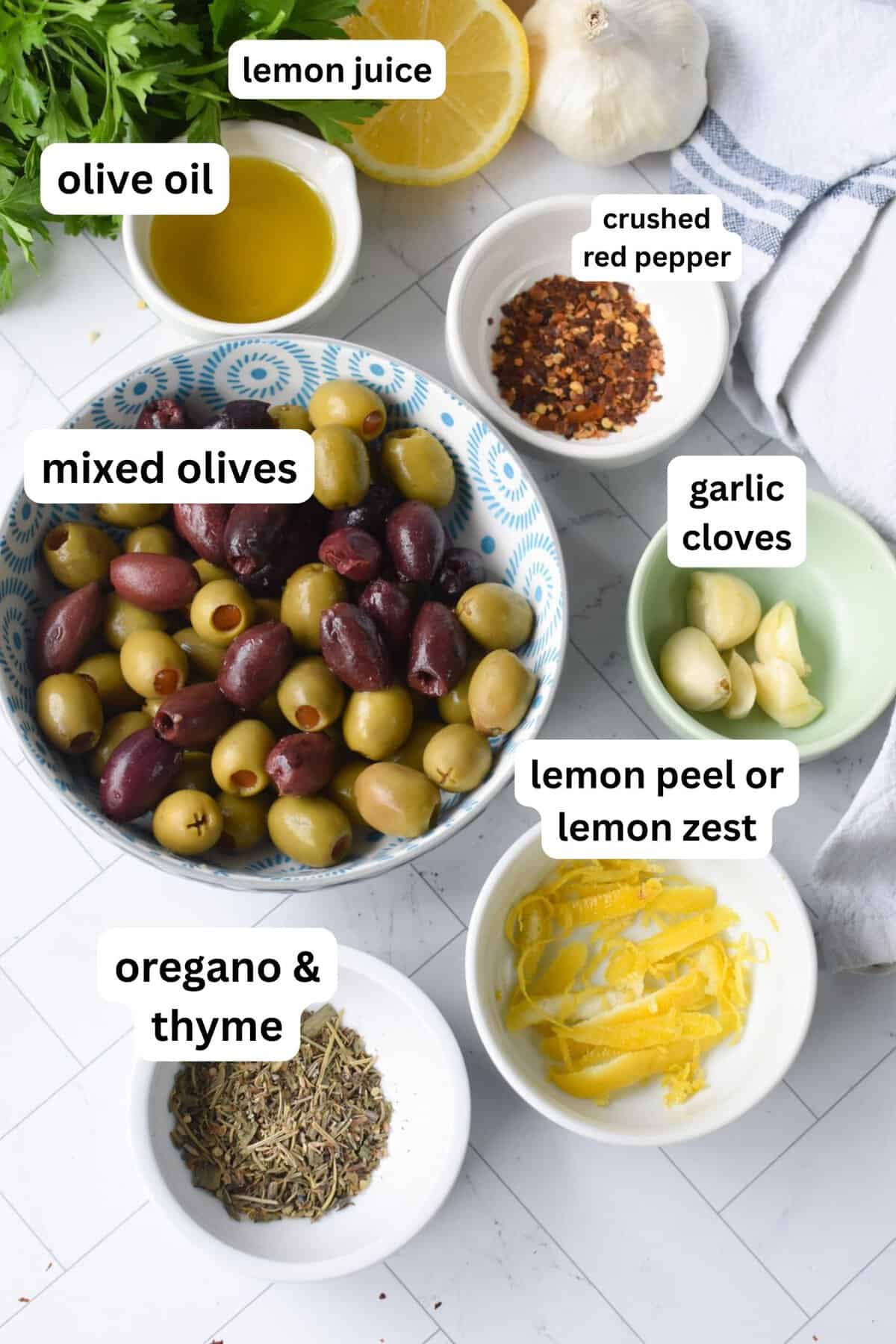
- Kalamata and green olives: The combination gives you two different textures and flavor profiles. Kalamata olives are rich, meaty, and briny. Green olives have a firmer bite and a slightly grassy, buttery flavor. Together they make the bowl more interesting than any single variety could. Use pitted for easier eating when serving guests, or unpitted if you want the olives to hold their shape and flavor a little better.
- Extra virgin olive oil: This is the base of everything. Use one you actually like the taste of because you will taste it.
- Garlic: Slice it thin rather than mincing. Thin slices turn golden and tender without burning as quickly, and they look beautiful in the finished dish.
- Lemon zest and lemon juice: The lemon zest (or try lemon peel) goes in with the heat to bloom into the oil. The juice goes in at the end, off the heat, so it stays bright and doesn’t turn bitter. Both are necessary.
- Dried oregano and dried thyme: This is the Mediterranean herb combination that makes these taste specifically like something from a Lebanese or Greek table rather than a generic Italian appetizer. Oregano in particular is a staple in Lebanese cooking and it pairs perfectly with briny olives.
- Crushed red pepper: Just enough heat to make these interesting. It builds slowly and doesn’t overwhelm.
Ways to Modify these Herby Olives
- Switch Up the Olives: Castelvetrano olives give you a buttery, milder bite. A pre-made olive bar mix adds variety with zero extra effort. Cerignola olives are a great pick if you want something meatier.
- Herbs & Spices: Add more herbs like fresh rosemary or fresh basil. I also like adding za’atar or sumac.
- Adjust the Heat: Skip the red pepper entirely for a kid-friendly version, double it or add a sliced fresh chili for more kick, or swap in a pinch of Aleppo pepper for a smokier, slower heat.
- Change the Citrus: Use orange zest and juice instead of lemon for a sweeter, warmer flavor. A mix of both lemon and orange together is also really good.
- Add More to the Bowl: Crumbled feta stirred in before serving adds a salty, creamy contrast. Capers punch up the brine. Sun-dried tomatoes add a chewy, sweet element.
- Make it Heartier: Serve over toasted bread with cubed feta, toss with white beans as a simple side, or spoon over hummus for a full mezze plate.
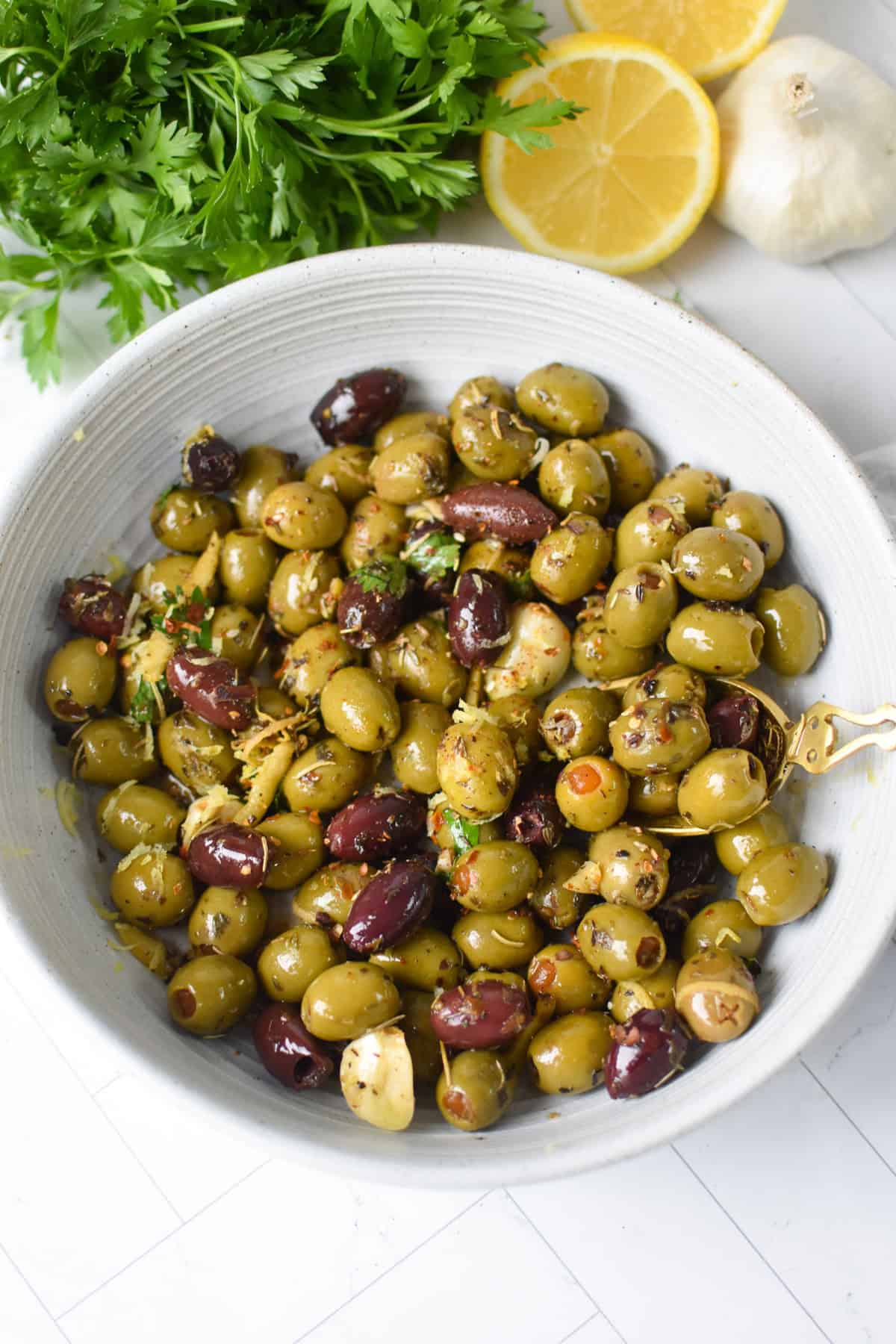
How to Make Warm Olives with Lemon and Mediterranean Herbs
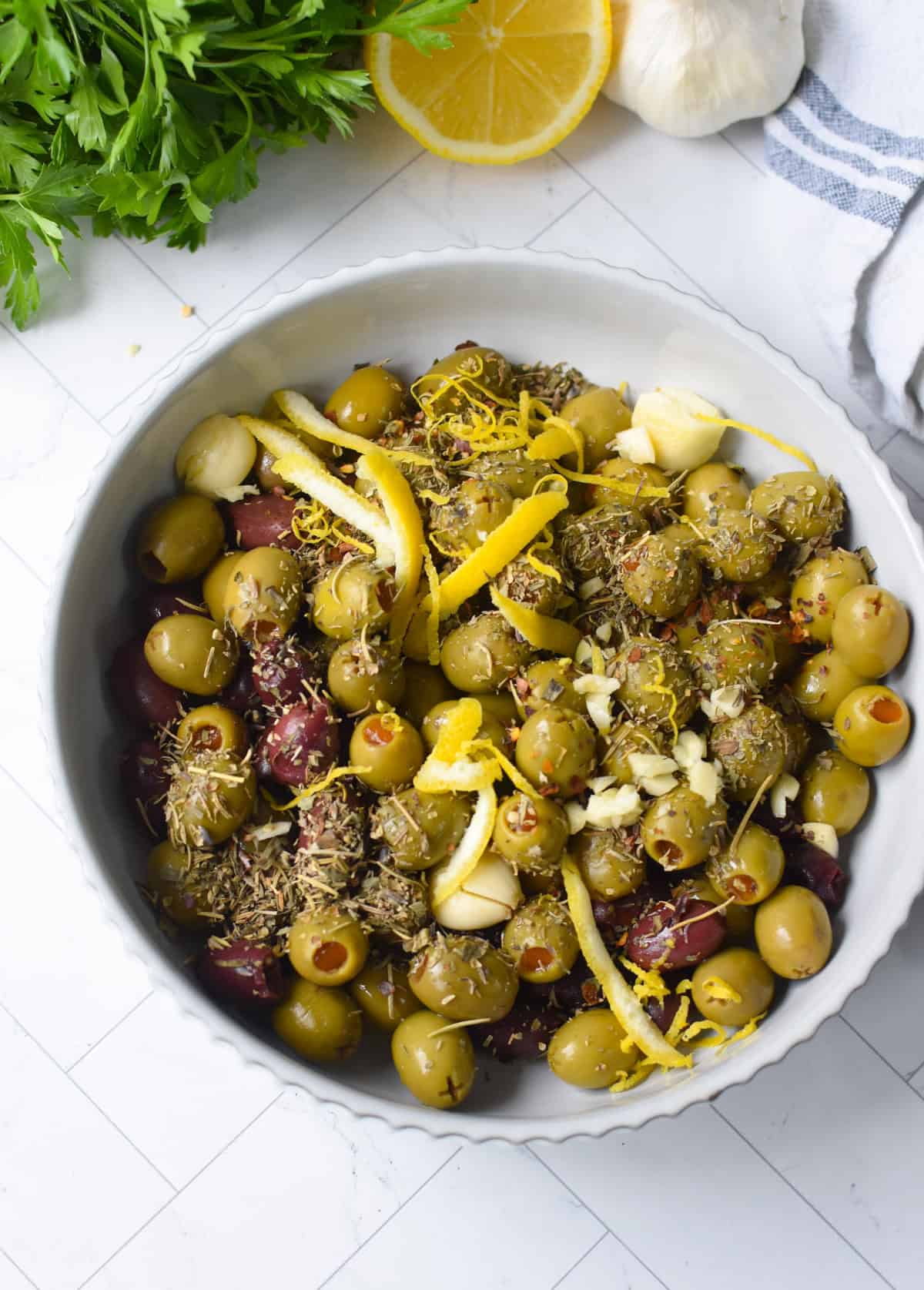
Step 1: Add the olives and seasonings. In a medium bowl combine the olives, 1 tablespoon olive oil, garlic, lemon zest, oregano, thyme, crushed red pepper, black pepper, and salt. Stir well to coat.
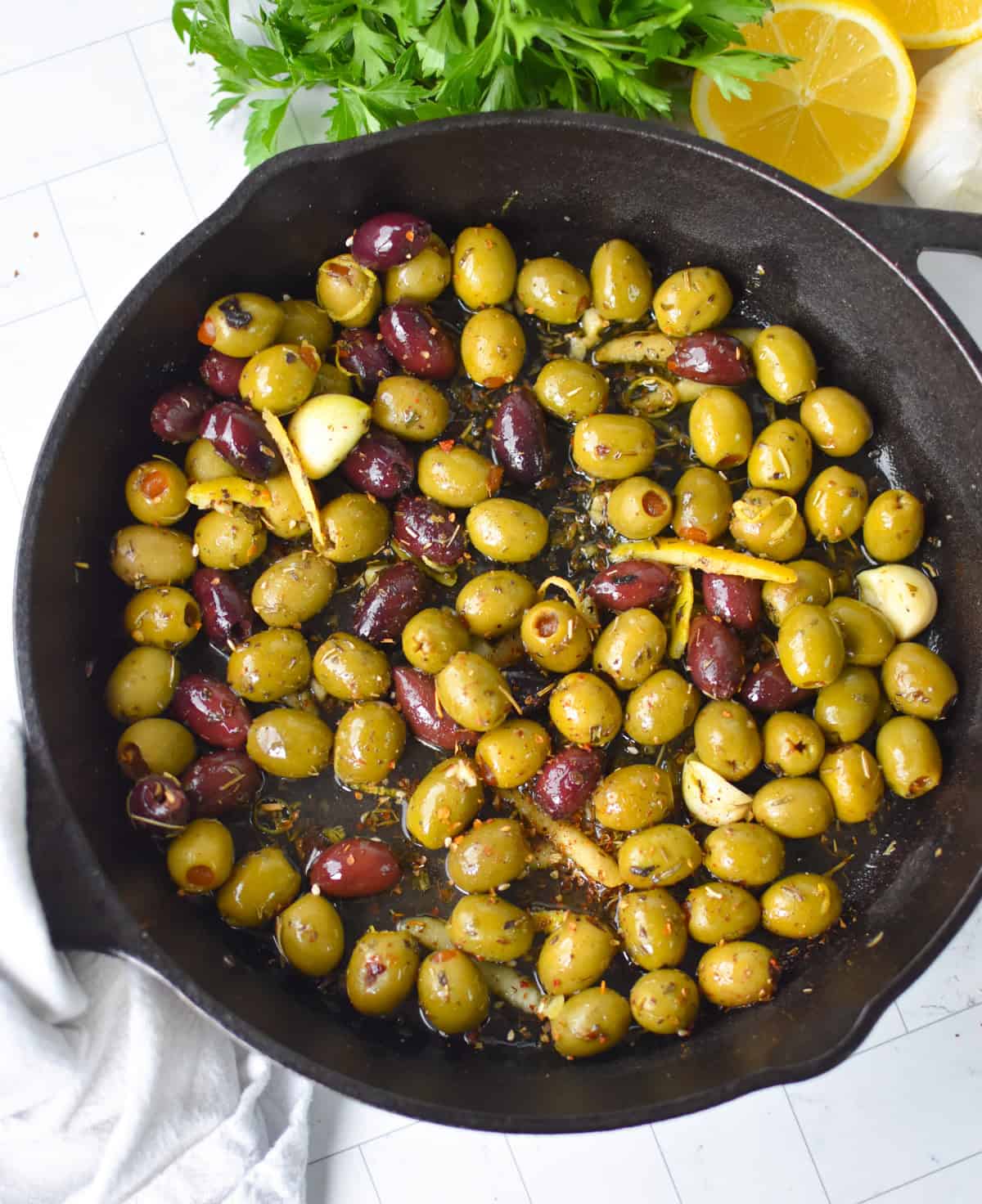
Step 2: Warm through. Heat the remaining 2 tablespoons of olive oil in a medium skillet over medium-low heat. Add the olive mixture to the skillet and cook for 3 to 4 minutes, stirring occasionally, until the olives are warmed through and the oil smells deeply herby.
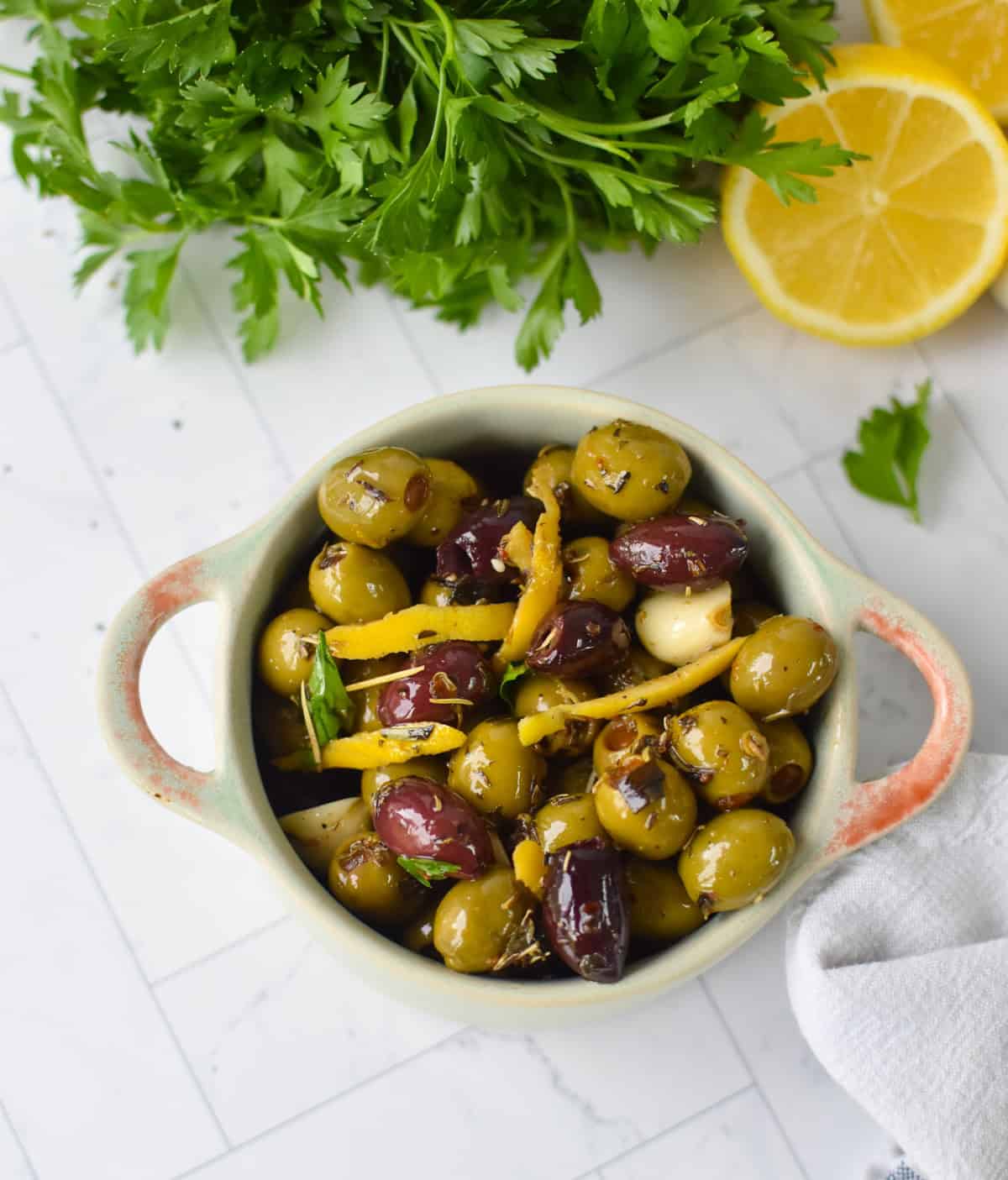
Step 3: Finish with lemon juice. Remove from heat and stir in the lemon juice. Garnish with fresh parsley.
Step 4: Serve warm. Transfer to a serving bowl and serve warm.
Recipe Tip: Watch your garlic. Burnt garlic is bitter in a way that spreads through the entire dish, and there is no fixing it once it happens. You want the garlic to be fragrant and barely golden, not brown. Medium-low heat the entire time is the move here. If your pan runs hot, pull the garlic off a few seconds earlier than you think you need to. It keeps cooking from the residual heat in the oil. If the garlic burns, start over with a fresh batch. The olives are forgiving. The garlic is not.
What to Serve Warm Olives With
Warm olives fit into almost any spread. Here are the ways I reach for them most often.
- With a mezze spread. This is the most natural home for them. Set them out alongside Roasted Red Pepper hummus recipe, baba ganoush recipe, and warm pita and this becomes a full table without any cooking.
- On a charcuterie board. Tuck the warm olives into a corner of the board right before guests arrive. They stay warm long enough to eat and the oil makes the board look abundant.
- Alongside roasted fish or chicken. Spoon the warm olives and a little of the herby oil over Greek chicken recipe or pan seared salmon recipe and it acts like a sauce.
- With crusty bread. The oil left in the bowl is worth mopping up. Serve with a good sourdough or pita and do not let it go to waste.
- As an appetizer on its own. Set out a bowl with toothpicks or small forks and let people pick while dinner finishes. This is the move when you need a low-effort hold-them-over.
Make-Ahead and Storage Tips
These warm olives are best eaten fresh while the oil is still fragrant and the garlic is soft. That said, here is how to work ahead if you need to.
- Make-ahead: Combine the dry ingredients with the olives in a bowl a day ahead and store in the fridge. When you’re ready to serve, warm them in the skillet with the oil for a few minutes. The flavor actually improves after a day.
- Storage: Transfer leftovers and all of the oil to an airtight container or mason jar. They keep in the fridge for up to a week. Note that olive oil solidifies when cold, so pull the container out 20 to 30 minutes before serving and let it come back to room temperature.
- Reheat: Warm gently in a small skillet over low heat or serve at room temperature. Both are good.
Recipe FAQ
Kalamata and green olives are my go-to combination. Kalamata brings the brininess and richness. Green olives add firmness and a lighter, almost buttery flavor. If you want to swap in Castelvetrano olives for the green, that also works beautifully. Avoid canned black olives, which turn mushy when heated.
Either works. Pitted olives are easier to eat without thinking about it, which makes them better for parties. Unpitted olives hold their shape and flavor a little better. If you serve unpitted, put out a small bowl for the pits so guests know what to expect.
Yes. Fresh thyme and fresh oregano both work. Add a little more than the dried amounts since fresh herbs are less concentrated. Add them in the last minute of cooking rather than at the start so they stay bright.
No. That is the garlic, herbs, and lemon interacting with the oil as it cools slightly. It is completely normal and tastes delicious. Stir before serving.
Yes. Combine everything in a small baking dish and roast at 375°F for about 15 minutes until the oil is sizzling and fragrant. The stovetop method is faster and gives you more control, but the oven works well if you need your burners free.
More Appetizer Recipes
Appetizers
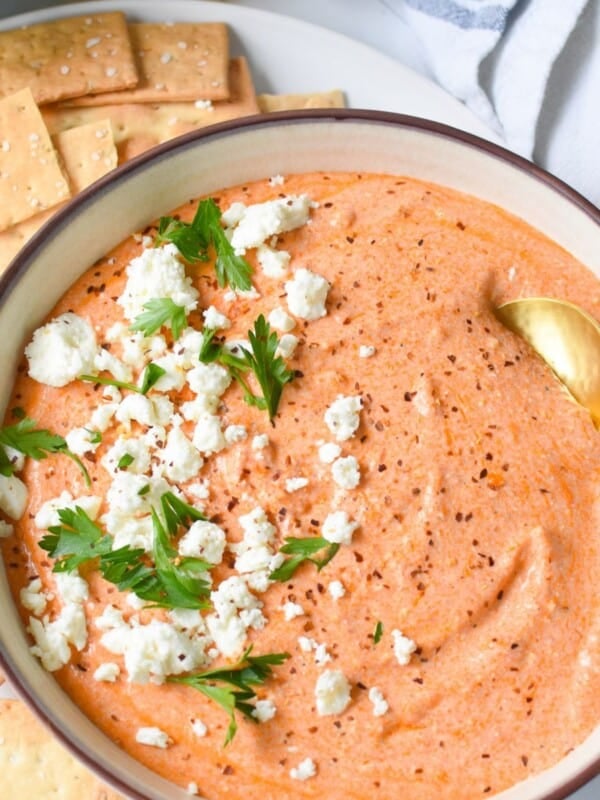
Roasted Red Pepper Feta Dip
Mediterranean
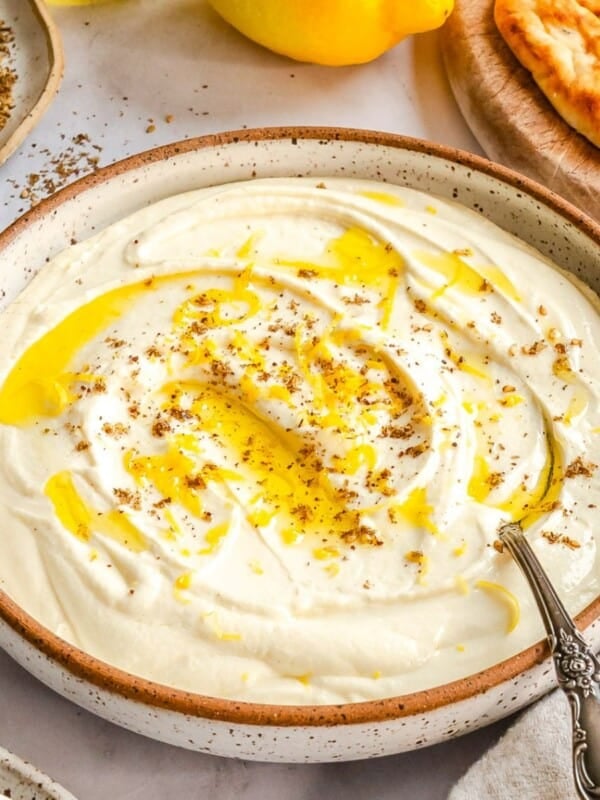
Lemon Whipped Feta Dip
Vegetarian
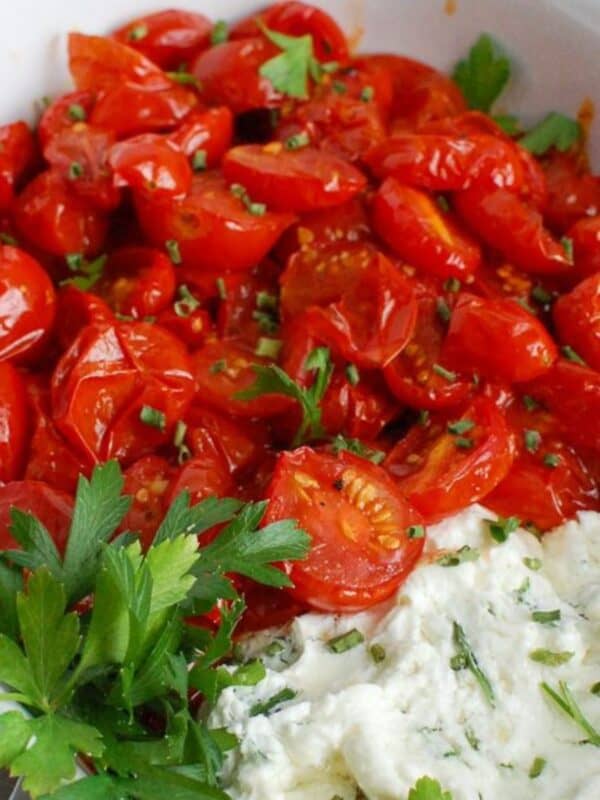
Goat Cheese and Roasted Tomato Dip

Vegetarian
Crunchy Roasted Chickpeas
Tried this recipe? Leave a star rating and comment below! Subscribe to my newsletter or follow me on Facebook, Instagram, or Pinterest for the latest.
Warm Olives with Lemon and Mediterranean Herbs
Ingredients
- 1 pound mixed olives, kalamata and green, pitted or unpitted
- 3 tablespoons extra virgin olive oil, divided
- 3 garlic cloves, thinly sliced
- Zest of 1 lemon
- 1/2 teaspoon dried oregano
- 1/2 teaspoon dried thyme
- 1/4 teaspoon crushed red pepper flakes, optional for spice
- 1/4 teaspoon black pepper
- Pinch of kosher salt
- 1 tablespoon fresh lemon juice
- Fresh parsley, chopped for garnish
Instructions
- In a medium bowl add the olives, 1 tablespoon olive oil, garlic cloves, zest of lemon, oregano, thyme, crushed red pepper, pepper and salt and stir well.
- Heat the 2 tablespoons olive oil in a small skillet over medium-low heat.
- Add the olive mixture to the skillet and cook for 3-4 minutes, stirring occasionally, until the olives are warmed through and the oil smells deeply herby.
- Remove from heat and stir in the lemon juice. Garnish with fresh parsley.
- Transfer to a serving bowl and serve warm.
Notes
- Pat your olives dry before adding them to the bowl. Wet olives will cause the hot oil to splatter.
- Watch the garlic closely. You want it fragrant and just barely golden, not brown. Burnt garlic will make the whole dish bitter and there is no fixing it once it happens.
- Add the lemon juice off the heat, not in the skillet. This keeps it bright and prevents it from turning bitter.
- Make-ahead: Combine the dry ingredients with the olives in a bowl a day ahead and store in the fridge. When you’re ready to serve, warm them in the skillet with the oil for a few minutes. The flavor actually improves after a day.
- Reheat: Warm gently in a small skillet over low heat or serve at room temperature. Both are good.
- Storage: Transfer leftovers and all of the oil to an airtight container or mason jar. They keep in the fridge for up to a week. Note that olive oil solidifies when cold, so pull the container out 20 to 30 minutes before serving and let it come back to room temperature.
Nutrition
Nutrition information is automatically calculated, so should only be used as an approximation.










The perfect easy appetizer for a Mediterranean meal.