This post may contain affiliate links.
Whip up a batch of homemade Lebanese Hummus Recipe and keep it for snacking throughout the week. It is packed with protein, pairing perfectly with pita bread or vegetables. I also like to use it on sandwiches and wraps!
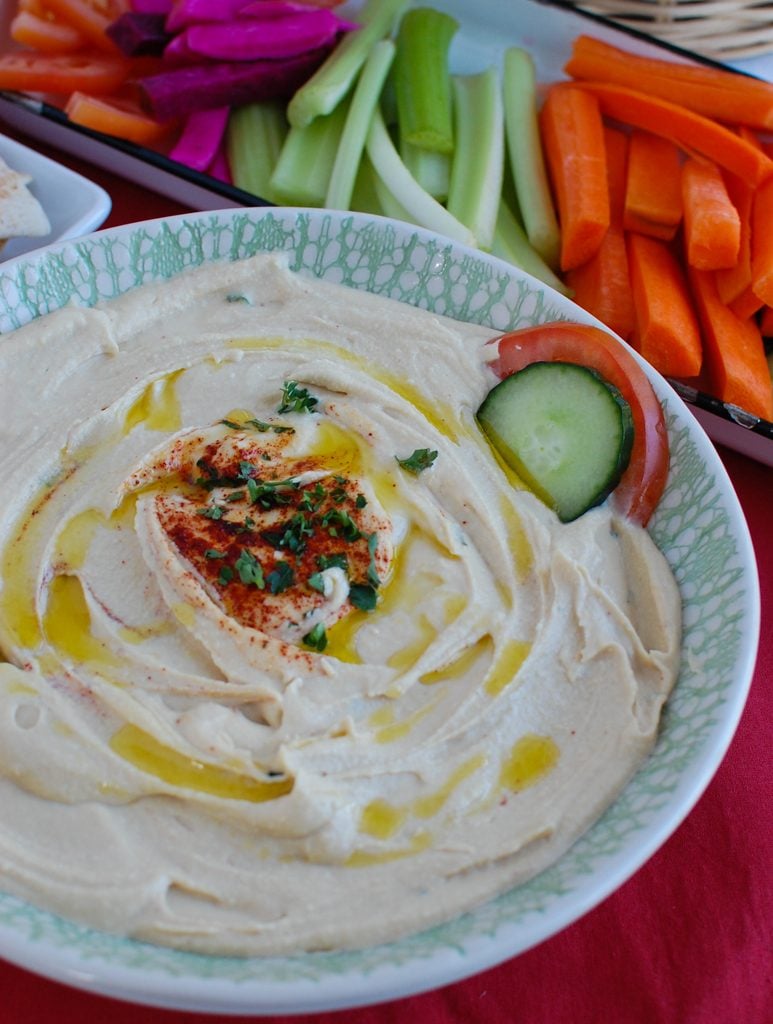
I grew up watching my mom make a bowl of this before every family gathering. She would pull out the food processor, throw in a can of chickpeas, and 5 minutes later there would be a beautiful swirled bowl of hummus on the table surrounded by warm pita bread from the small Lebanese market my grandpa used to take me to in Akron, Ohio. That bowl would be completely gone before dinner even started. That is the Lebanese Hummus Recipe I am sharing with you today.
This Lebanese Hummus Recipe is not the thick, chalky version sitting in a plastic tub at the grocery store. It is creamy, bright from fresh lemon, and has just enough garlic to remind you that someone who actually cooks made it. Once you make it yourself, you will not go back. If you like other flavors of hummus try this Roasted Red Pepper Hummus or this Lemon Hummus. If you want a different type of Mediterranean dip try my Baba Ganoush.
What Makes Lebanese Hummus Different from What You Buy at the Store

Most store-bought hummus is thick, slightly grainy, and weirdly sweet. It is made to have a shelf life, not to taste like it came out of someone’s kitchen in Beirut.
Authentic Lebanese hummus is made with a short list of real ingredients: chickpeas, tahini, fresh lemon juice, garlic, and salt. That is it. The difference is in the ratio of tahini (Lebanese hummus tends to be more tahini-forward than other versions), the quality of your ingredients, and a couple of simple techniques that make the texture genuinely silky instead of dense.
My family’s version is exactly that. Simple. Bright. Creamy. And very Lebanese.

Recipe Ingredients and What to Look for When You Shop
The ingredients are minimal, which means each one matters. Here is what you need and what to pay attention to:
- Chickpeas: One 15 oz can, drained and rinsed. Save a few tablespoons of the chickpea liquid (aquafaba) from the can. You may want it later for thinning. Canned chickpeas work perfectly here and this is genuinely a weeknight-friendly recipe. If you want to go the extra mile, see the FAQ below on using dried chickpeas.
- Tahini: This is the most important ingredient and the one most people get wrong. Look for a tahini that is runny and pourable straight from the jar, not dry or separated with a thick paste at the bottom. Good tahini should smell nutty, not bitter. I like Soom or Trader Joe’s tahini. You will find it in the Middle Eastern aisle or near the nut butters at most grocery stores.
- Fresh lemon juice: Not the stuff in the squeeze bottle. Fresh only. You want the brightness that only comes from squeezing a real lemon.
- Garlic: One or two cloves depending on your preference. If you find raw garlic too sharp, you can soak the garlic in the lemon juice for five minutes before blending. It mellows the bite noticeably.
- Extra virgin olive oil: For blending and for finishing. A good drizzle on top at the end is not optional. It makes it look like it came from a restaurant and adds a lot of flavor.
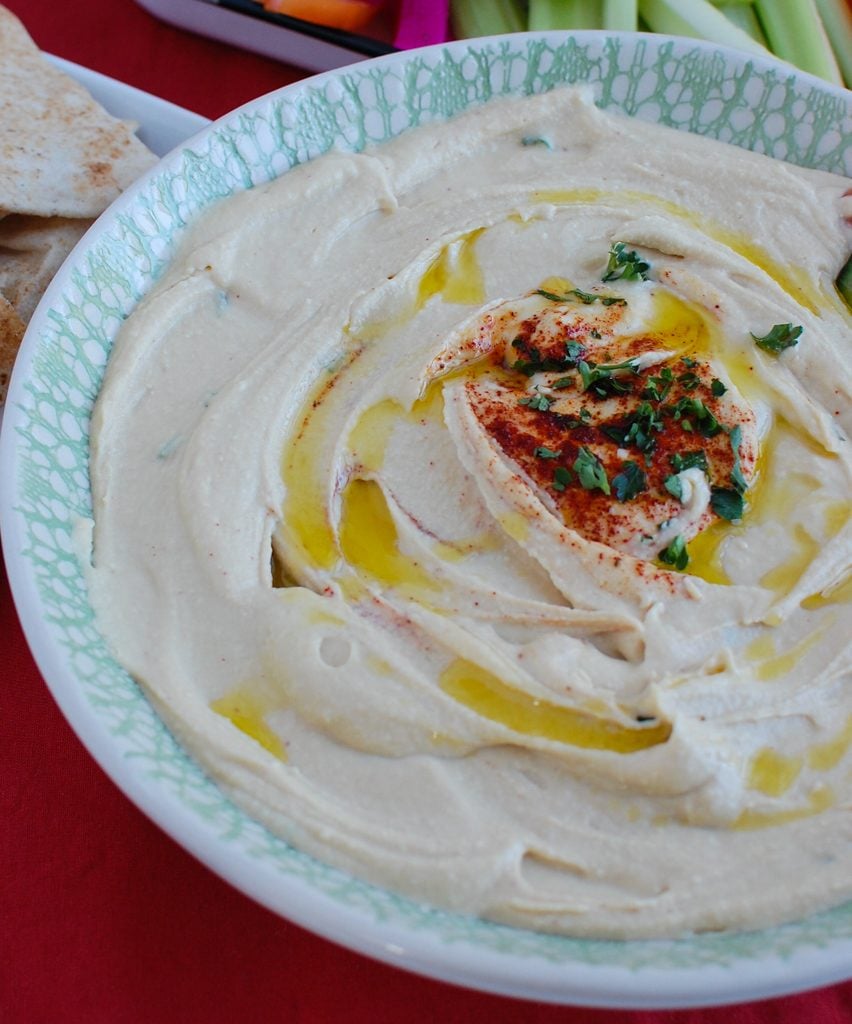
- Parsley and paprika to garnish: This is the classic Lebanese presentation. It makes a simple bowl of hummus look like something special.
The Two Tricks That Make Hummus Actually Creamy
Most hummus recipes skip over why these two things matter. Here is what is actually happening.
- Trick 1: Ice water while blending. Adding a small amount of ice water while the food processor is running creates an almost whipped texture. The cold temperature helps keep the fat from the tahini from breaking down too fast, which results in a lighter, fluffier, smoother hummus. Start with one tablespoon and add more slowly until the hummus looks pale and almost glossy as it spins. You will see it visibly transform.
- Trick 2: Let the food processor run longer than you think. Most people blend for 30 seconds and call it done. You want to run your food processor for a full two minutes, scraping the sides halfway through. The longer blend time fully emulsifies everything together. The hummus should look smooth and have a slightly sheen when it is ready.
That is all there is to it. These two steps are what separate hummus that tastes homemade in the best way from hummus that just tastes like blended chickpeas.
How to Make Lebanese Hummus
Step 1: Add everything to the food processor. Combine the drained chickpeas, tahini, fresh lemon juice, garlic, olive oil, and a pinch of salt in the bowl of a food processor.
Step 2: Blend, scrape, blend again. Run the food processor for about 60 seconds, then stop and scrape down the sides with a spatula. Blend for another 60 seconds.
Step 3: Add ice water to reach your texture. With the food processor running, slowly add ice water one tablespoon at a time. Add just enough until the hummus looks pale, smooth, and slightly glossy. It should have almost a whipped quality.
Step 4: Taste and adjust. This is the step most people skip. Taste and decide: does it need more lemon for brightness? More salt? A little more tahini for depth? Adjust and blend briefly to incorporate.
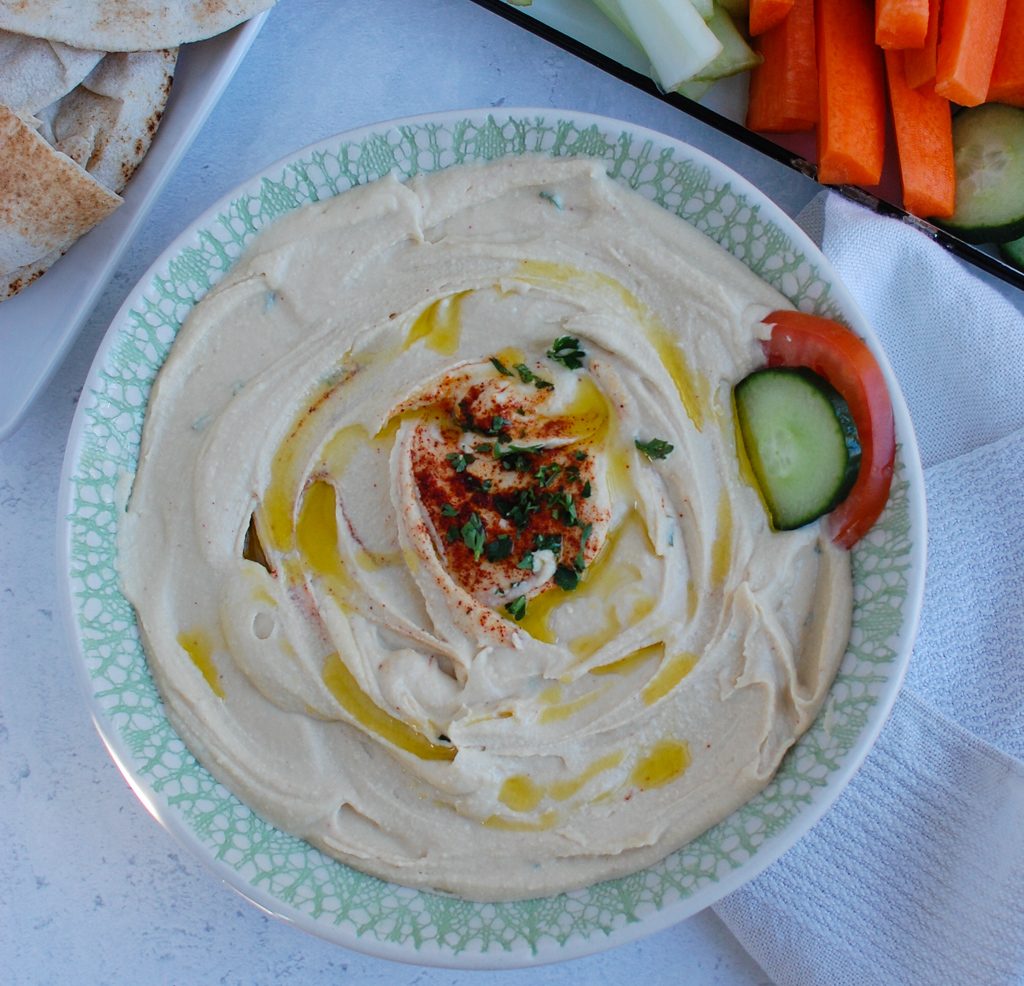
Step 5: Serve it right. Scoop the hummus into a shallow bowl. Use the back of a spoon to create a wide swirl. Drizzle with a generous pour of olive oil. Top with a pinch of paprika and fresh chopped parsley. Add a few whole chickpeas if you want to go full Lebanese restaurant style.
Serve immediately with warm pita bread or pita chips or fresh cut vegetables, or cover and refrigerate.
Ways to Serve It (Beyond Just Pita)
Hummus is one of the most versatile things you can keep in your fridge. Here are some of our favorite ways to use it:
- As a dip with warm pita, cucumber slices, carrots, or bell pepper strips. As a spread on this Mediterranean Vegetable Sandwich instead of mayo.
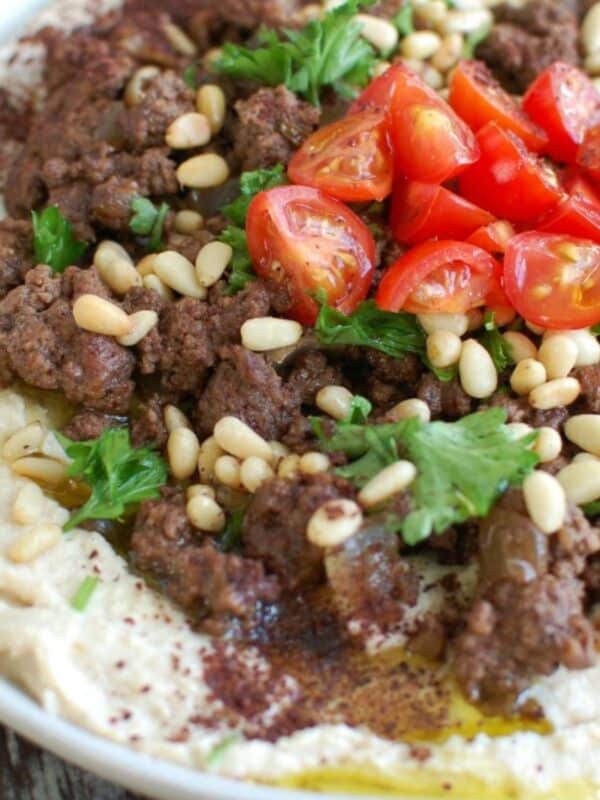
- As the base for Hummus with Spiced Beef and Toasted Pine Nuts, which is essentially a full meal served warm. Swirled onto a plate alongside Lebanese Meat Pies or Spinach Fatayer as part of a mezze spread. Spread onto Mediterranean Hummus Toast with Za’atar for breakfast or a snack.
- Use this hummus as part of these Mediterarnean Pinwheels.
If you are meal prepping, make a double batch on Sunday. It keeps well and makes weekday lunches infinitely better.
Storage Tips
- Store hummus in an airtight container in the fridge for up to 5 days. A thin drizzle of olive oil across the top before sealing the container helps lock in freshness and keeps the surface from drying out.
- To freeze, transfer to an airtight container leaving a little room at the top for expansion. Freeze for up to 3 months. Thaw overnight in the fridge, then stir well before serving. The texture may need a quick re-blend or a splash of cold water stirred in.
Recipe FAQ
Lebanese hummus tends to be more tahini-forward with a higher tahini-to-chickpea ratio than many other versions. It is typically lighter, smoother, and more lemon-forward than American-style grocery store hummus, which is often thicker and milder.
Two things make the biggest difference. First, add ice water slowly while the food processor is running. The cold keeps the texture light and smooth. Second, let the processor run for a full two minutes. The hummus should look pale and slightly glossy when it is ready.
Yes. If you want the absolute smoothest texture, simmer canned chickpeas in water with a pinch of baking soda for 10 to 15 minutes. The skins will loosen and you can rub them off between a clean kitchen towel. It is an extra step but it does make a noticeable difference.
You can but it will not taste like Lebanese hummus. In a pinch, Greek yogurt or a nut butter like almond or cashew butter can stand in, but expect a different flavor profile.
Add cold water, a tablespoon at a time, while the food processor is running. You can also add more lemon juice or a drizzle of olive oil. Avoid adding too much at once; go slowly.
More Hummus Recipes
Appetizers
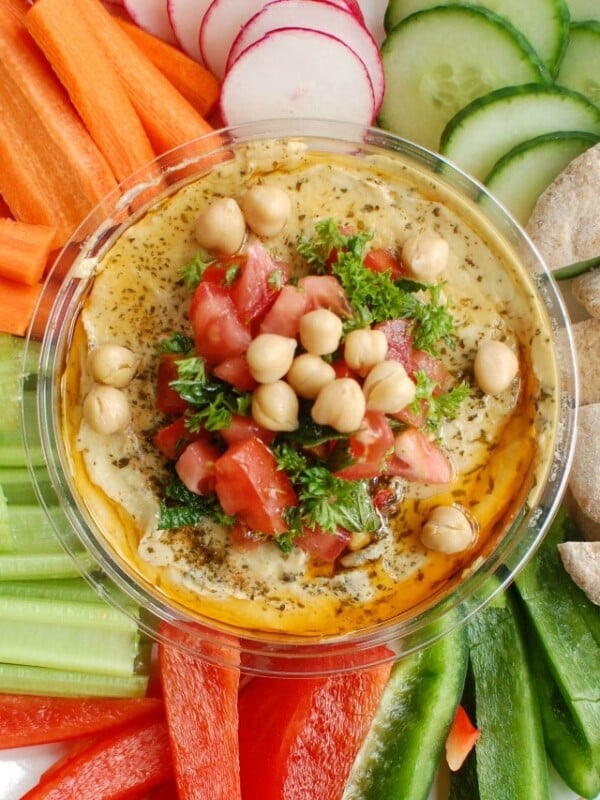
Lebanese Style Hummus

Appetizers
Southwestern Hummus Baked Wonton Cups

Appetizers
Cucumber Hummus Bites
Tried this recipe? Leave a star rating and comment below! Subscribe to my newsletter or follow me on Facebook, Instagram, or Pinterest for the latest.
Lebanese Hummus Recipe

Ingredients
- 1 -15 oz can of chickpeas, drained and rinsed
- juice of 1 lemon
- 1/3 cup tahini
- 1 or 2 cloves garlic {depending on how much you like garlic}
- 3 tablespoons extra virgin olive oil {you may want more for thinner hummus}
- Parsley and paprika to garnish
Instructions
- Combine all ingredients in the food processor. Blend for 30 seconds to 1 minute (blend longer for more creamy texture).
- Add an additional small amount of olive oil to thin out the hummus and blend again if you think it is too thick.
- Place in serving bowl.
- Garnish ideas: chickpeas, paprika, parsley and a drizzle of olive oil.
- Serve immediately with fresh, warm pita bread, veggies or cover and refrigerate.
Notes
- When I make my hummus I blend everything for 30 seconds, open the lid of the food processor and scrape the sides and blend for another 30 seconds. At that point if it isn’t as thin or creamy as you want, add a drizzle of olive oil and blend more.
- If you want extra creamy hummus add a few ice cubes while blending.
- For a thinner hummus save some of the liquid from the can of chickpeas and add that slowly while blending.
Nutrition
Nutrition information is automatically calculated, so should only be used as an approximation.