
This post may contain affiliate links.
Forget the foil. These oven roasted beets come out fork tender with deeply caramelized edges and rich, earthy flavor every single time. Toss them in olive oil and balsamic vinegar, spread them on a sheet pan, and let your oven do the rest in just 30 minutes.
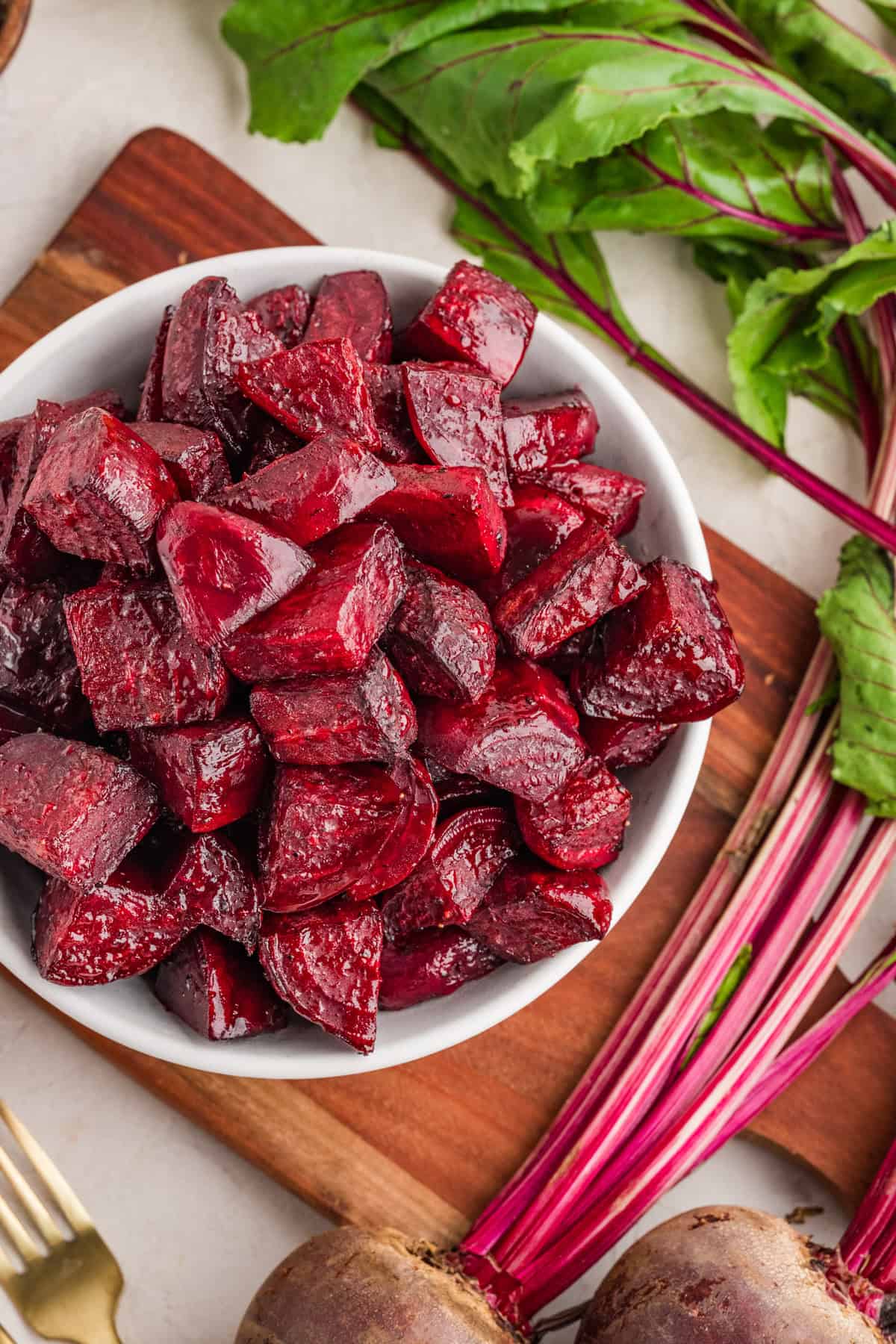
If you have avoided roasting beets because you thought it was complicated, time-consuming, or just plain messy, this recipe is going to change your mind.
These oven roasted beets skip the aluminum foil entirely. Instead of wrapping whole beets and waiting close to an hour for them to steam through, you peel them, cube them, toss them in olive oil and a splash of balsamic vinegar, and roast them on a sheet pan at 400 degrees. Thirty minutes later you have deeply colored, fork-tender beets with caramelized edges and a naturally sweet, earthy flavor that is hard to beat.
I make these on repeat because they go with almost everything. Toss them over a salad like this Lentil and Beet Salad, serve them alongside Greek Chicken, or eat them straight off the pan. They are the kind of side dish that earns a spot in your regular rotation fast. If you like beet recipes you also might like this Easy Beet Hummus or these Quick Pickled Beets.
Why Cubed Beets Beat the Foil Method Every Time

Most roasted beet recipes tell you to wrap whole beets in foil and roast them for 45 to 60 minutes. That method works, but it is essentially steaming the beet inside the foil rather than truly roasting it. You get tender beets, yes, but you miss out on the caramelized edges and concentrated flavor that come from direct oven heat.
Cubing the beets first does two things. It dramatically cuts the cook time, and it gives you way more surface area to caramelize. Those edges that turn deep ruby and slightly crisp in the oven are where all the flavor lives. You also skip the step of trying to peel a scorching hot whole beet after it comes out of the oven, which is both messy and miserable. This is the method I reach for every single time, and once you try it you will understand why.

Table of Contents
- Recipe Ingredients
- Ways to Modify
- How to Peel Beets Without Staining Everything You Own
- How to Roast Beets in the Oven (Step by Step)
- How to Know When Roasted Beets Are Done
- What to Serve with Roasted Beets
- Storage and Make-Ahead Instructions
- Recipe FAQ
- More Roasted Vegetable Recipes
- Oven Roasted Beets Recipe
Recipe Ingredients
The ingredient list is short, which is part of what makes this recipe so reliable.
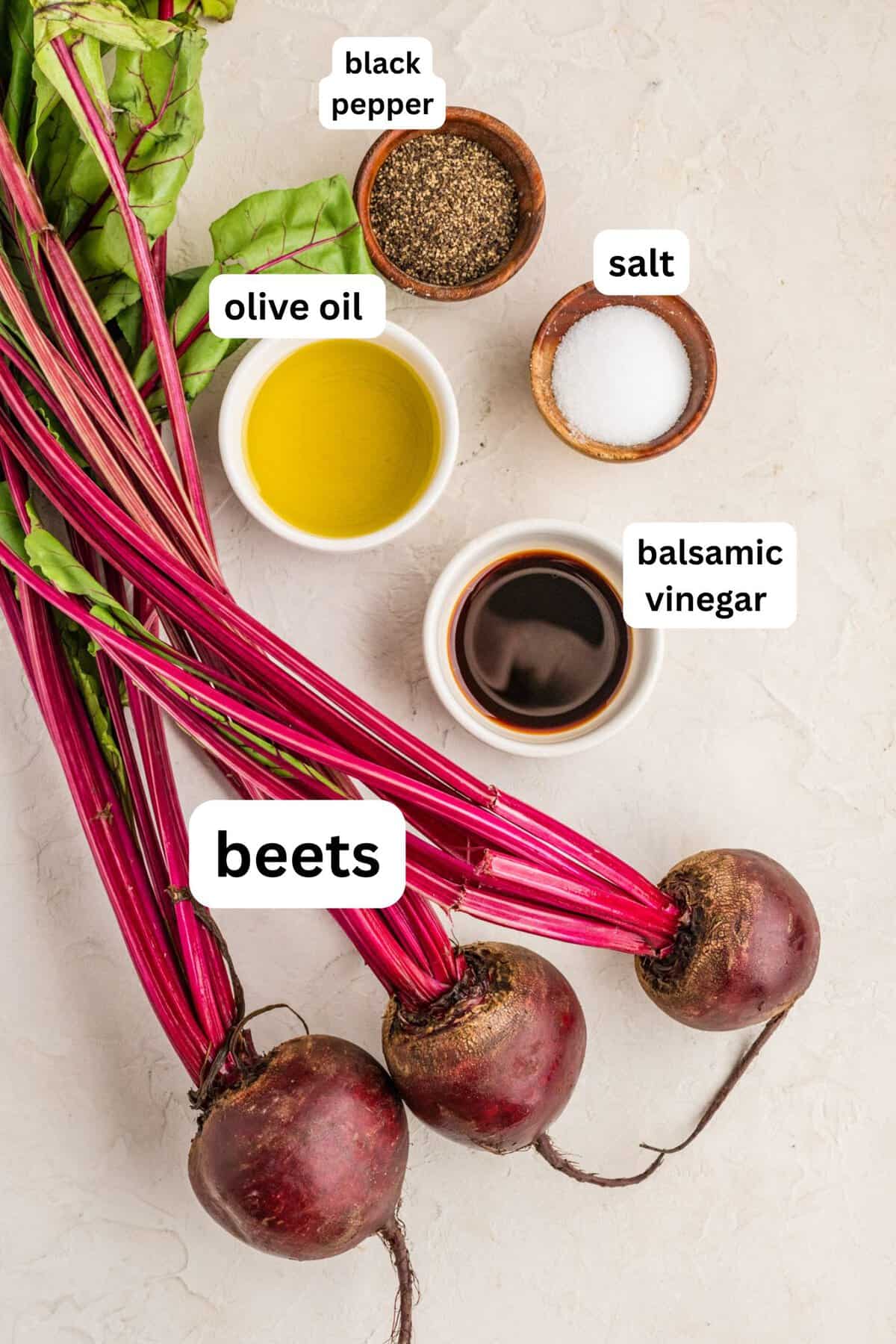
- Beets. Fresh, whole beets work best here. You want them firm with no soft spots. Medium-sized beets are easiest to peel and cube. Red beets are the classic choice, but golden beets or a mix of both work beautifully and make for a stunning presentation on the plate.
- Olive oil. A good quality olive oil helps the beets roast evenly and adds richness to the final dish. Two tablespoons is the right amount for this batch.
- Balsamic vinegar. Just one tablespoon. This is the move that sets these beets apart. The balsamic deepens as it roasts and creates a subtle sweet and tangy glaze on the edges of the beets. Do not skip it.
Ways to Modify
- Swap the acid: Use red wine vinegar or fresh lemon juice instead of balsamic for a brighter, tangier flavor.
- Add sweetness: Drizzle a little honey over the beets before roasting for extra sweetness and deeper caramelization.
- Add fresh herbs: Toss in fresh thyme or rosemary before roasting for an herby twist. You also can add parsley, chives or fresh dill as a garnish before serving.
- Mix the beets: Use red and golden beets together for a colorful, eye-catching presentation.
- Seeds or Nuts: Add pistachios, pecans, sliced almonds, pine nuts or walnuts.
- Add warm spice: Toss in a pinch of cumin or smoked paprika before roasting for a warm, earthy depth.
- Finish with cheese: Crumble goat cheese or feta over the beets right before serving.
How to Peel Beets Without Staining Everything You Own
Before you get into the actual roasting, a quick word on prep because beets will stain anything they touch.
- Use a plastic cutting board. Beet juice will permanently dye a wood cutting board, and no amount of scrubbing will fully remove it.
- Grab disposable gloves if you have them. Your fingers will turn a deep purple if you peel and cube beets barehanded. The color fades eventually but it takes a day or two.
- Wear an apron. Beet splatter is real and it shows up on everything light-colored.
- To peel the beet, leave the stem on while you peel. The stem gives you something to hold onto while you work the vegetable peeler around the outside. Once it is peeled, cut the stem off and cube it into one-inch pieces.
- These are small tips but they make the whole process a lot less stressful, especially if this is your first time working with beets.
How to Roast Beets in the Oven (Step by Step)
Step 1: Preheat your oven to 400 degrees F. Line a rimmed baking sheet with parchment paper. Parchment keeps cleanup easy and prevents sticking.
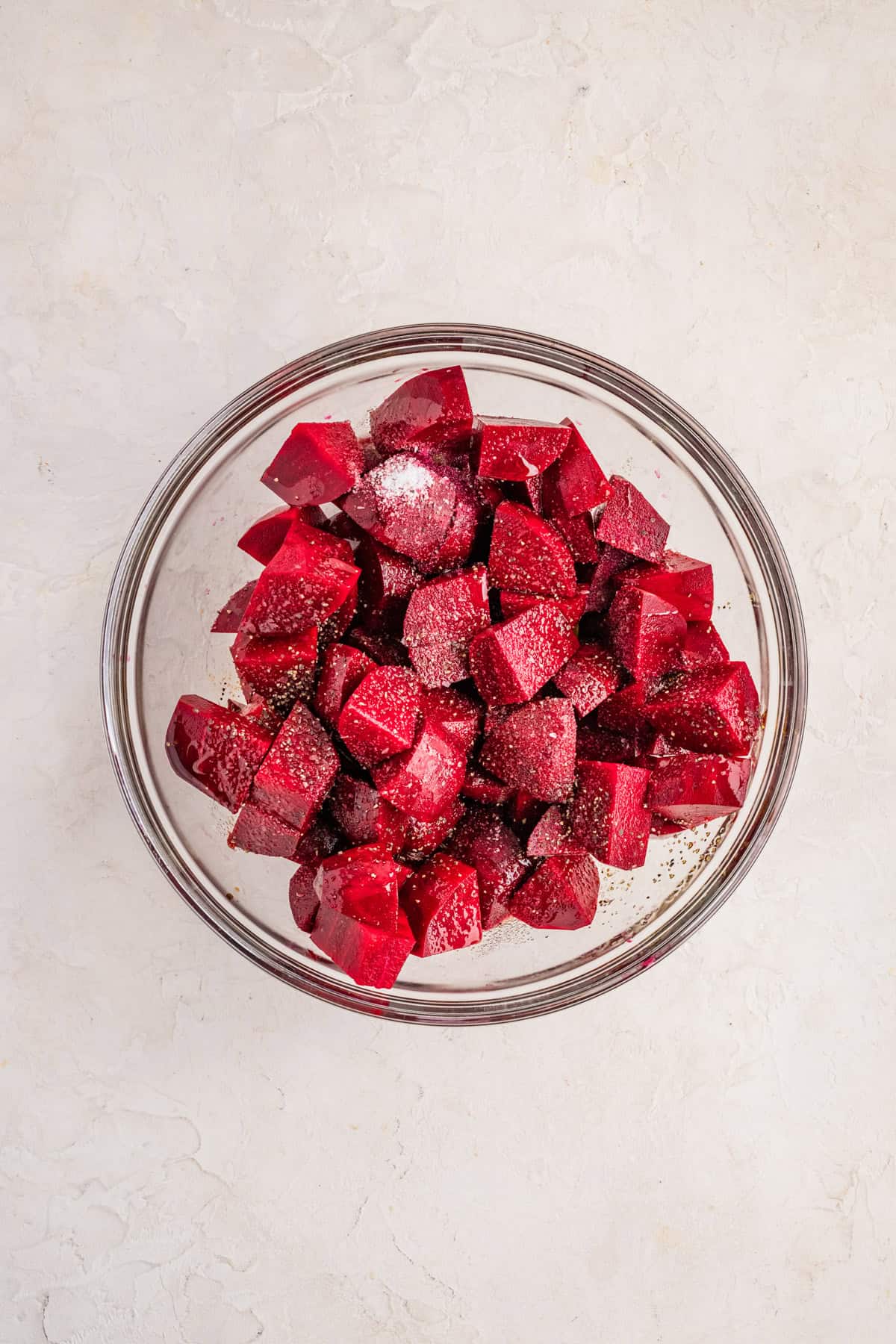
Step 2: Toss the beets. Add your peeled and cubed beets to a large mixing bowl. Pour in the olive oil and balsamic vinegar, then season with salt and pepper. Toss everything together until every piece is evenly coated. You want the beets glossy, not swimming in oil.
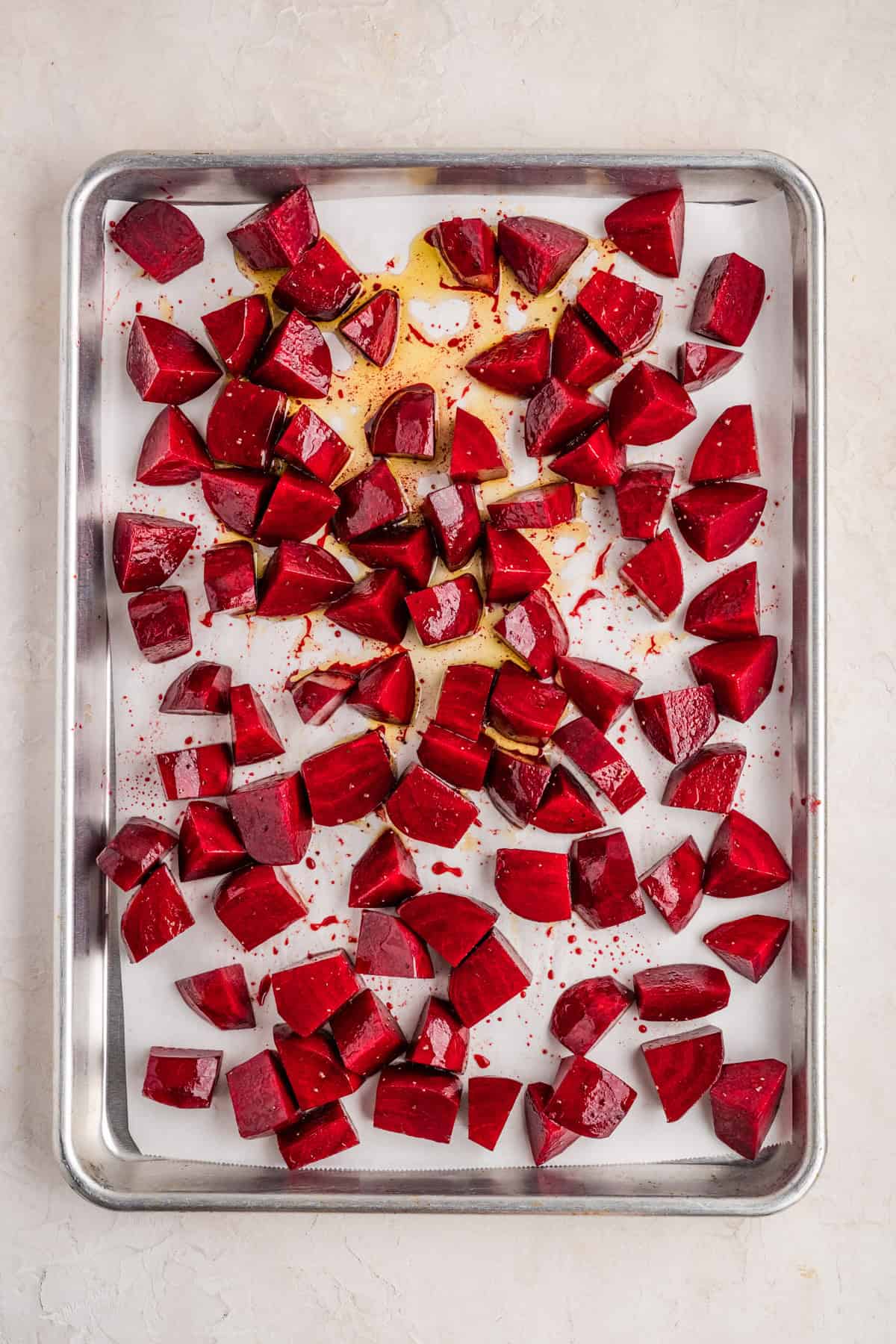
Step 3: Spread them out. Pour the beets onto your prepared baking sheet and spread them into a single layer. This is important. If the beets are crowded, they steam instead of roast and you lose that caramelized crust. Give each piece a little room.
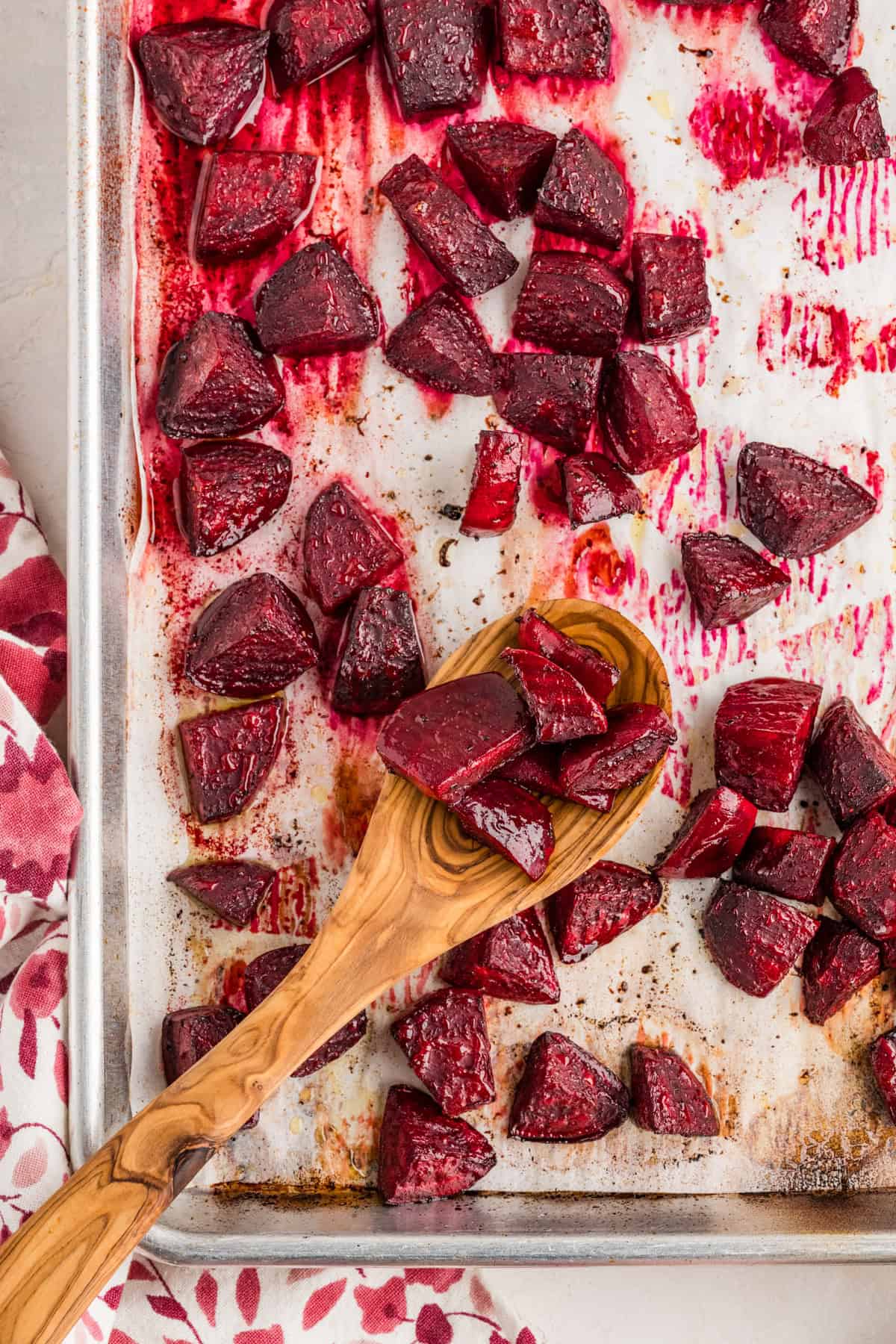
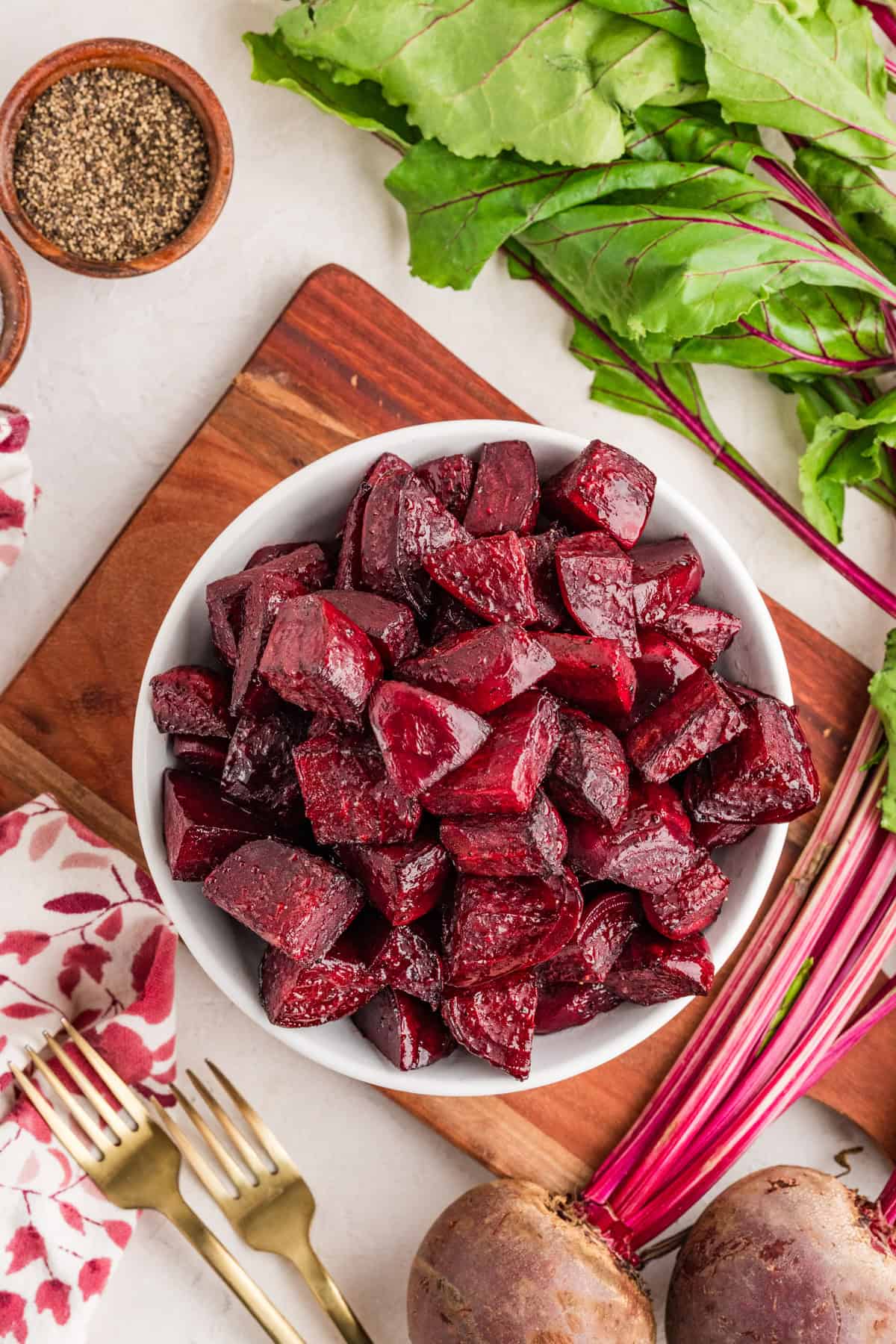
Step 4: Roast for 30 minutes. Slide the pan into the oven and let the beets roast undisturbed for about 30 minutes. You will know they are done when a fork slides in easily and the edges look deep, burnished, and slightly crisped at the corners. The balsamic will have reduced into a glaze on the bottom of the pan.
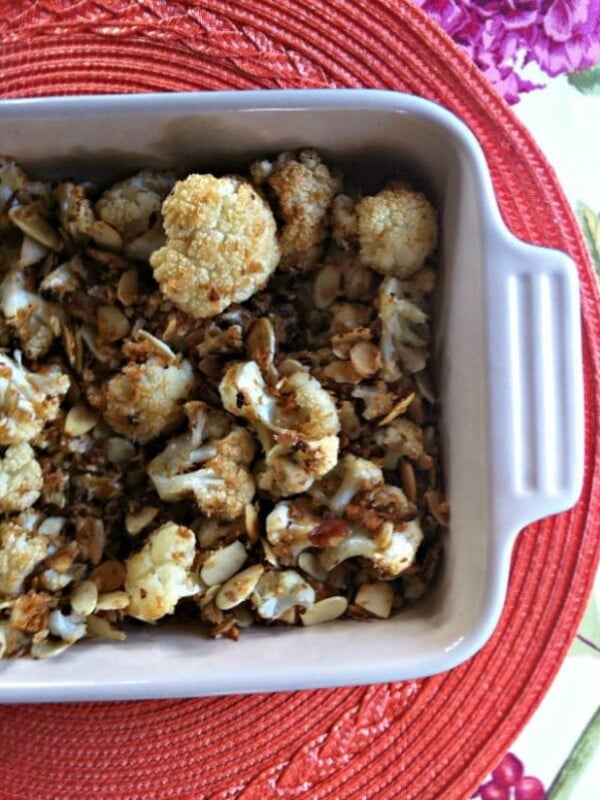
If you like roasted vegetables you also might like these Mediterranean Roasted Vegetables or these Turmeric Roasted Cauliflower.
How to Know When Roasted Beets Are Done
- The two signs to look for are fork tenderness and color. A fork should slide into the center of a beet cube with no resistance. If you hit a firm spot, give them another five minutes and check again.
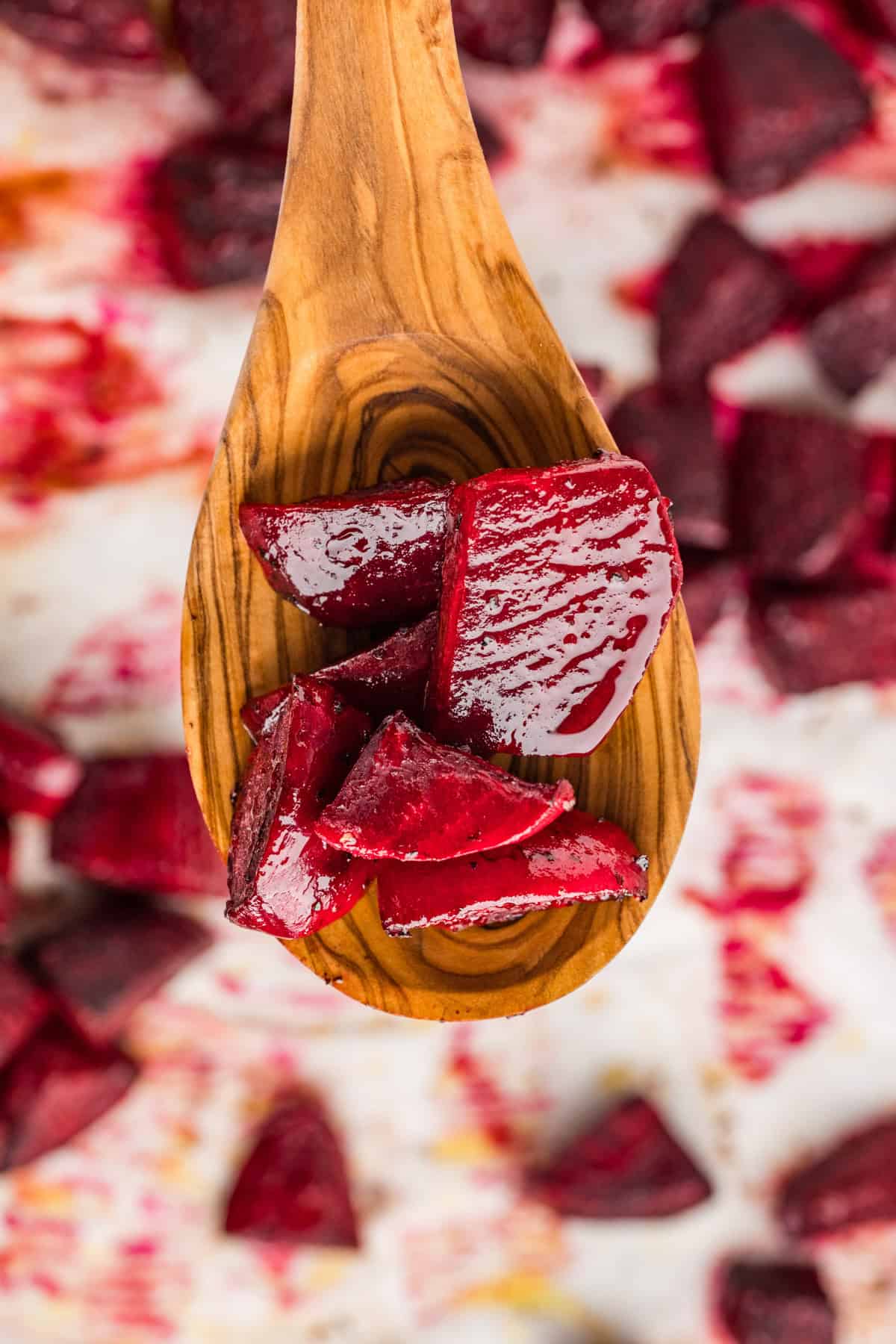
- The color cue is equally reliable. The edges of the beet cubes should be deeply caramelized, almost jammy looking at the corners. The balsamic creates a dark, almost lacquered finish on the outside. If your beets look pale and wet, they need more time and possibly more space on the pan.
- Do not pull them early. Slightly overdone beets are still delicious. Underdone beets are chalky and unpleasant.
What to Serve with Roasted Beets
Roasted beets are genuinely versatile, which is one of the reasons I make them so often. Here are the ways I use them most.
- As a side dish. They pair beautifully with grilled or roasted proteins. Try them alongside Yogurt Marinated Chicken or Mediterranean Baked Salmon for a complete weeknight dinner.
- On a salad. Roasted beets are one of the best salad toppings out there. Toss them over arugula with goat cheese, toasted walnuts, and a lemon vinaigrette for a restaurant-quality salad at home. They also work well in a fattoush salad or a Mediterranean Hummus Bowl.
- With grains. Stir them into farro, quinoa, or couscous for a meal prep-friendly lunch bowl. They hold up well and actually improve in flavor after a day in the fridge.
- With hummus. This is a Lebanese-inspired combination I love. Spread hummus on a plate and pile roasted beets on top with a drizzle of olive oil and a pinch of sumac. Serve it with warm pita. It is simple and extraordinary. Check out a beef hummus platter recipe for inspiration on how to build a spread like this.
Storage and Make-Ahead Instructions
- Let the beets cool completely before storing. Transfer them to an airtight container and refrigerate for up to five days. They are one of the better meal prep vegetables because the flavor deepens overnight and they reheat without getting mushy.
- To reheat, spread them on a baking sheet and warm at 375 degrees for about 10 minutes, or just eat them cold straight from the fridge on a salad.
- Can you freeze roasted beets? You can. Freeze in a single layer on a baking sheet first, then transfer to a freezer bag. They will keep for up to three months. The texture softens slightly after freezing but they are still great for grain bowls and salads.
- Can I make roasted beets ahead of time? Yes, and they are actually great for meal prep. Roast a full batch, cool completely, and store in an airtight container in the refrigerator. They keep for five days and taste even better after the first day.
Recipe FAQ
You do not have to, but I recommend it for this recipe. Leaving the skin on works fine if you scrub the beet really well first. The skin is edible and thin. That said, peeling before you cube them means better caramelization and a more uniform texture throughout.
Yes, and this recipe proves it. Skipping the foil and using a sheet pan instead gives you better caramelization and a faster cook time. Foil traps steam, which softens the beet but prevents browning. A hot oven and a parchment-lined pan do the job better.
Two likely culprits. First, the beets are too crowded on the pan. When vegetables are too close together, they release steam and braise instead of roast. Spread them out so each piece has space. Second, your oven temperature may be too low. Make sure your oven is fully preheated to 400 degrees before the pan goes in.
Absolutely. Golden beets have a slightly milder, less earthy flavor than red beets. They roast in the same amount of time and work perfectly with the same olive oil and balsamic combination. Golden beets also do not stain, which makes prep a lot less messy.
More Roasted Vegetable Recipes
Vegetarian
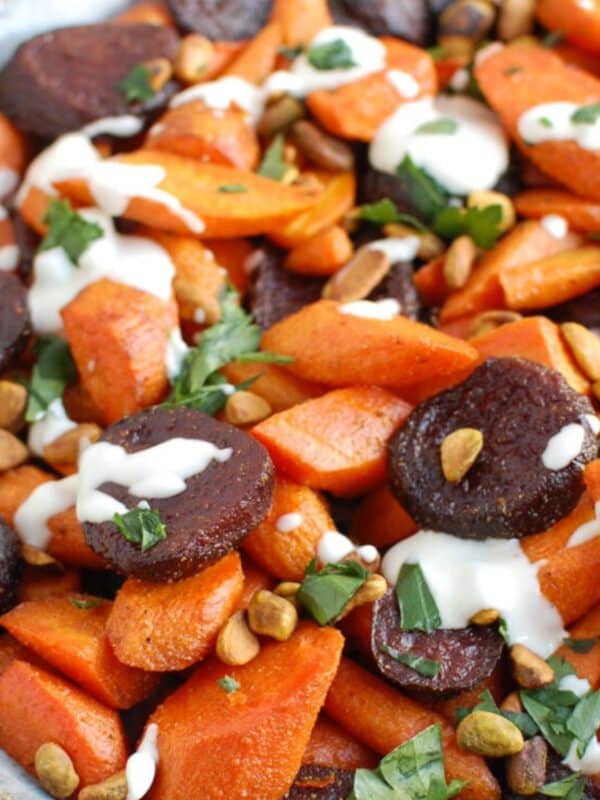
Roasted Carrots and Beets with Tahini

Vegetarian
Curry Roasted Cauliflower
Sides
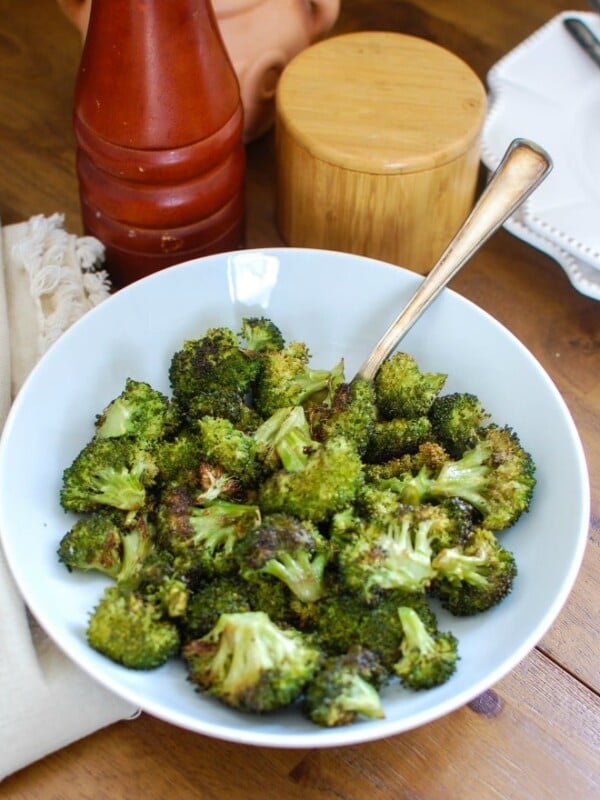
Roasted Broccoli
Tried this recipe? Leave a star rating and comment below! Subscribe to my newsletter or follow me on Facebook, Instagram, or Pinterest for the latest.
Oven Roasted Beets

Ingredients
- 5 to 6 whole beets, peeled and chopped into uniform 1-inch pieces
- 2 tablespoons olive oil
- 1 tablespoon balsamic vinegar
- 1 teaspoon kosher salt
- 1/8 teaspoon coarse ground pepper
Instructions
- Preheat the oven to 400 F and line a rimmed baking sheet with parchment paper.
- In a large mixing bowl toss the beet cubes together with the olive oil, balsamic vinegar, salt, and pepper until every piece is evenly coated.
- Spread onto the baking sheet in a single layer, making sure pieces are not touching. Roast for about 30 minutes or until the beets are fork tender and the edges are caramelized.
Notes
- Cutting: Try to cut the beets into evenly sized one-inch pieces. Uneven pieces mean some will be done before others, and the smaller ones may burn while you wait for the larger ones to cook through.
- Spacing: Spread the beets in a single layer with a little room between each piece. Crowded beets steam instead of roast and you will lose the caramelized edges.
- Golden beets: Golden beets work just as well as red beets in this recipe and are a lot less messy to prep. You can also mix the two for a beautiful presentation, just roast them on separate pans so the red beets do not bleed onto the golden ones.
- Storage: Store leftovers in an airtight container in the refrigerator for up to five days. The flavor actually deepens after the first day, making these a great option for meal prep.
- Reheating: Reheat on a baking sheet at 375 degrees for about 10 minutes to bring the edges back to life. They also taste great cold straight from the fridge on a salad.
Nutrition
Nutrition information is automatically calculated, so should only be used as an approximation.











A simple way to roast beets