
This post may contain affiliate links.
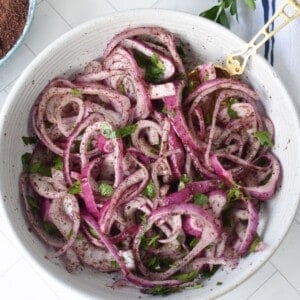
Bright, tangy, and ready in five minutes, these Lebanese Sumac Onions are the condiment your fridge has been missing. Made with red onion, sumac, lemon juice, and fresh parsley, they go on everything from shawarma and falafel, to grain bowls and grilled fish.
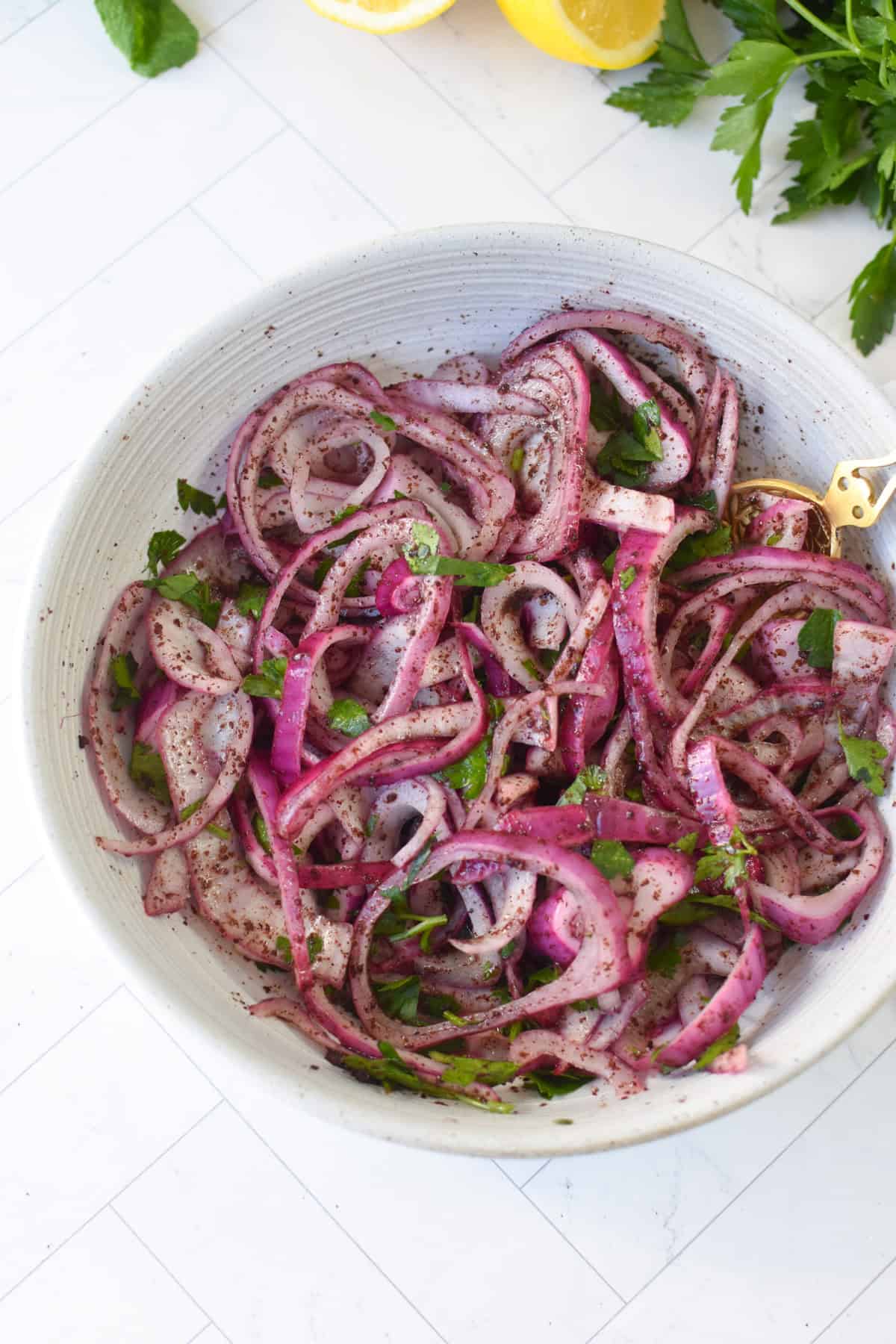
Sumac onions are one of those Lebanese condiments that make everything they touch taste brighter. In my family, a bowl of them often showed up at the table. You will find them tucked alongside a platter of beef shawarma, spooned over a fattoush salad, piled on top of a beef and hummus platter where the warm spiced meat needed something tart to cut through it, or served next to white fish with tahini. They are a tangy, herby side dish, and done in five minutes, and once you have a jar of them in your fridge you will find yourself reaching for them constantly.
You might be wondering what are sumac onions? Sumac onions are thinly sliced red onions marinated in sumac, lemon juice, vinegar, olive oil, and fresh parsley. They’re a staple condiment across Lebanese, Turkish, and broader Middle Eastern cuisine, most commonly served alongside shawarma, kebabs, and falafel, but honestly, they’re one of those things you end up putting on everything. I have heard this referred to as a Turkish Onion Salad or red onion salad also. The sumac adds a tart, almost citrusy depth that plain lemon juice alone can’t quite replicate. Five minutes to make, last four days in the fridge, and taste even better on day two.
Why You’ll Make These Every Week

This recipe is five ingredients, no cooking, and five minutes of actual work. But don’t let the simplicity fool you, the flavor is anything but simple.
The combination of sumac’s earthy tartness, lemon juice’s brightness, and red wine vinegar’s sharpness transforms plain sliced onions into something complex and almost pickled-tasting without the wait time of actual pickling. The olive oil rounds everything out and helps the sumac cling to every slice.
They’re also a great meal prep option. Make a batch Sunday night and you have a ready-made flavor boost for the entire week. Drop them onto a weeknight hummus bowl, tuck them into a falafel wrap, or pile them on top of Greek grilled chicken, every single time the dish tastes more intentional.

Ingredients You Need
Here’s what goes into these sumac onions, and why each one matters:
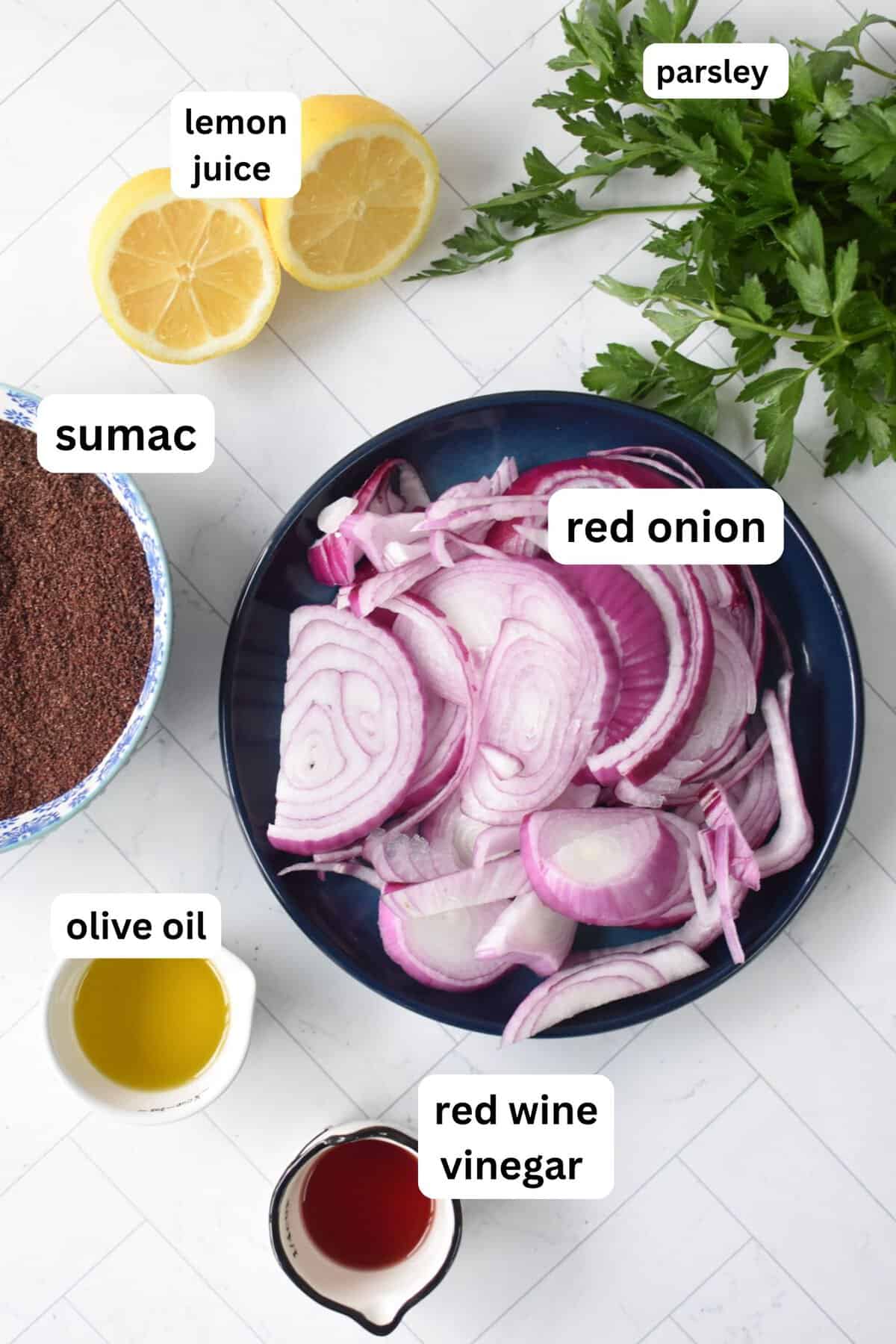
- Red onion: The sharp, slightly sweet flavor of red onion is perfect here. It mellows beautifully when massaged with the sumac dressing. Slice thin (a mandoline makes this effortless) into half-moon shapes for the best texture.
- Sumac: The star. Tart, fruity, earthy. Sumac powder is a deep red spice made from dried sumac berries with a tart, fruity flavor, think bright and acidic, like a more complex lemon zest. It’s a staple in Lebanese cooking and easy to find in most grocery store spice aisles, at Middle Eastern markets, or online. Look for a vibrant deep red color, faded means old, and the flavor will show it.
- Fresh lemon juice: Bottled won’t taste the same. Use fresh if you have it available. Add lemon zest for a more lemony flavor.
- Red wine vinegar: Adds a slightly deeper, more complex acidity than lemon juice alone. The two together are what gives these onions that almost-pickled quality.
- Extra virgin olive oil: Rounds out the sharpness and helps the sumac coat every slice. Try to use a good quality olive oil.
- Fresh parsley: Adds color, freshness, and a slight herbal bite. Flat-leaf parsley is preferred over curly.
- Salt: Just a pinch. It helps draw a little moisture from the onions and seasons the whole thing.
Ways to Modify this Recipe
- More sumac: Love a bold, tangy flavor? Push the sumac up to 2 tablespoons.
- Less sumac: New to sumac? Start with 1 tablespoon and taste before adding more.
- Swap the herb: Not a parsley fan? Fresh mint works beautifully here for a different herbal note.
- Skip the vinegar: If you want a lighter, more citrus-forward result, leave out the red wine vinegar and add a little extra lemon juice instead.
- Add heat: A pinch of red pepper flakes or Aleppo pepper adds a subtle warmth without overpowering the sumac.
- Make it oil-free: Simply leave out the olive oil. The lemon juice and vinegar carry the marinade on their own.
- Add garlic: A small clove of minced or grated garlic adds depth if you want a more assertive flavor.
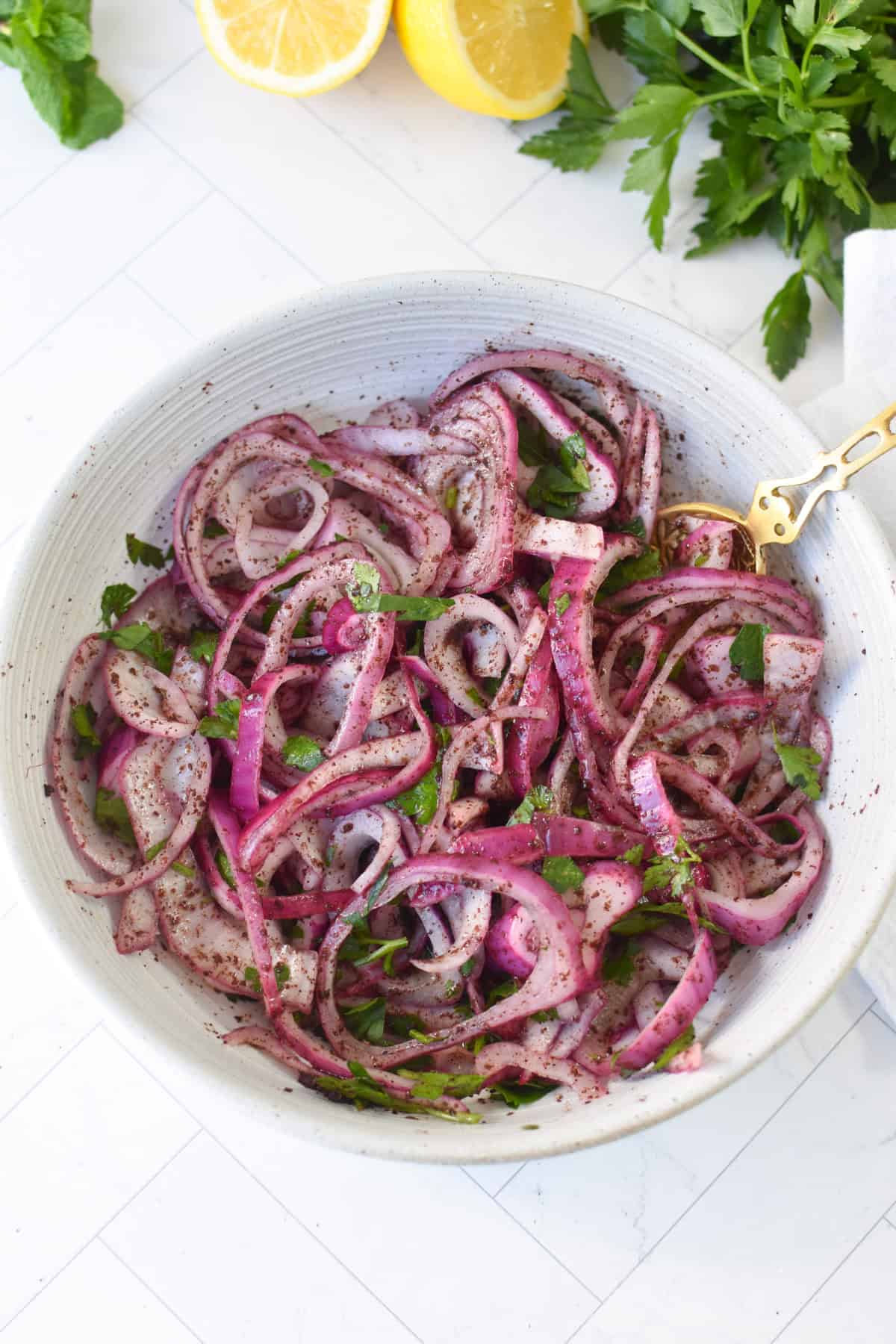
Should You Soak the Onions First?
This is the one decision point in the recipe, and it comes down to how much you like the bite of raw onion.
- Skip the soak if you enjoy a sharp, assertive onion flavor. The marinade softens the onions enough on its own, especially if you give them a good massage and let them sit for 30 minutes. I personally don’t soak.
- Do the soak if you’re sensitive to raw onion’s pungency, serving these to kids, or want a more mellow, lightly tangy result. Place the sliced onions in cold water for 10 minutes, drain thoroughly, and pat dry before adding to the bowl. Patting dry is important, excess water dilutes the marinade and makes everything watery.
- Either way, the end result is delicious. This is just a flavor preference call, not a right or wrong choice.
How to Make Sumac Onions
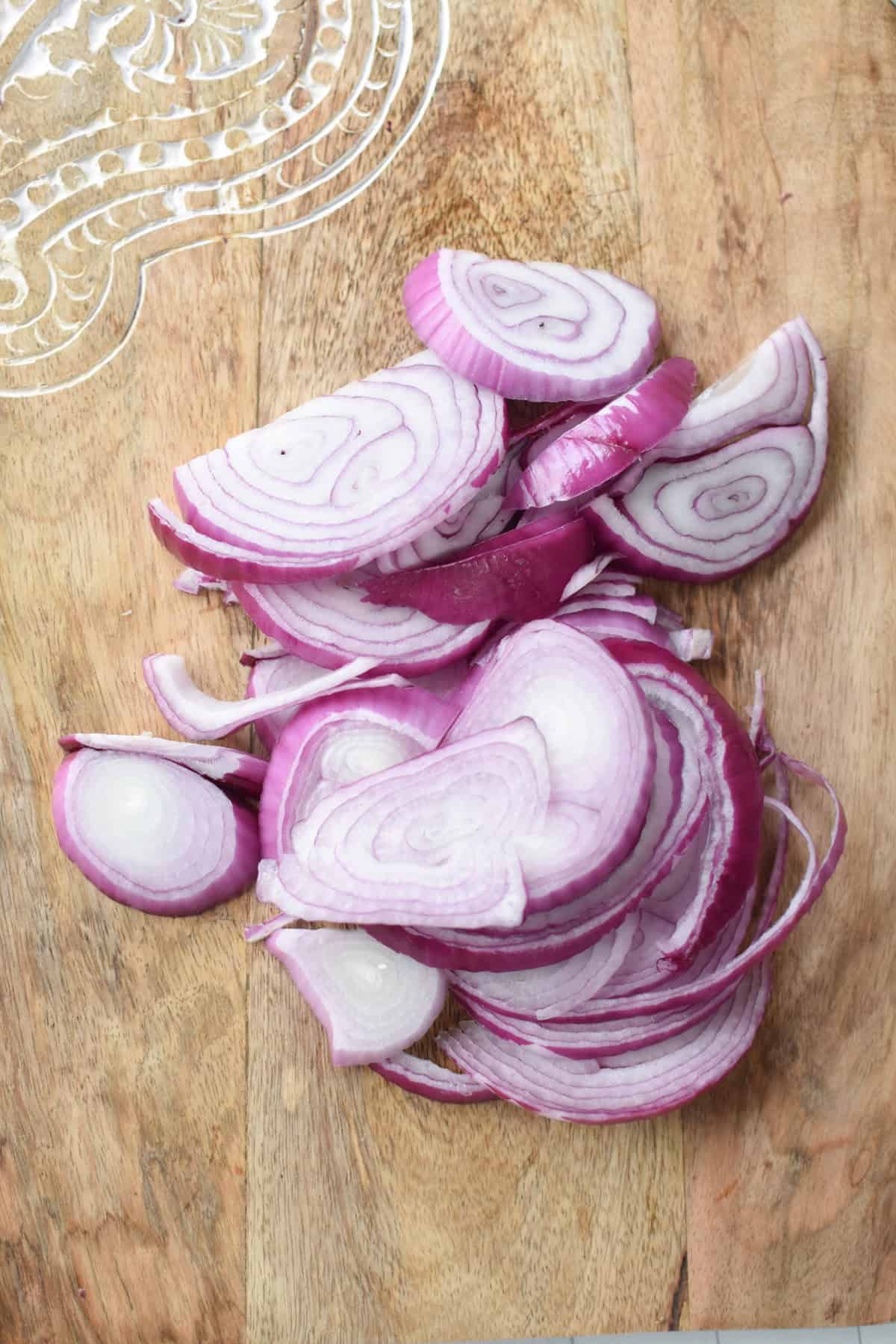
Step 1: Slice the onions. Cut the red onion in half from stem to root, peel it, and slice each half into thin half-moon shapes. Aim for slices that are thin enough to bend slightly but not paper-thin, about ⅛ inch. A sharp knife or a mandoline both work well here. Consistent thickness means even marination. (Optional Soak) If you want milder onions, place sliced onions in a bowl of cold water for 10 minutes, then drain and pat completely dry. Don’t skip the pat-dry, wet onions water down your dressing.
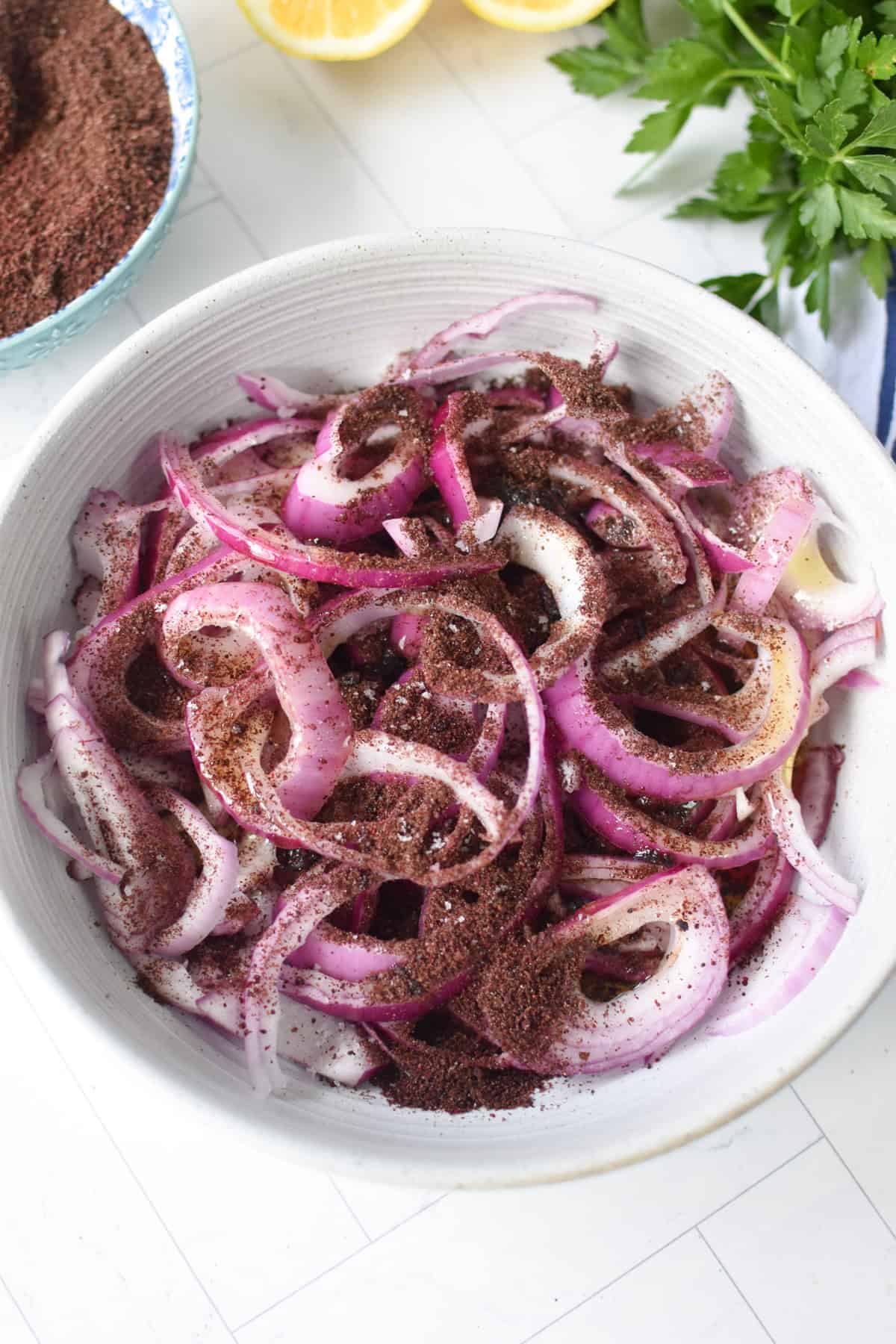
Step 3: Combine everything. Add onions to a medium bowl. Add the sumac, lemon juice, red wine vinegar, olive oil, parsley, and salt. Don’t stir yet, you’re about to massage.
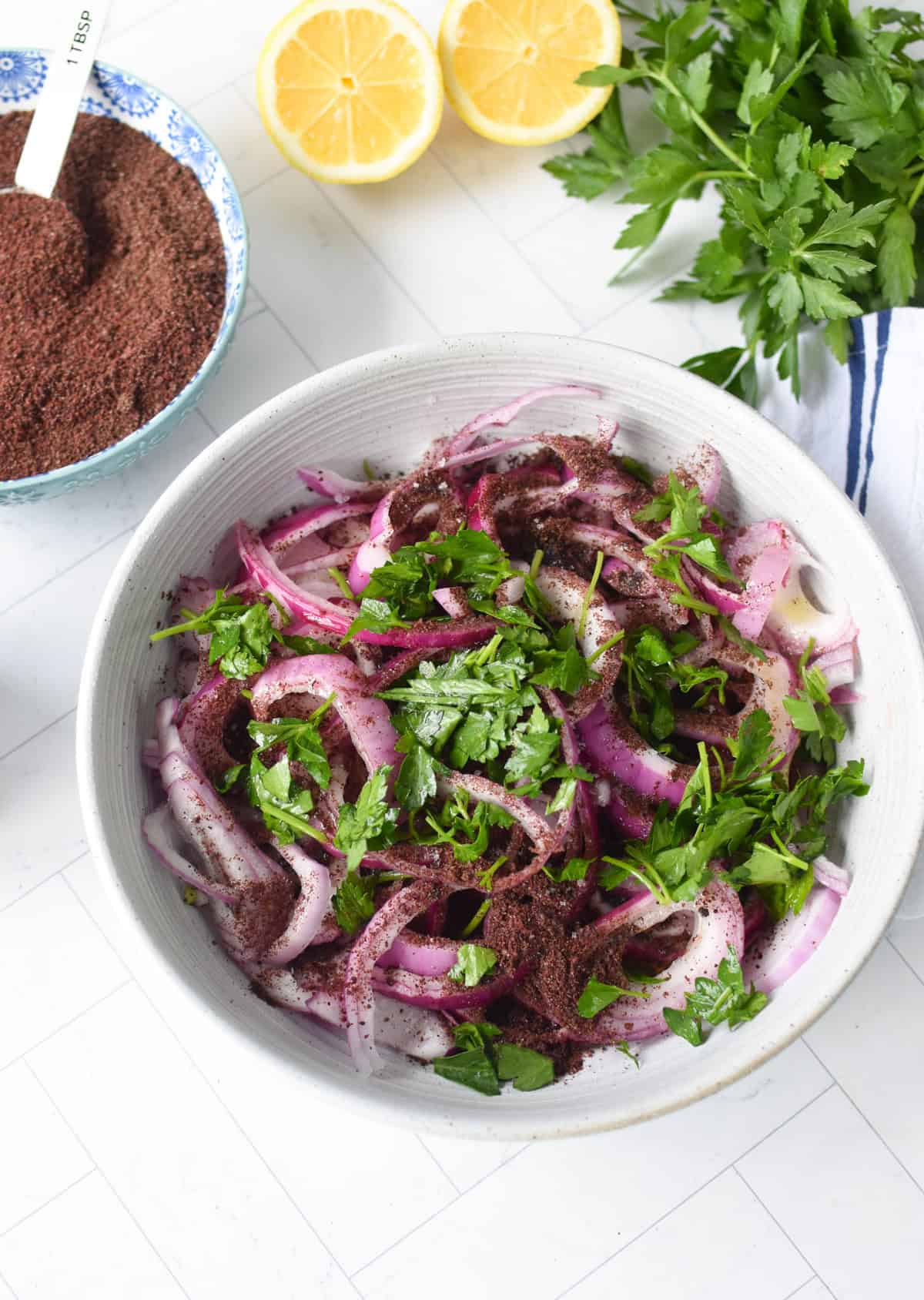
Step 4: Massage and toss. Using clean hands, massage the onions for about 60–90 seconds. You’ll feel them start to soften and release a little liquid. The color will shift to a deeper reddish-purple, that’s the sumac doing its thing. This step matters. It accelerates marination and gives you a better texture than just tossing.
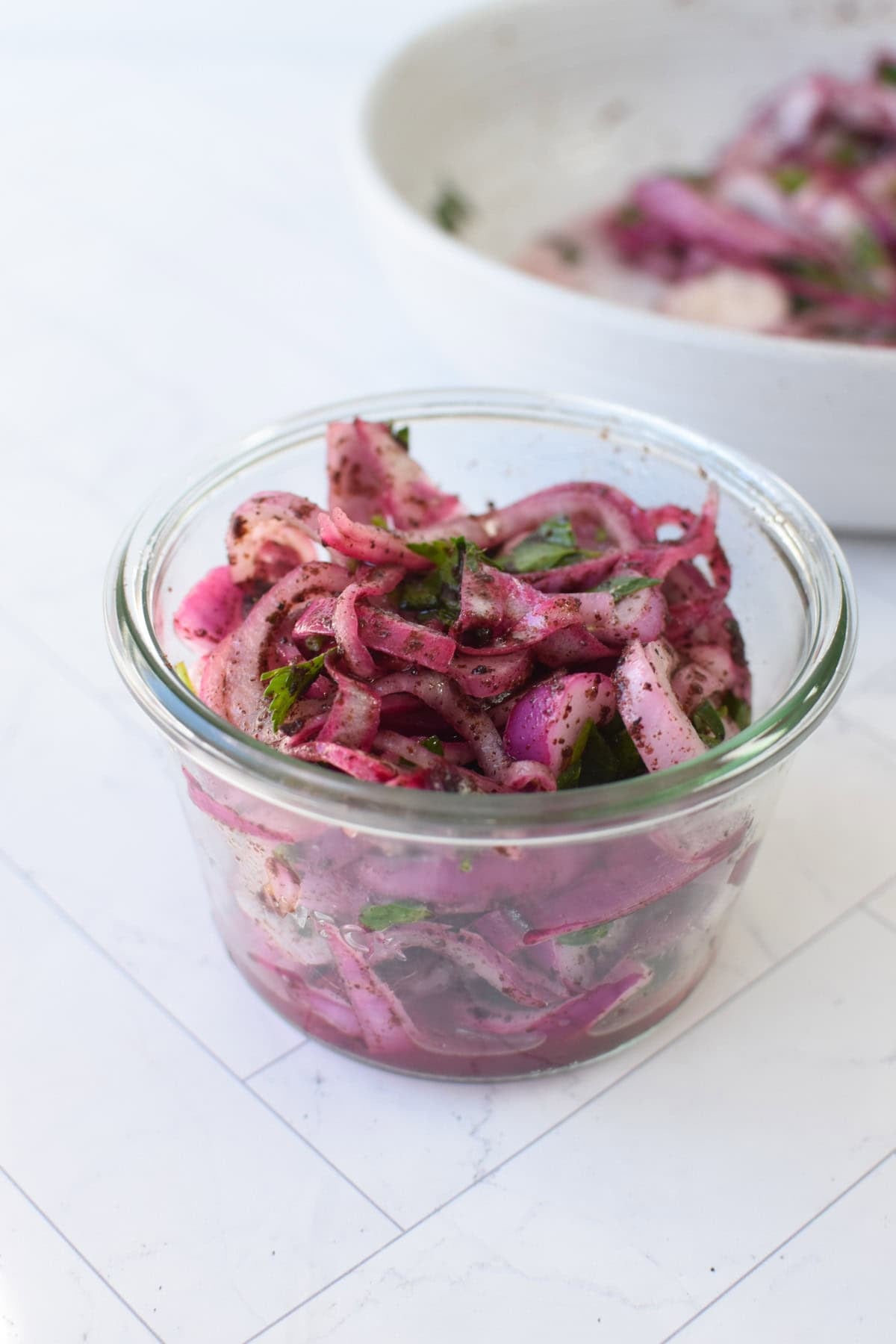
Step 5: Marinate and serve. Taste and adjust, more sumac, more lemon, more salt. Let them sit for at least 5 minutes before serving. For the best flavor, cover and refrigerate for 30 minutes to 1 hour. The onions mellow, the flavors meld, and the whole thing gets even better. These are genuinely one of those things that tastes better the next day.
How to Use Sumac Onions
This is where sumac onions earn their permanent spot in your fridge. They go on more things than you think:
- Classic Lebanese pairings: Pile them on homemade chicken shawarma, falafel wraps, grilled kofta, or lamb kebabs. They cut through richness and add brightness.
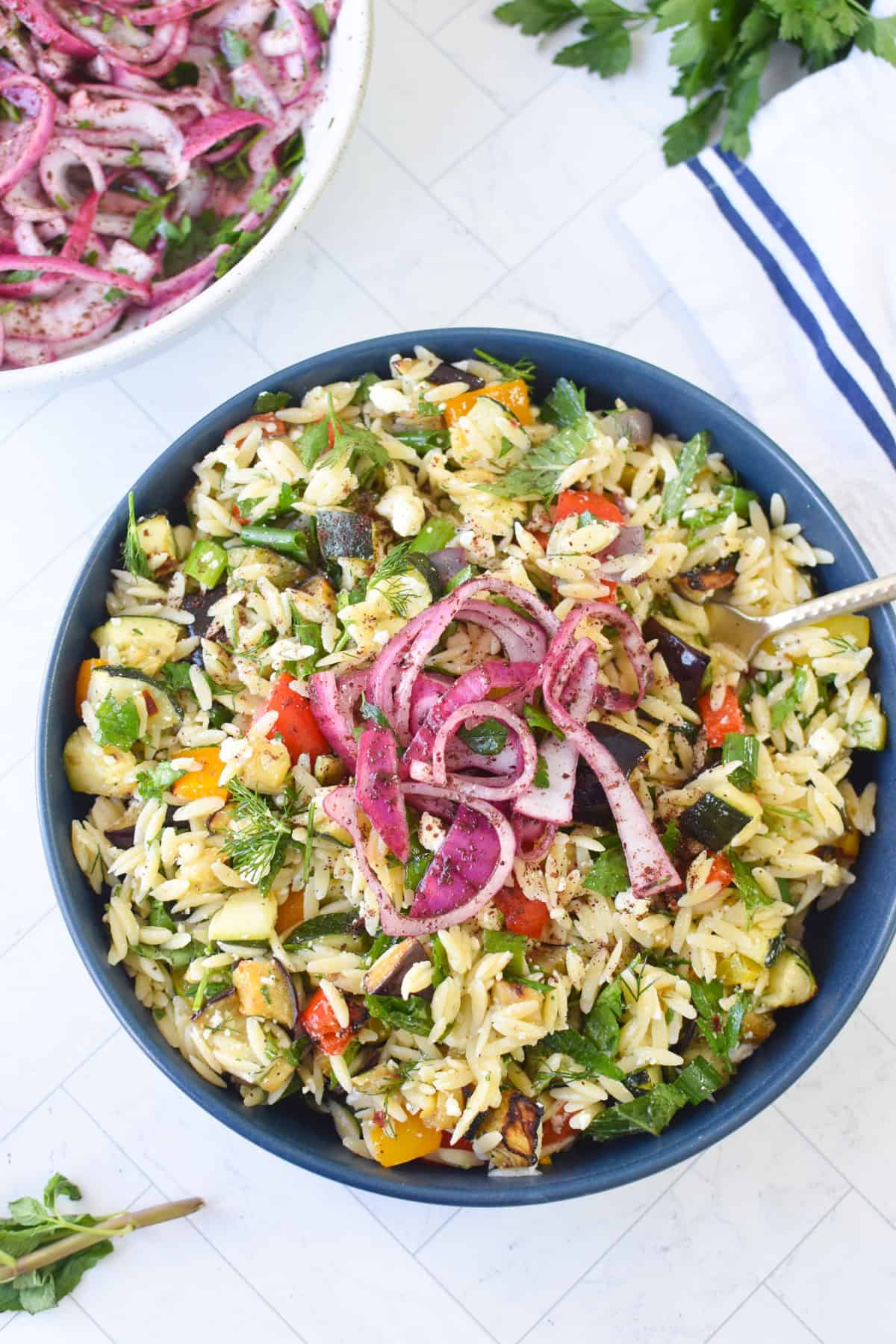
- Mediterranean bowls: Add a spoonful to a hummus bowl or quinoa bowl with roasted vegetables, they add acidity and color that makes the whole bowl feel more composed.
- Proteins: Lay them over grilled Mediterranean salmon or roasted chicken, the tartness is a natural counterpoint to rich, fatty proteins.
- Vegetables: They’re surprisingly great on roasted cauliflower, air fryer eggplant, or on a simple Lebanese Salad.
- More Ideas: Tucked these onions into a pita sandwich with leftover chicken, spooned over Lebanese Hummus with pita chips, stirred into a lentil bowl. They work anywhere you want brightness and texture.
How to Store + Make-Ahead Tips
- Storage: Store in an airtight container or mason jar in the refrigerator for up to 3–4 days. Give them a quick stir before serving. The flavor deepens and the onions mellow over time, they’re genuinely better on day 2.
- Make ahead: This is one of the best recipes to batch at the start of the week. Make a full batch Sunday and use it all week on everything from grain bowls to sandwiches to grilled proteins.
- Do not freeze. Once thawed, the onions lose their texture completely.
Recipe FAQ
You can, but red onion is strongly preferred. It has the right sharpness and natural color that turns that beautiful deep red with sumac. White onions are more pungent and lacks the color. Yellow onion is too mild and sweet for this preparation.
The recipe calls for 1.5 tablespoons, which gives you a bold, well-coated result. Love sumac? Go up to 2 tablespoons. New to it? Start at 1 tablespoon, taste, and add from there.
Yes, the parsley adds freshness and color but the sumac onions still taste great without it. You could sub fresh mint for a different herbal note.
Massaging the onions for 60–90 seconds softens them slightly, helps the sumac and dressing absorb faster, and creates that deep reddish color. If you just toss and walk away, the onions will still taste good but the texture stays sharper and the color is less vivid.
Not quite. Pickled onions are fully brined in vinegar over hours or overnight. Sumac onions are a quick marinated preparation, they have a similar tang but are lighter, less acidic, and ready in under an hour. If you want a quick pickled red onion recipe try these Quick Pickled Red Onions!
More Vegetable Recipes

Vegetarian
Quick Pickled Vegetables
Vegetarian
Refrigerator Dill Pickles

Mediterranean
Easy Marinated Tomatoes
Tried this recipe? Leave a star rating and comment below! Subscribe to my newsletter or follow me on Facebook, Instagram, or Pinterest for the latest.
Sumac Onions
Ingredients
- 1 large red onion, thinly sliced into half-moons
- 1/4 cups fresh parsley, chopped
- 1.5 tablespoons sumac, (more or less depending on how much sumac flavor you like)
- 1 tablespoons fresh lemon juice
- 1 tablespoons red wine vinegar
- 1 tablespoons extra virgin olive oil
- 1/4 teaspoons salt
Instructions
- Cut the red onion in half from stem to root, then peel and slice each half into thin half-moon shapes. For the best results, use a sharp knife or a mandolin to get even, thin slices.
- Optional soak: If you prefer a milder onion flavor, place the sliced onions in a bowl of cold water and soak for 10 minutes. Drain well and pat dry before continuing if you soaked the onions.
- In a medium bowl add the sliced red onions. Add the sumac, lemon juice, red wine vinegar, olive oil, parsley, and salt to the bowl.
- Using clean hands, gently massage the onions for about 1 minute until they slightly soften and are fully coated in the sumac dressing. This helps the flavors absorb faster and gives the onions a beautiful deep red color.
- Let the onions marinate for at least 5 minutes before serving (or for even better flavor, cover and refrigerate for 30 minutes to 1 hour). The longer they sit, the more the flavors meld and the onions mellow. Serve as a topping, condiment, or side alongside your favorite Mediterranean dishes.
Notes
- Storage: Store in an airtight container or mason jar in the refrigerator for up to 3–4 days. Give them a quick stir before serving. The flavor deepens and the onions mellow beautifully over time, they’re actually even better on day 2!
- Make it ahead: This recipe is perfect for meal prep. Make a batch at the start of the week and use it on everything, grain bowls, wraps, salads, grilled chicken, and more.
- Adjust to taste: Love bold sumac flavor? Go up to 2 tablespoons. Prefer it milder? Start with 1 tablespoon and add more after tasting.
- Serving ideas: Kebabs, shawarma, falafel wraps, pita sandwiches, hummus bowls, grilled salmon, roasted cauliflower, grain bowls, or tacos.
- Do not freeze, the onions lose their crisp texture once thawed.
Nutrition
Nutrition information is automatically calculated, so should only be used as an approximation.












A simple, but flavor packed side dish to add to salads, wraps or rice bowls.